At the rank
The meter, and a floor
A published tariff, a supplement both ways, and a minimum on anything starting here.
Cheap airport transfers
Barcelona does not do flat airport fares. A rank taxi out of Josep Tarradellas Barcelona-El Prat Airport runs on the metropolitan meter, with an airport supplement charged in both directions. 2026 tariff line by line, says where the taxi rank is at Terminal 1 and at each section of Terminal 2, explains how long the queue actually runs and why, puts the Aerobús, the L9 Sud metro, the R2 Nord train and the night buses honestly beside a pre-booked Barcelona airport transfer, and is straight about the journeys.

At the rank
A published tariff, a supplement both ways, and a minimum on anything starting here.
Booked ahead
Per vehicle, settled before you fly, and held through a delay.
Your transfer, in three
Answers first
Six questions that come before any other, each answered in a sentence that stands on its own and each traced to whoever published the figure.
The short answer A taxi from Josep Tarradellas Barcelona-El Prat Airport runs on the metropolitan meter rather than a flat fare: a €2.80 flag drop, €1.35 a kilometre by day or €1.66 at night and weekends, a €4.60 airport supplement in both directions, and a €21.00 floor on anything starting at the airport. The only fixed fare here is €46.00 to the cruise terminals.
The metropolitan tariff is reset each year — the 2026 schedule came in at a weighted 2.3 per cent above 2025 — and the transport operators reprice on their own calendars while we review ours. Every euro figure here is a reading of someone’s published schedule on the day this page was reviewed. The only number that binds anybody is the one on your booking at the moment you accept it.
Our vehicles
From a saloon for two up to a 50-seater coach. Our fare is for the vehicle rather than the seat, so the number that decides your class is the suitcase count.
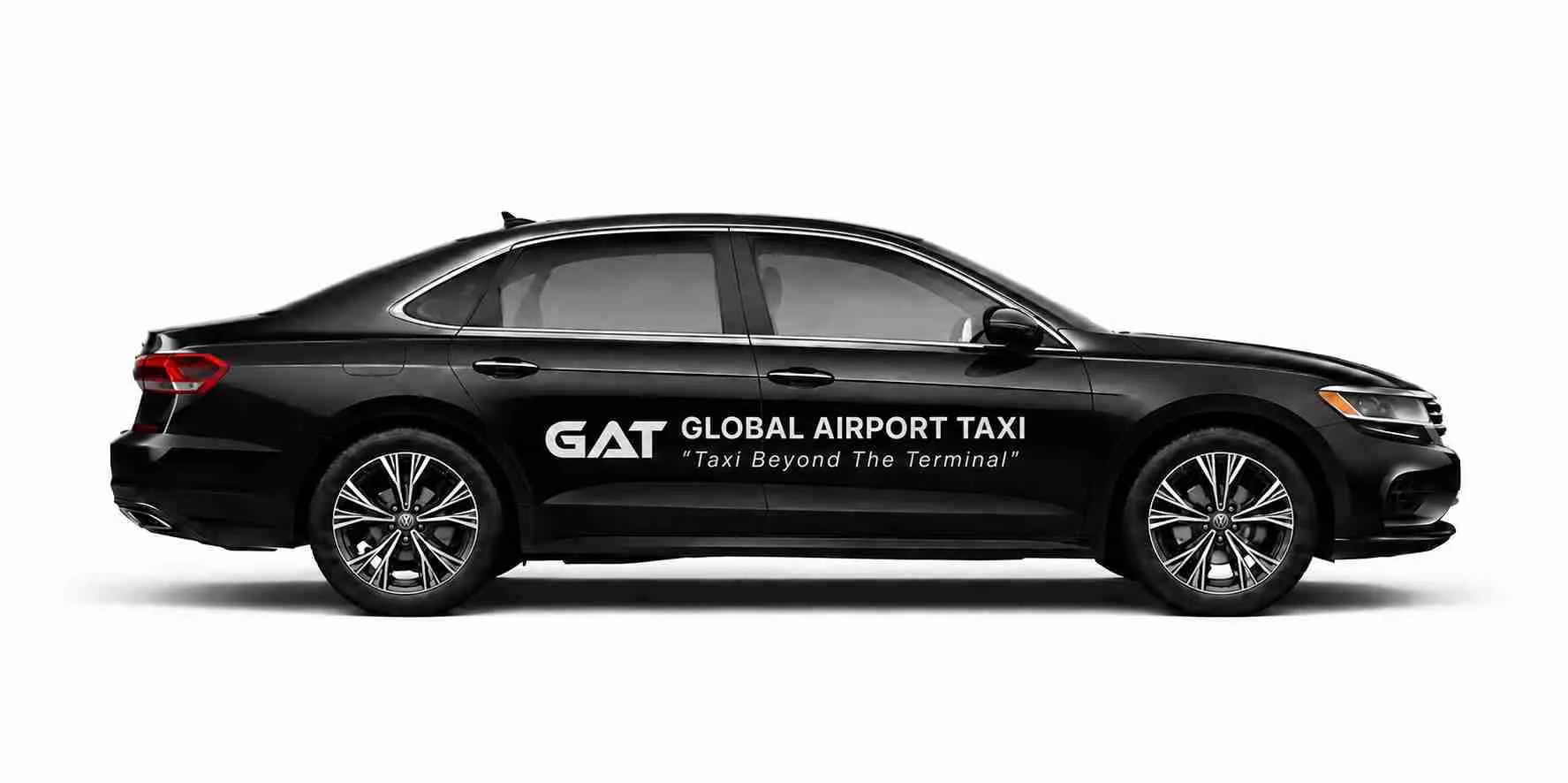 Normally a Volkswagen Passat or similar
Saloon taxi
4 passengers, 2 large bags
One or two people with cabin bags, bound for the Eixample.
View vehicle →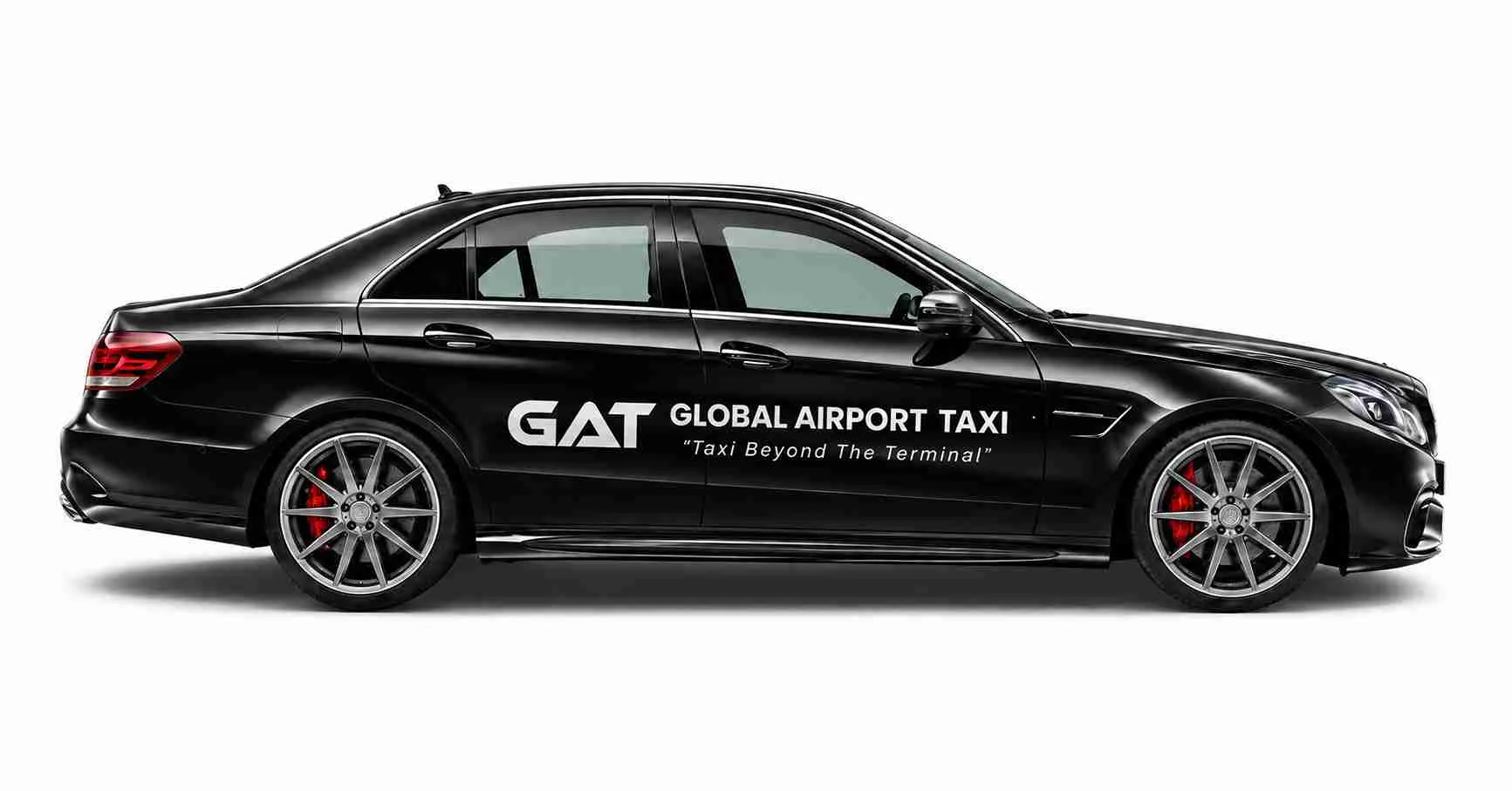 Normally a Mercedes E-Class or similar
Executive car
3 passengers, 2 large bags
A quieter car for a business arrival, in MWC week or any other.
View vehicle →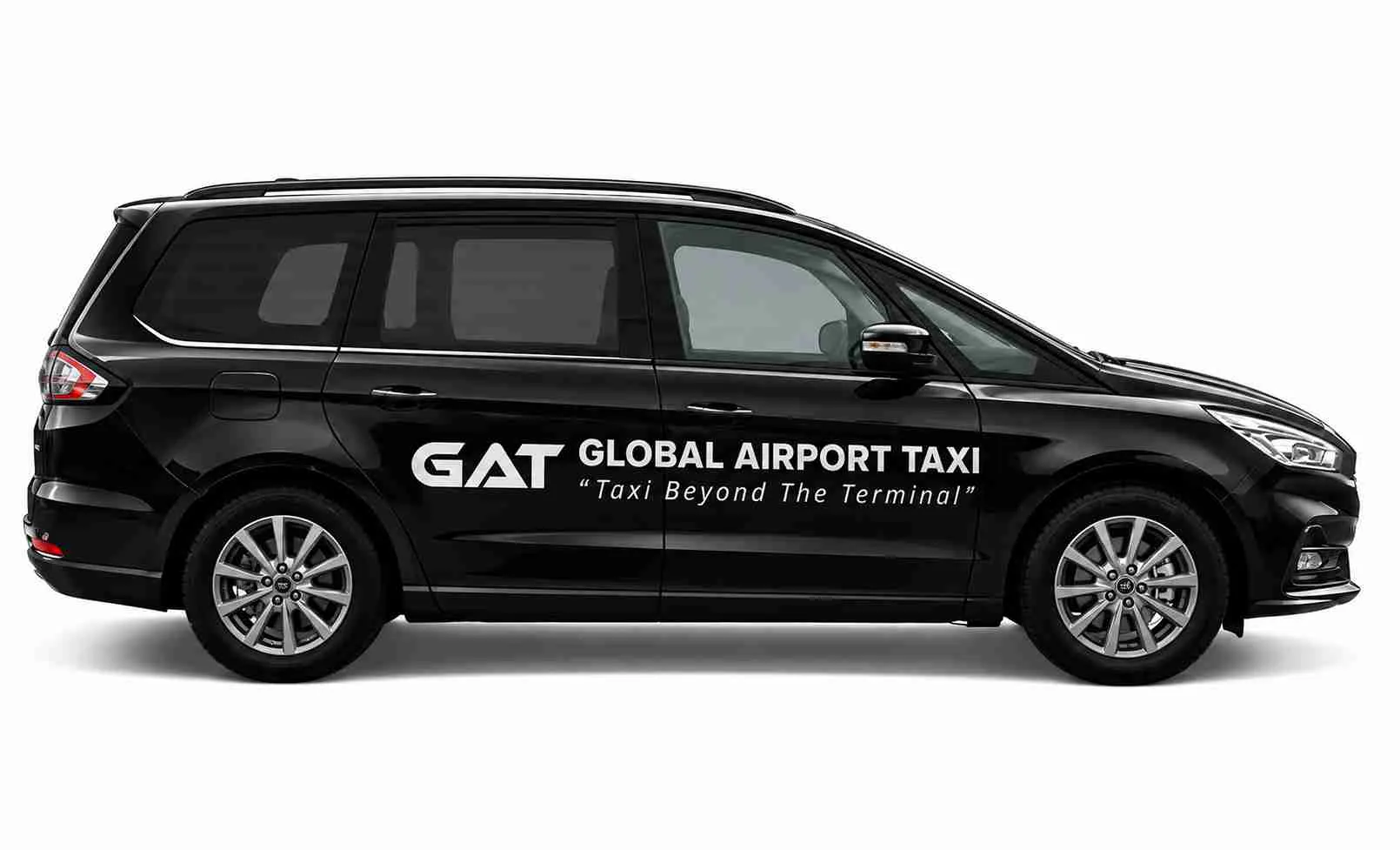 Normally an estate taxi
Estate taxi
4 passengers, 3 large bags
Four people whose cases will not close a saloon boot.
View vehicle →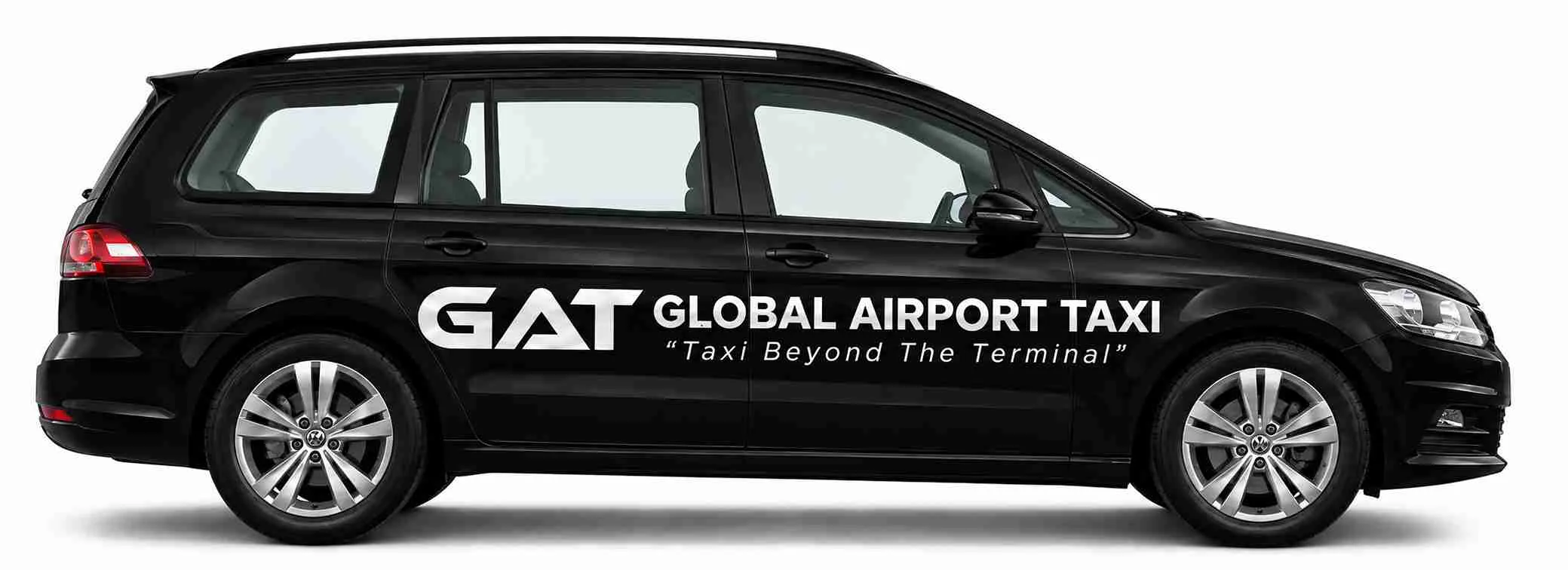 Normally a 6-seater MPV people carrier
People carrier
5 to 6 passengers, 4 to 5 large bags
A family of five or six with a pushchair and a week on the Maresme.
View vehicle →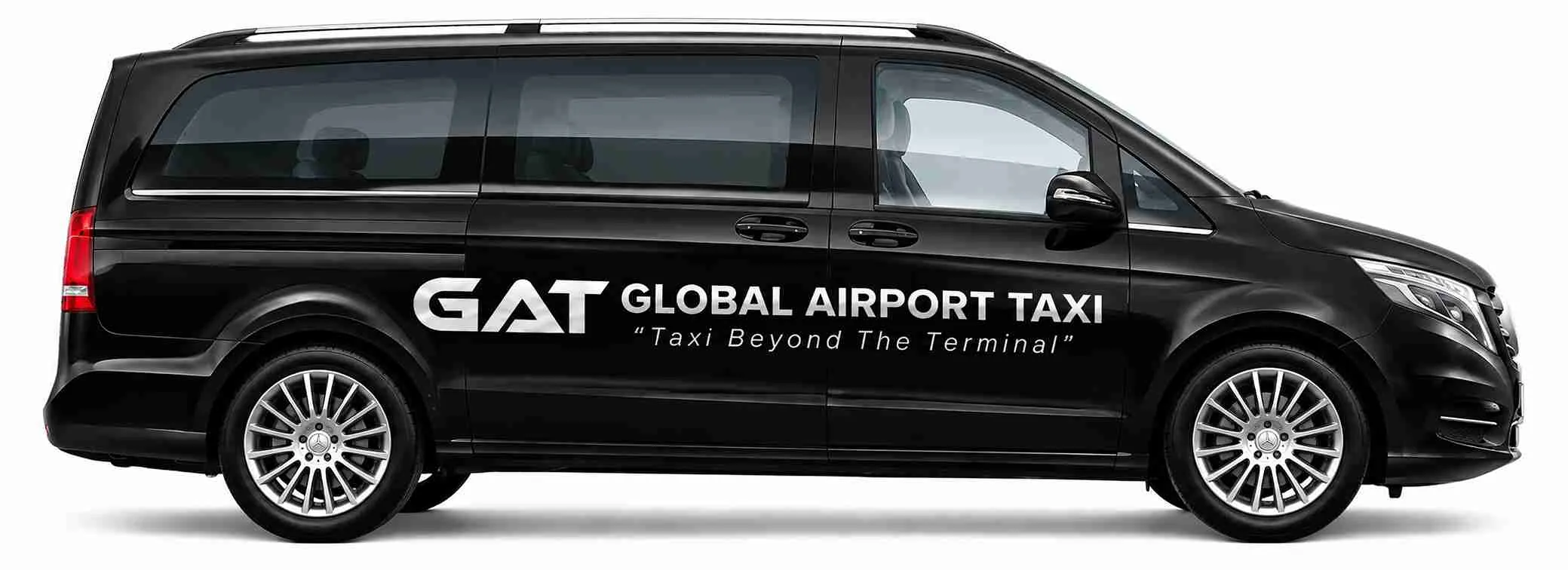 Normally a 7 seater taxi
7 seater taxi
7 passengers, 7 cabin bags
Seven arriving on one flight, travelling light.
View vehicle →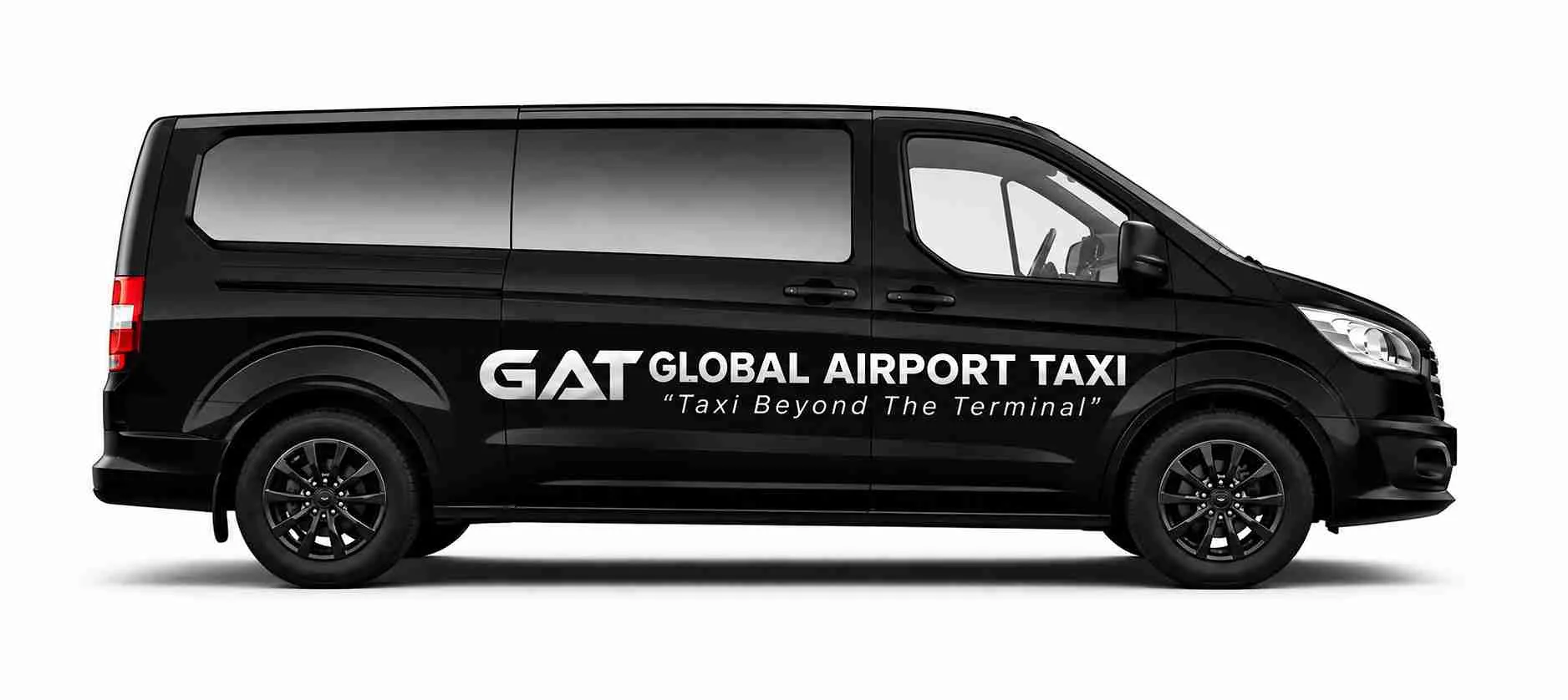 Normally an 8 seater taxi
8 seater taxi
8 passengers, 6 to 8 large bags
Eight people, or six with cruise luggage on an embarkation morning.
View vehicle →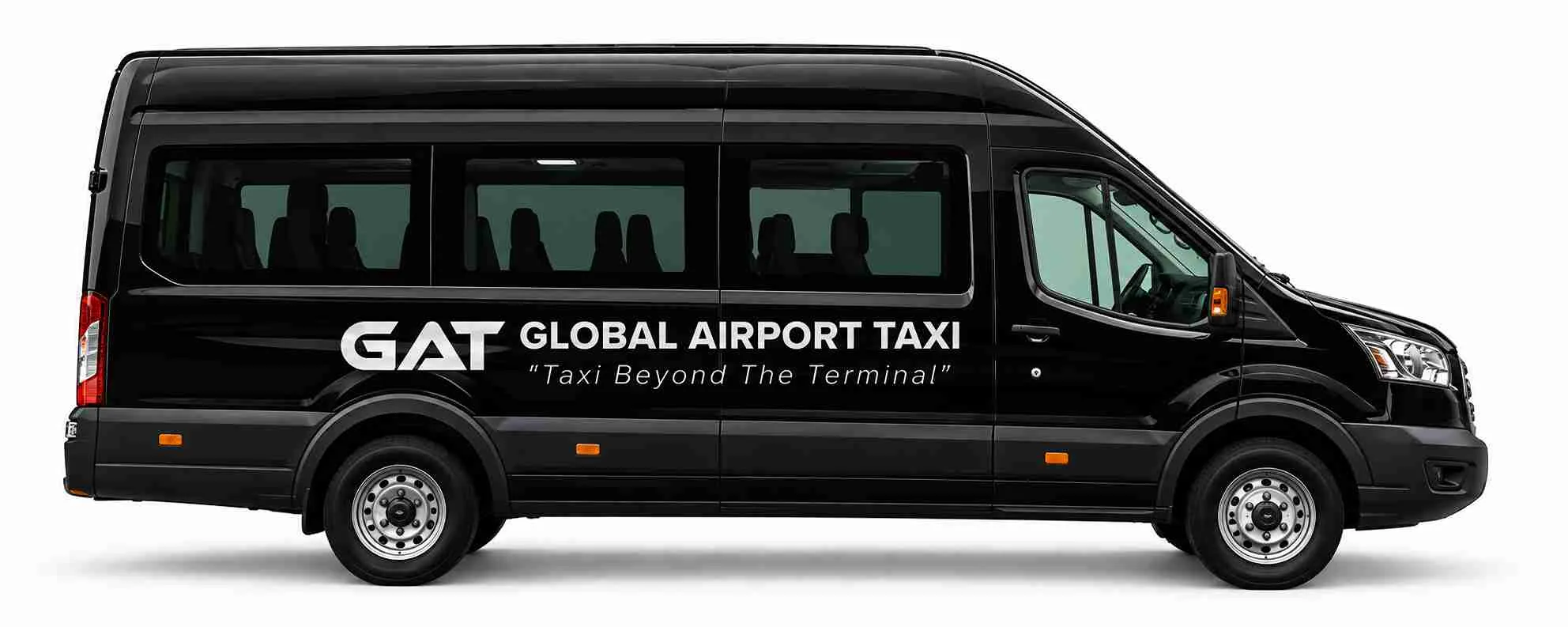 Normally a 16 seater minibus
16 seater minibus
16 passengers, about 14 large bags
A delegation off one flight, kept in a single vehicle.
View vehicle →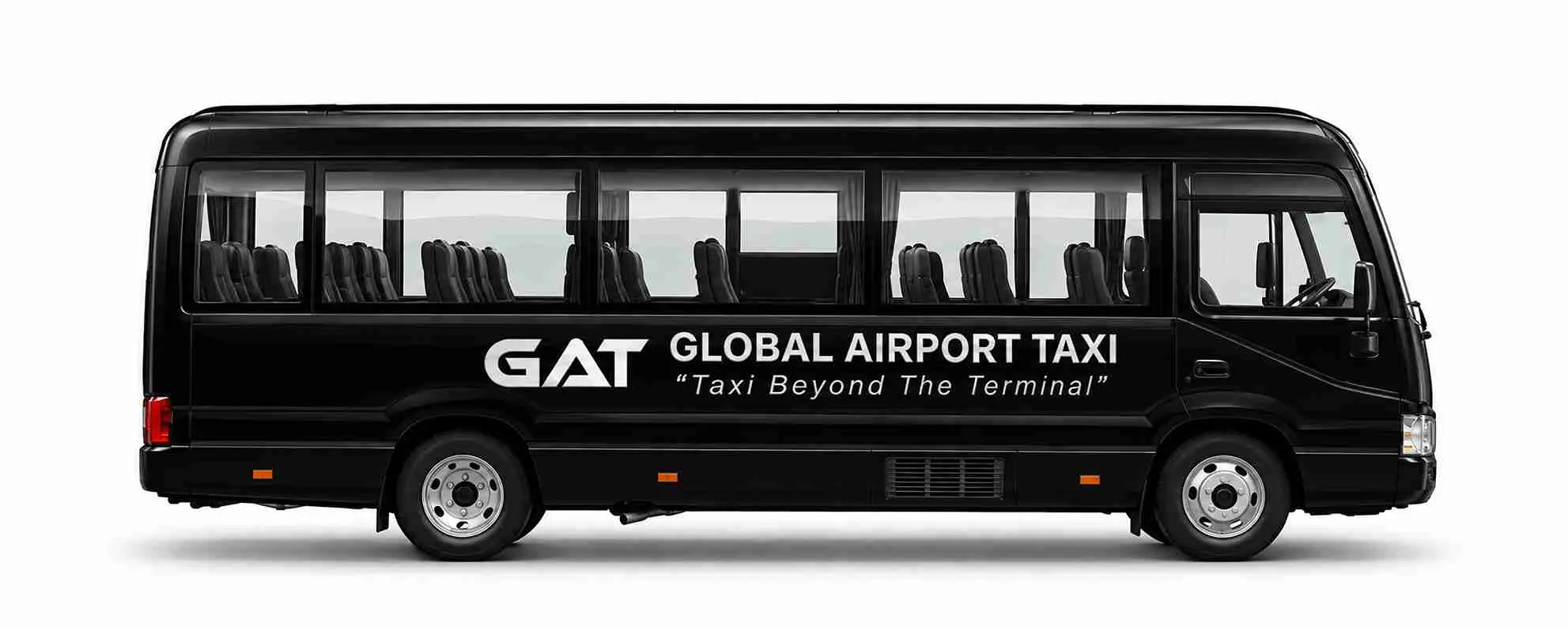 Normally a 30-seater coach
30-seater coach
30 seats
Fira intakes and incentive groups past minibus size.
View vehicle →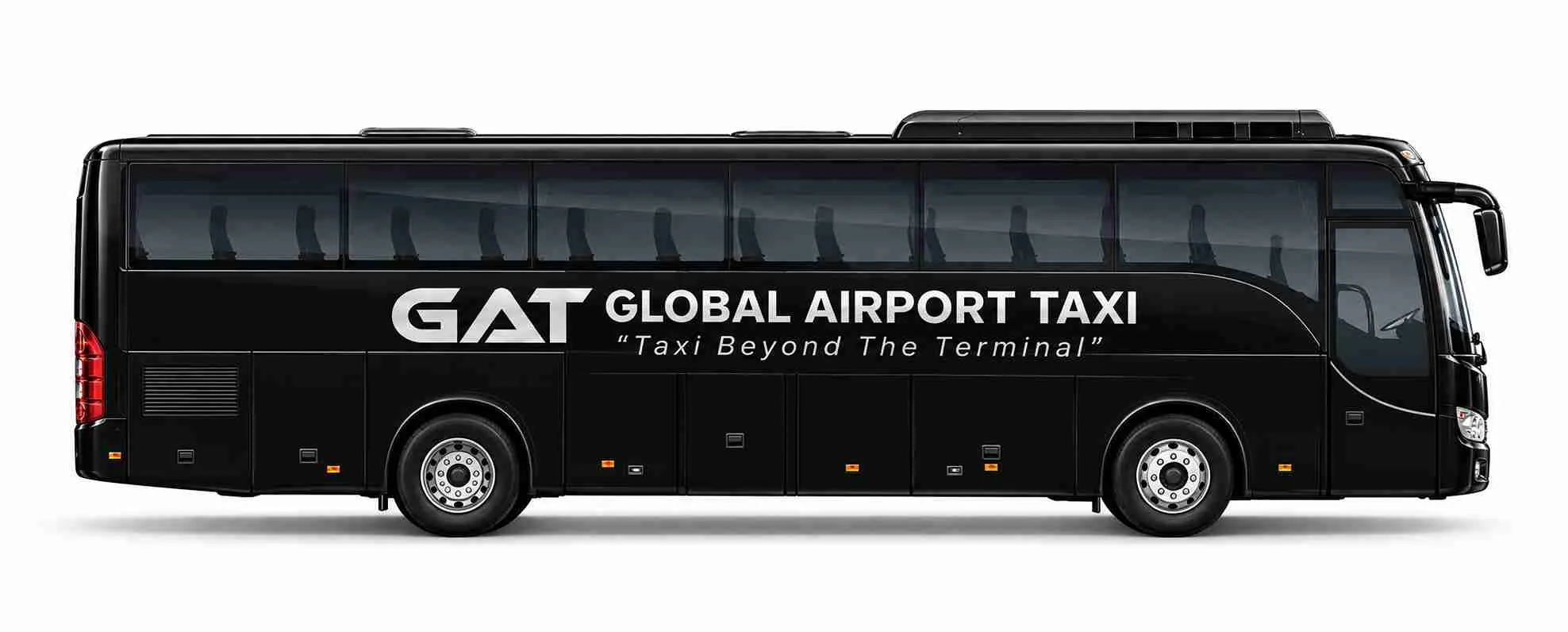 Normally a 50-seater coach
50-seater coach
50 seats
Congress groups and cruise parties, booked well ahead.
View vehicle →| Extra | What to know |
|---|---|
| Child seats | Carriers, forward-facing seats and boosters are all carried free on request. Spanish law wants an approved restraint for any child of 135 cm or under, and a rank taxi will rarely have one, so send the ages and rough weights with the booking. |
| Skis, golf clubs, bikes | All carried, given notice. The figure we need is the length of the item, because that is what decides which load space it fits. |
| Wheelchair-accessible vehicles | Ask at booking with the chair’s measurements and weight, and the ramp vehicle is confirmed against your date and route before you pay. |
The full list lives on our fleet page. Models named here are representative of a class rather than promised individually, and your quote states what is actually allocated. Give us the party size and the bag count and the class follows from it.
Reviews
The scores below are the ones our review widget publishes, checked on 14 October 2026. They come from travellers at airports across our network, and we show a selection of passenger reviews about airport transfers. Every review stays on the platform where it was written.
Excellent4.9453 reviewsShowing all 10 reviews
Excellent service...arrived at terminal and driver was waiting...helped with luggage to the car...smooth drive...perfect overall
Very reliable and easy to get a hold of. I was very confused leaving the airport - user error haha - and they were super helpful. My flight was also delayed and the guy who picked me up was on top of it.
Super affordable and professional service! The pricing was very clear from the start, with no hidden charges, which I really appreciated. Everything went smoothly, and the professionalism of the global airport taxi service stood out. Highly recommended for anyone looking for a hassle-free and budget-friendly option.
Amazing taxi service to the airport! Our driver was friendly, on time, and made the whole trip so easy. The car was clean and comfortable, and we got to the airport right on time. Would definitely use this service again!
Excellent service , driver waited for us as flight was delayed, clean car and smooth ride
I would totally recommend Global Airport Taxi to anyone needing a taxi service for their airport commute. I decided on way to the airport that I was flying out of that I will need a cab service at LHR. They were quick to respond to and accommodated some of my last minute schedule change requests after I had landed at LHR. Totally reliable and willing to be flexible. Outstanding customer support provided by Jennifer and Root. Keep it up guys !!
This was a brilliant service our driver was excellent he was friendly and helpful. Used again for the return journey and driver was professional and ensured we made it to the airport on time with heavy traffic
The service was extremely reliable. My cab arrived exactly on time for my early morning flight, which was a huge relief. Everything went smoothly, and I felt confident choosing this service. Highly recommend global airport taxi for stress-free airport transfers!
Amazing customer service, on time driver helped with cases. A pleasant experience Thank you
Very clean car and on time very polite driver will use them again
These scores cover the whole network rather than Barcelona alone. Trustindex supplies the widget, and every review appears exactly as its author wrote it. Nothing on this page is a review we wrote.
The service
A plain account of the Barcelona airport transfer service before any figures: what it is, how far it reaches, and the four journeys where booking in advance changes the outcome rather than the paperwork.
The short answer A private transfer from Josep Tarradellas Barcelona-El Prat Airport to any address in Barcelona or Catalonia, around the clock, priced per vehicle rather than per passenger — €35 to €42 for the ordinary runs into the centre — agreed in euros before you fly, with the terminal read from your flight number and the driver waiting inside that terminal’s arrivals hall.
A Barcelona airport taxi service booked before you fly rather than queued for: a private transfer by car, estate, people carrier, minibus or coach, door to door between Josep Tarradellas Barcelona-El Prat Airport and any address in Barcelona or Catalonia. One vehicle, one party, nobody else in it.
The city and the whole metropolitan area, then well past it: the Fira and the cruise terminals, the Maresme and the Garraf coasts, Sitges, Salou and Tarragona, the Costa Brava, Montserrat, the Montmeló circuit and the long runs to Andorra and the Pyrenees.
Every hour of every day, from both terminals. A 05:40 landing, a late-night pickup and a Sunday afternoon are priced on the same basis, which is not true of the meter beside us. The return transfer to the airport is booked the same way.
A fixed price per vehicle, in euros. The ordinary runs into the city centre land at €35 to €42 depending on the address, the class and the hour; longer ones are priced on the route. Whatever the figure, you see it at booking and it does not move afterwards, with the airport supplement, the tolls and the waiting already inside it.
We will claim three things: that the figure is agreed before you travel and does not move; that the driver is inside the arrivals hall of the terminal you actually land at, with your surname on a board; and that the pickup is set against the aircraft’s real landing time rather than its printed one. We will not claim to beat the meter on every journey. On a quiet Tuesday afternoon into the Eixample, with no queue and light traffic, the rank is a perfectly good deal and we would rather say so here than have you work it out afterwards.
Anything under about ten kilometres, where the €21.00 floor means the meter charges you for a journey you are not making. Anything outside the metropolitan boundary, where the AMB tariff stops and interurban rates begin. Anything with a group, real luggage, a child seat or a wheelchair, where the problem is the vehicle rather than the fare. And anything landing in a congress week, where the problem is simply whether there is a car at all.
The vehicle and a licensed professional driver. The €4.60 airport supplement. Any toll the route genuinely incurs. Flight arrival monitoring, so the pickup follows the aircraft rather than the timetable. 60 minutes of waiting measured from touchdown. Help with the luggage. A child seat, if you ask for one. That is the list, and there is nothing underneath it.
The AMB restates this tariff every January and the transport operators move on their own calendars. Read the figures above as the shape of the cost, and the booking page for the price.
What it costs
Barcelona publishes its taxi tariff in full, so this page prints it in full rather than summarising it into a range — and then says where our own figure does and does not beat it.
The short answer There is no flat airport fare at Barcelona. A rank taxi runs on the metropolitan meter: €2.80 to start, €1.35 a kilometre on T-1 or €1.66 on T-2, plus a €4.60 airport supplement charged in either direction, and no journey beginning at the airport bills under €21.00. The one fixed fare is €46.00 to the Moll Adossat cruise terminals.
| Tariff | When it applies | Flag drop | Per km | Per hour |
|---|---|---|---|---|
| T-1 | Weekdays, 08:00 to 20:00 | €2.80 | €1.35 | €27.75 |
| T-2 | 20:00 to 08:00 on weekdays, and all day Saturdays, Sundays and holidays | €2.80 | €1.66 | €27.75 |
| T-3 | A fixed price agreed through an approved booking app, meter at zero | From €8.00 | — | — |
| T-4 | The airport to or from the Moll Adossat cruise terminals | €46.00 fixed | — | — |
| Supplement | Amount | When it applies |
|---|---|---|
| Airport | €4.60 | Charged whether the airport is where you start or where you finish |
| Moll Adossat cruise terminals | €4.60 | Same rule, same figure, either direction |
| Fira Gran Via, l’Hospitalet | €3.30 | Journeys that begin there only. It rose from €2.50 for 2026 |
| Barcelona Sants station | €2.55 | Journeys that begin there only |
| A vehicle carrying five to eight | €4.60 | The larger licence class, not a charge for luggage |
| Special nights | €4.60 | 20:00 to 08:00 on 23–24 June, 24–25 December and 31 December–1 January |
The two figures that catch people out
The single most repeated piece of misinformation about this airport is that a rank taxi into the city costs a fixed amount. It never has. What exists instead is a published tariff, a supplement and a floor, and the number at the end of the ride is whatever those three produce once traffic has had its say. Madrid publishes a flat airport fare; Barcelona does not, and a page that tells you otherwise has not read the schedule.
One genuine fixed fare exists here: tariff T-4, €46.00 between the airport and the Moll Adossat cruise terminals, supplements included, in either direction. If you are joining or leaving a ship, that is the number, and it is the city’s rather than anybody’s offer.
It is the clause most visitors have never heard of and the one that costs them. Run the tariff honestly over the seven kilometres to the Fira Gran Via and the arithmetic lands nowhere near €21.00. You pay €21.00 anyway. The same goes for l’Hospitalet, for Cornellà, and for a hotel in El Prat itself four kilometres from the stand. Short hops out of this airport are the worst value on any meter in Spain, and they are exactly where an agreed figure wins.
Barcelona taxis are black with yellow doors, with a licence number, a roof light and a meter, and they carry the tariff on a sticker in the side window. That sticker is the authority: every permitted supplement is printed on it, and anything a driver names that is not printed there is not a supplement. Nobody licensed will approach you inside the terminal offering a ride, either — the rank is outside, and it is the only place a taxi waits.
Ours is €35 to €42 per vehicle for the ordinary runs into the centre, fixed at the moment you accept it. Put that beside a clean, off-peak metered run into the Eixample and the two bands overlap: on that particular journey we are competitive rather than cheap, and we would rather write that down than let you work it out afterwards. What the band does is remove the top end — the traffic, the hour, the detour, the queue you paid for while the meter idled. And it earns its place outright on three journeys: the short hops the €21.00 floor punishes, everything past the metropolitan boundary where interurban rates take over, and the congress weeks when the honest question is not what a car costs but whether there is one. Our own figures are quoted per vehicle for the route, the class and the hour you enter, and are held once you accept them. They are not the rank’s figures, and we do not present them as cheaper than the meter on every journey, because on some they are not: the band above sits inside the range a meter produces on a good day.
Tariff figures are the Àrea Metropolitana de Barcelona’s own 2026 urban schedule, a weighted 2.3 per cent above 2025, reported here. The AMB revises it annually; check the current order before planning around any figure above. There is no per-bag charge in the metropolitan tariff. Suitcases travel free. What legitimately costs more is the vehicle: five to eight passengers is a different licence class carrying its own €4.60 supplement.
A published tariff is a snapshot, not a promise. Barcelona has reset its taxi schedule every year for as long as anyone has been counting, and 2027 will be no different.
Outside the city
Half the destinations on this page sit outside the metropolitan area, where the schedule printed above simply stops applying and a different one takes over. Here it is, with the clause that matters most.
The short answer Journeys that start or end outside the Barcelona metropolitan area run on the Generalitat’s interurban tariff rather than the AMB’s: a reported €0.82 a kilometre on T-6 or €0.89 on T-7, minimums of €7.25 and €7.90, the same €4.60 airport supplement — and, crucially, the fare is reckoned as a closed circuit back to where the taxi started, with the passenger paying the tolls on the return leg too.
| Tariff | When it applies | Per km | Per hour waiting | Minimum |
|---|---|---|---|---|
| T-6 | Monday to Friday working days, 08:00 to 20:00 | €0.82 | €22.47 | €7.25 |
| T-7 | Saturdays and public holidays, and 20:00 to 08:00 Monday to Friday | €0.89 | €24.32 | €7.90 |
| Supplement | Amount | When it applies |
|---|---|---|
| Entering or leaving an airport | €4.60 | The same figure as the metropolitan one, and charged the same way |
| More than four passengers | €4.60 | In a vehicle of up to nine seats, driver included |
| Special nights | €4.60 | 20:00 to 08:00 on 23–24 June, 24–25 December and 31 December–1 January |
| Booked by telephone or radio | €4.60 | The supplement set for the relevant urban area applies |
The clause that decides every long run out of this airport
Everything printed in the fare section of this page is the Àrea Metropolitana de Barcelona’s schedule, and it governs the city, l’Hospitalet, Cornellà, Castelldefels, Badalona and the rest of the metropolitan area. The moment a journey starts or ends outside that boundary it leaves the AMB’s jurisdiction entirely and runs on the Generalitat de Catalunya’s interurban tariff instead. Sitges does. So do Montserrat, Montmeló, Tarragona, Salou, Reus, Girona, the Costa Brava and Andorra — which is to say most of the long runs anyone actually books.
You will find plenty that do. The arithmetic looks easy enough: thirty-six kilometres at €0.82 is a number anyone can produce. It is also wrong, because the interurban tariff reckons the journey as a closed circuit back to where the taxi started and the passenger pays the tolls both ways. A figure that ignores that is not a cautious estimate; it is half the fare. We have printed the tariff and declined to print the estimate.
Three things. If you are taking a rank taxi to Sitges or Salou, ask the driver to confirm how the return leg is being reckoned before you set off. If you are comparing a metered fare against an agreed one on a long run, you are not comparing like with like unless the return is in both. And if a rank driver declines a long out-of-area job at a busy moment — which happens — now you know why the economics of it are not simple.
Interurban figures are the Generalitat de Catalunya’s own, set by Order TER/215/2025 of 22 December 2025 and in force from 25 December 2025, a general rise of 2.2 per cent. Luggage is free on the interurban tariff too, as long as it fits in the boot or on a roof rack within the traffic rules. Empty seats may be used for it where the size and shape allow.
Supplements change faster than tariffs do: the Fira supplement rose by a third for 2026 and the special-night one by more than a pound. Check the window sticker on the day.
The buildings
Your terminal decides your taxi pickup location, which routes into the city are open to you, and how long you queue. At Barcelona-El Prat that is not a formality.
The short answer Barcelona-El Prat has two terminals about 1.8 kilometres apart with no walking route between them: T1, a single building with one arrivals level, and T2, three linked sections A, B and C each with their own doors and taxi rank. Only T2 has a Rodalies station, reached from T2B by a 200-metre covered footbridge.
| Terminal | Who uses it | Gates | What it means for you |
|---|---|---|---|
| T1 | Long-haul and most full-service carriers; the Vueling, Level and Iberia operation | A to E | One building, one arrivals level, and a rank that runs the length of the kerb on Level 0. The arrivals hall is long enough that the far doors are a five-minute walk from the near ones, so agree a door rather than a terminal. |
| T2A | Part of the low-cost and regional operation | Shared with 2B | The western section of the T2 complex. Its own doors, its own rank, its own queue. |
| T2B | The busiest of the three T2 sections, and the one with the train | Shared with 2A | A covered footbridge of about 200 metres, with lifts and escalators, links 2B to the Rodalies station. If you are connecting to an AVE at Sants, this is the section you want. |
| T2C | The quiet end of T2 | Own gates | The least crowded rank of the three and the furthest from the train footbridge. When the queue at 2B looks grim, 2C is often two minutes away and empty. |

T1 is a single building about 1.8 kilometres from the T2 complex, and T2 is three linked sections, A, B and C, each with its own arrivals doors and its own taxi rank. Nothing walks between T1 and T2: the free shuttle bus is the only way.
The terminal does not change what a taxi costs at Barcelona. It changes almost everything else. The Rodalies train exists at T2 and does not exist at T1. The Aerobús is a different line from each. The three T2 ranks are three separate queues that can be twenty minutes apart in length. And a driver sent to the wrong building is 1.8 kilometres and a shuttle ride away, which is why we take the terminal off your flight number instead of asking you to supply it.
The free green inter-terminal bus. It is the only link between T1 and T2: there is no walking route. It runs 24 hours, reported at every 4 minutes from 08:00 to 20:00, every 7 until midnight and every 20 overnight, and takes 10 to 12 minutes end to end. If you are connecting between the two buildings, or if you landed at T1 and want the train, that leg is real time and it belongs in your plan rather than in your surprise.
Aena has an approved expansion with a satellite terminal, reported at about 1.5 kilometres beyond T1 and intended to lift capacity toward 70 million a year. It is not open, and no opening date is published that we would repeat.
At the rank
Four taxi ranks, six rules that govern a Spanish one, and an honest account of the hours when the line is bad.
The short answer The rank sits outside arrivals at each terminal: Level 0 at T1, and one each outside T2A, T2B and T2C. You take the car at the head of the line, a journey starting at the airport bills at least €21.00, and waits are minutes off-peak but reported at 30 to 45 minutes in the mid-morning long-haul bank, the early evening wave and congress weeks.
| Terminal | Where the taxi rank is |
|---|---|
| Terminal 1 | The T1 taxi rank is on Level 0, straight out of the arrivals hall, signed with the black-and-yellow taxi pictogram. It runs the length of the kerb |
| Terminal 2A | Outside the 2A arrivals doors, at the western end of the complex |
| Terminal 2B | Outside the 2B arrivals doors. The busiest of the three T2 taxi ranks, because the train and the footbridge are here |
| Terminal 2C | Outside the 2C arrivals doors. Usually the shortest line of the four, and two minutes’ walk from 2B |
| When | What is happening | What to expect |
|---|---|---|
| 10:00–12:30 | The long-haul bank lands at T1 | The longest single queue of the day |
| 17:00–21:00 | The European short-haul wave meets the city rush hour | A queue, and then a slow road |
| Friday and Sunday | Weekend traffic in both directions | T2 ranks stretch to T1 lengths |
| Congress weeks | ISE, MWC, KubeCon and the rest | Reported waits of 30 to 45 minutes |
| After 00:30 | The Aerobús has stopped for the night | A short queue, but taxi or Nitbús only |
Choosing a nicer one is not how a Spanish rank works, and the marshals will send you back. If you need a larger vehicle, say so before you join rather than at the front.
A journey beginning at the airport bills at least €21.00 once the supplements are counted, whatever the meter would otherwise have read.
Every licensed taxi carries the current tariff and every permitted supplement printed on a sticker in the side window. A surcharge that is not on that sticker is not a surcharge.
Most Barcelona taxis take cards and the fare and supplements are displayed by law, but readers fail. Ask at the start rather than at the destination.
It carries the licence number, the route and the fare. It is what makes a complaint to the Institut Metropolità del Taxi go anywhere, and it is how a phone comes back off the back seat.
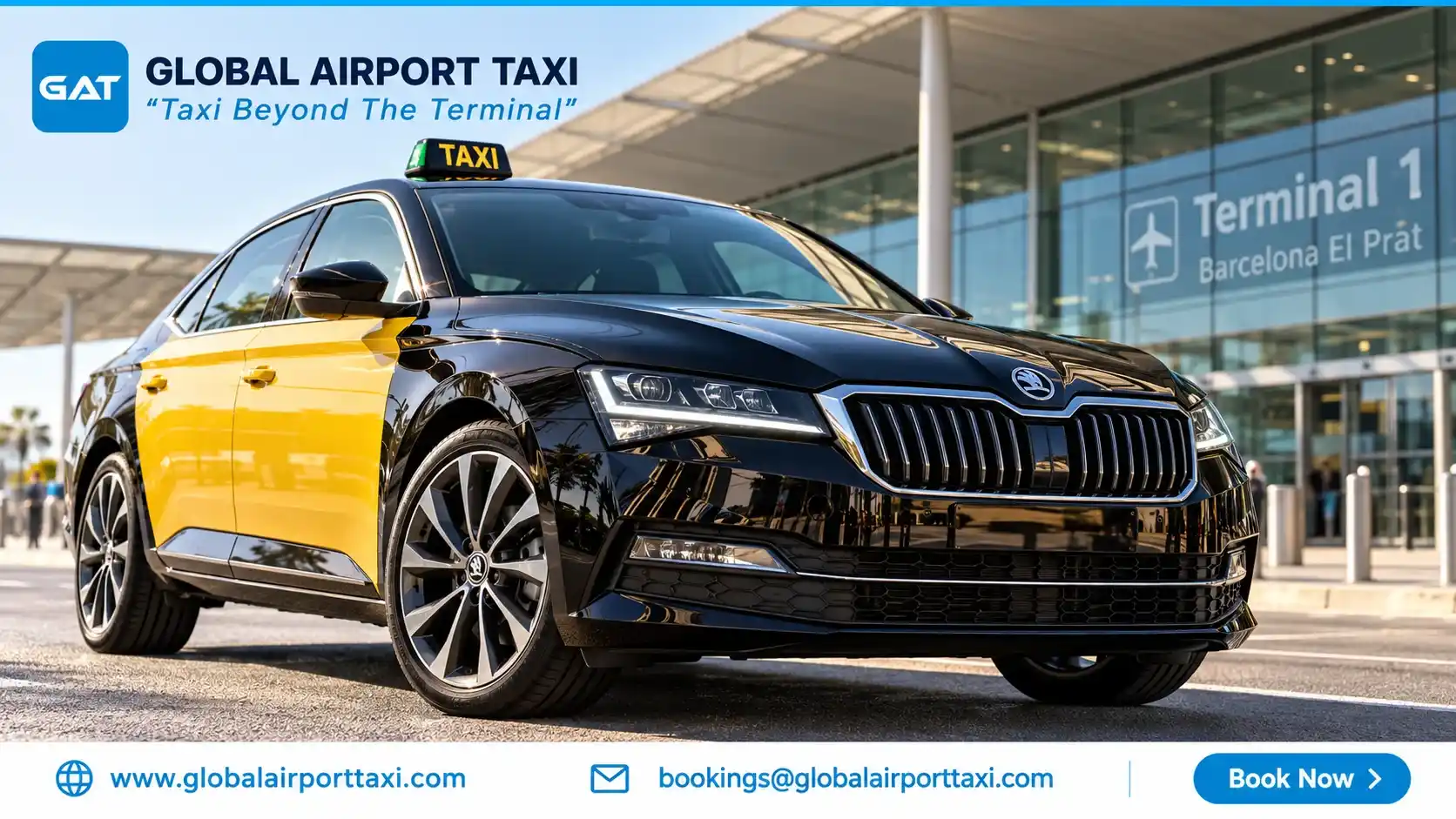
Barcelona taxis are black with yellow doors, with a licence number, a roof light and a meter, and they wait at the rank. Anyone offering a ride inside the terminal is not one.
Queue lengths are reported observations rather than a published figure. Aena and the Institut Metropolità del Taxi publish no rank waiting time, and anyone quoting one to the minute is guessing.
Your position
The AMB publishes a list of what a taxi passenger may insist on. Almost no transfer page reproduces it, which is odd, because it is the part a worried traveller actually needs.
The short answer A Barcelona taxi passenger may choose the vehicle at a rank and the route, set the temperature and the windows, be helped with luggage, be spoken to in either official language, be given change up to €20 and receive a printed receipt carrying the licence number, the holder’s tax number, the registration, the price and the date; complaints go to the Institut Metropolità del Taxi online or by post, and the receipt is what makes one possible.
| Your right | What it means in the car |
|---|---|
| Choose the car at the rank | You may take the vehicle you want rather than the one at the front, unless a shift system is running for organisational reasons. |
| Choose your own route | The route that suits you is yours to choose, not the driver’s to impose. |
| Set the temperature and the sound | The interior temperature and the volume are the passenger’s call. So are the rear windows and the air conditioning — and if a request is refused, you are entitled to get out. |
| Be helped with the luggage | Loading and unloading is the driver’s job, and so is helping you in and out if you have reduced mobility. |
| Be spoken to in any official language | Catalan or Spanish, as you prefer. |
| Know the licence number and the fares | Both must be available to you before and during the journey. |
| Get in and out safely | Only where safety is guaranteed, which is why a driver may decline a particular kerb. |
| Be given change up to €20 | Drivers are required to carry at least €20 in change. |
| Travel with an assistance dog free | A guide or assistance dog accompanying a passenger with reduced mobility travels at no charge. |
| Receive a proper receipt | Showing the price, the origin and destination, the licence number, the licence holder’s tax number and the vehicle registration. |
Ask for it, every time, printed. It has to carry the licence number, the licence holder’s NIF, the vehicle registration, the price and the date of the journey, and without it a complaint has nothing to attach itself to: no licence number means no driver to identify, and no price means nothing to dispute. It is also how a phone comes back off a back seat. Thirty seconds at the end of a journey buys you every option you might need afterwards.
The AMB’s own wording is careful, and worth reading as written: you may pay cash, or by card “provided that the taxi indicates that this system of payment is accepted”. Card acceptance is therefore conditional rather than universal, whatever you have read elsewhere. In practice most Barcelona taxis take cards and many take contactless and phone payment on an app booking, but the rule does not guarantee it, so ask before the journey rather than at the end of it.
The complaint goes to the Institut Metropolità del Taxi, and there are two routes. Online through tramits.amb.cat, which requires a digital certificate or idCAT Mòbil to prove who you are — which is the better route if you have one, and almost no visitor does. Or on paper: the complaint form, printed, signed and posted to the Institut Metropolità del Taxi, Carrer 62 núm. 18, Zona Franca, 08040 Barcelona. There is also a telephone, 932 235 151, and an address for the sanctions and claims department, sancionsimet@amb.cat, open 09:00 to 13:30, by appointment. No deadline is published, but the receipt is what makes any of it work, so keep it until you are home.
Different from our own waiting policy, and worth knowing before you try it. A driver asked to wait while you do something may require the fare so far plus a deposit against the waiting time, and may end the service and leave if you do not come back. If your plan involves a car waiting at Montserrat or a stop on the way to Sitges, that is a booking rather than an arrangement made through a window.
The rights above are the Àrea Metropolitana de Barcelona’s own, published for users of the metropolitan taxi, and they govern a rank taxi rather than a private transfer. The Institut Metropolità del Taxi is reported to have opened 144 sanctioning files since 2024, against 192 in the whole of 2023, with fines of up to a reported €1,400 and six licences revoked from drivers sanctioned twice.
Compared honestly
Eight ways out of this airport, including the two that beat us outright on the right journey and the one we would argue you out of booking.
The short answer From Barcelona-El Prat the Aerobús is a reported €7.45 to Plaça de Catalunya, the L9 Sud metro a reported €5.90 on the compulsory airport ticket, the R2 Nord train from T2 a reported €2.90 to Sants in about 19 minutes, and city bus 46 a reported €2.90; a rank taxi runs on the meter with a €21.00 floor, and our own car is a figure agreed before you fly.
| How | What it costs | How direct | What it suits |
|---|---|---|---|
| Pre-booked transfer (ours) | €35 to €42 into the centre, fixed before you fly | Door to door, no queue | A late arrival, a group, luggage, a first visit, a cruise morning |
| Rank taxi | The meter, with a €4.60 airport supplement and a €21.00 floor | Door to door, after the queue | An off-peak arrival by someone happy to watch a meter |
| Aerobús A1 and A2 | A reported €7.45 single, €12.85 return | 30 to 35 minutes to a square, then your own way | One person with a case, heading to Catalunya or Espanya |
| Metro L9 Sud | A reported €5.90, on the airport ticket only | about 32 minutes, with changes | The Fira, Zona Universitària, light bags |
| Train R2 Nord | A reported €2.90 single, about €1.30 on a T-casual | 19 minutes to Sants from T2 | A T2 arrival connecting to an AVE at Sants |
| City bus 46 | A reported €2.90, the ordinary one-zone fare | 50 to 70 minutes to Plaça d’Espanya | Budget travel in daylight with one bag |
| Nitbús N17 and N16 | A reported €2.90 | Slow, but it runs when nothing else does | The 03:00 arrival on a budget |
| Ride-hailing (VTC) | Variable, and capped by licence | Booked ahead only, from marked bays | Almost nobody arriving at BCN in 2026 — see the section below |
One person, a cabin bag, landing at T2 in daylight, heading for Sants to catch an AVE. Walk the footbridge and take the R2 Nord: a reported €2.90, about 19 minutes, and the platform is 200 metres from the door you came out of. A private car on that trip buys you very little and we would rather say so than sell it.
One or two people with light luggage going to Plaça de Catalunya or Plaça d’Espanya in ordinary traffic. A reported €7.45, real luggage holds, every few minutes, around the clock. Note what it is not: your ordinary travel card does not cover it, it is a separate premium service, and it leaves you at a square rather than at an address.
Four points. Three or more people, because every fare in that table except ours and the taxi’s is per head and three Aerobús singles are most of a metered fare. Real luggage, because the R2 Nord means a change and the L9 Sud metro means escalators. A landing after the Aerobús stops, when the choice narrows to a car or a Nitbús. And any address that is not near a station, which in a city this dense is most of them.
Barcelona has unusually good public transport from its airport, and this page is not going to pretend it has not. What a booked car sells here is not speed and it is certainly not price per head: it is a known figure, a known vehicle and a driver who is already there when a flight lands two hours late at 01:00.
Transport fares are the operators’ own — TMB, Aerobús and Rodalies de Catalunya — and are reported here as published. They change with each network tariff revision; the airport metro ticket and the integrated fares both moved in January 2026.
Treat all of it as planning arithmetic. The figure that governs your journey is the one on the screen at the moment you accept it.
Ride-hailing
Catalonia regulates private hire harder than almost anywhere in Europe, and it tightened again this year. Here is what that actually means at the kerb.
The short answer Uber, Bolt and Cabify operate in Barcelona as VTC rather than taxi, under Catalan rules that require advance booking, forbid street hailing and cap the licence pool, so they cannot be summoned on arrival; the licensed taxi, the taxi-hailing apps such as Free Now and PideTaxi, and a pre-booked transfer are the realistic ways out of Barcelona-El Prat.
These dispatch the same licensed black-and-yellow cars you would find at the rank, on the same metered tariff plus a booking fee. In Barcelona they are the dependable app route, because the car behind the app is a taxi rather than a VTC.
Present in name and constrained in practice. A VTC must be booked in advance rather than hailed, cannot cruise for fares or use the taxi lanes, cannot show you a live car before you book, and comes from a licence pool that is capped and shrinking.
Priced and confirmed before you fly, with the flight tracked and the driver waiting through a delay. This is what we do, stated plainly rather than dressed up as something new.
Desks at both terminals, and the right answer for the Priorat or the Costa Brava. For the city it is a trap: Barcelona’s low-emission zone covers most of the city, l’Hospitalet and Sant Adrià, and runs working days, monday to friday, 07:00 to 20:00. A car with no DGT environmental label may not circulate in it at all, the fine is a reported €200, rising by 30 per cent to €260 during a pollution episode, and a foreign-plated car has to be registered before it goes anywhere. Add scarce parking and a hotel garage, and the cheap rental stops being cheap.
Cheaper per head than a private car, and they leave when they are full rather than when you arrive, dropping other passengers before you.
Genuinely useful if you are sleeping in the El Prat airport hotel belt before an early flight, and irrelevant to anyone going into the city.
Catalonia licenses private hire as VTC rather than taxi, and the 2022 decree is already the strictest regime in Spain: a VTC must be booked in advance rather than hailed, may not cruise for fares or use the taxi lanes, and may not show you a car’s live position before you book.
A new Catalan taxi law has been through parliamentary committee during 2026 — the Parlament rejected an amendment to reject it outright — and the draft would declare taxi a service of general economic interest and wind urban VTC licences down as they expire. It is a bill in process, not law, and we will not describe it as settled.
What this means on the day you land: the black-and-yellow taxi is the default, the taxi-hailing apps dispatch those same cars, and the VTC apps are for booking ahead rather than summoning on arrival. If you are used to opening an app on the airbridge and watching a car approach, that is not how this airport works, and knowing it before you land is worth more than any price comparison.
This is live legislation. The bill described above is in parliamentary process and is not law; implementation dates and licence numbers have shifted more than once. Check the current position with the Generalitat de Catalunya or the AMB before you plan a flight around a VTC.
Meeting your driver
Meet and greet at Barcelona Airport arrivals, in whichever of the four halls is yours: where we stand, the number that reaches the car, and what a late aircraft does and does not cost you.
The short answer At Barcelona-El Prat the driver stands inside the arrivals hall of your own terminal, beyond baggage reclaim, with your surname on a board — never at the kerb. The terminal is taken from your flight number, and because the booking follows the aircraft rather than the schedule, a late landing costs nothing and brings 60 minutes of free waiting from the moment the wheels touch down.
T1 has one arrivals hall. T2 has three. That is four places a driver could be standing and only one of them is right, which at an airport with no walking route between its buildings is a two-kilometre mistake rather than a two-minute one. The flight number settles it before anyone leaves home, and your confirmation names the hall and the door rather than just the airport. Our guide to meet-and-greet airport service sets out what the service is and is not, at any airport.
Your confirmation carries a number for the journey itself, not a switchboard. Ring it from inside the building, where there is signal and somewhere to stand. The mobile number we ask for at booking does the same job in reverse: it is how the driver reaches you when the aircraft is parked out on a remote stand and the walk in takes twenty minutes.
None of the three is your problem to solve. The booking is attached to the flight number, so a late inbound simply drags the pickup along with it; nobody is sitting on a meter while you queue at the border. Waiting is free for 60 minutes from wheels down, and 90 where your bags have not flown with you. Past that the charge is CONFIRM: the per-minute or per-hour rate once free waiting ends. A diversion gets re-planned rather than invoiced, and a cancellation moves the booking rather than burning it.
If someone is collecting you rather than a driver, the thing to tell them is that the kerb is not a waiting room. Aena’s Express car park sits on the departures roadway at each terminal and gives the first 10 minutes free; past that you pay for the whole stay from the moment you arrived, the stay is capped, and a car left beyond the cap can be towed. The practical answer is that they wait in the car park and you ring when you have your bags. On a booked transfer that charge was settled inside your figure, which is the small, invisible part of what a meet-and-greet actually buys.
Airlines move flights between T1 and T2, sometimes late, and at this airport that is not a detail — it is a different building. Tell us and the driver moves, at no charge. It is the one change here that costs nothing and causes the most trouble when nobody mentions it.
Special requests
Everything that is not simply a seat: what it costs, what notice it wants, and whether it changes the car or only the paperwork.
The short answer Carriers, forward-facing seats and boosters are all carried free at Barcelona-El Prat, as is an assistance dog and a wheelchair that folds. A chair that does not fold needs the ramp vehicle with 48 hours of notice. Ski bags, golf clubs and Fira stand materials alter which vehicle turns up, not the price on it.
| Seat | What it does | Generally supplied for |
|---|---|---|
| Infant carrier | Rear-facing, in the back, which is what Spanish law requires | sold for babies up to roughly 13 kg |
| Forward-facing seat | Harnessed, for a toddler past the carrier | sold for roughly 9 to 18 kg, which is most toddlers |
| Booster | Lifts the child so the adult belt sits on the shoulder | sold from roughly 15 kg up, and needed until the child passes 135 cm |
| Item | What it changes |
|---|---|
| Golf clubs | Two sets and four cases together need the 8-seater; the MPV tailgate will not close. |
| Skis and boards | Baqueira and Andorra both run all winter. Give us the count, not just the party size. |
| Bicycles | Boxed or bagged, and the measurement we need is the length. |
| Pushchairs and travel cots | They count toward the load. A folding pushchair rides free and changes no class. |
| Musical instruments | Case dimensions, please. Anything cello-sized gets a seat of its own. |
| Congress stands and samples | ISE and MWC weeks bring crates rather than suitcases. Dimensions decide the vehicle. |
Spanish law wants an approved restraint for any child of 135 cm or under, and that child in the rear seats whatever their age. A rank taxi will rarely have one. That is the practical problem at a rank: a family landing at T2 with a two-year-old has no way of knowing whether the car at the head of the queue carries anything suitable, and no way to go and find one that does. On a booking it is settled in advance and costs nothing. Send the ages and rough weights with the booking rather than producing them at the kerb. Our child car seat guide for airport transfers goes through the types and the rules at more length. CONFIRM: the exact weight and height bands of the seats we stock
A folding chair rides free in any class on the table, with no notice, and free in a rank taxi too. A rigid frame or a powered chair is a different booking: the accessible vehicle, 48 hours ahead, with the make, the measurements and the weight, because a ramp has a limit. One thing worth stating plainly, because the fear is common and the fact is reassuring: the AMB is explicit that an adapted taxi runs on the same meter and the same annual tariff as any other. There is no accessibility surcharge in Barcelona. What there is, is scarcity — adapted vehicles are a small part of the fleet, so waiting for one to reach the head of a rank at a set hour is not a plan, and booking is. Assistance inside the terminal is separate again: that is Aena’s service, arranged through your airline, reported as wanting at least 48 hours.
An assistance dog travels free every time, in our cars and in a rank taxi, and needs no notice beyond a word at booking so the journey goes to a driver who is expecting one. Anything else is still open: CONFIRM: whether we carry animals other than assistance dogs, on what terms, and whether a carrier is required Where an animal does travel it eats into the vehicle’s stated capacity rather than riding alongside it.
Not one of these changes the price. Every one of them can change the car. A Gran Via stand is priced off its dimensions rather than its box count, and a February run up to Baqueira or Andorra is priced off how many ski bags are coming — the number nobody volunteers until the driver is looking at the boot.
We set one of the numbers on this page and read the rest off other people’s schedules. We will hold ours once you accept it, and we will not promise theirs.
Booking and cancellation
What an online booking needs, when the money moves, how long you keep the right to change your mind, and what happens after that.
The short answer Booking a car at Barcelona-El Prat takes 12 hours of notice and the full euro amount at the time of booking. The free cancellation window closes 24 hours before pickup; free waiting runs 60 minutes from touchdown; child seats cost nothing; and moving the job from T1 to T2 or back costs nothing either.
| Vehicle | Free to cancel until | After that |
|---|---|---|
| Cars and 8-seaters | 24 hours before the pickup | CONFIRM: the retention on a late car cancellation |
| Minibuses, 9 to 16 seats | CONFIRM: the free window on a 9-to-16-seat minibus | CONFIRM: the retention on a late minibus cancellation |
| Coaches, 17 seats and up | CONFIRM: the free window on a coach of 17 seats or more | CONFIRM: the retention on a late coach cancellation |
A cancelled saloon finds another job inside the hour. A cancelled coach does not: it was taken off the road for your morning and that morning is gone. The free window therefore widens with the vehicle, and the table above prints all three sizes rather than one figure that would be wrong for two of them.
Half the transfer pages on the internet promise free waiting and free cancellation without saying for how long or until when, which is an advertisement dressed as a term. The table above is the actual policy. Where a figure has not reached us yet it says CONFIRM in plain sight. That is uglier than a smooth sentence and considerably more use to you.
Twice a year this city absorbs more arrivals in four days than it has vehicles for. ISE in February and MWC a few weeks later fill the hotels, fill the Gran Via corridor and empty the rank, and no amount of operational planning on our side changes the arithmetic. The best way to book a Barcelona airport taxi into one of those weeks is weeks in advance rather than days — and once you have, the free window above is what protects you if the plan changes.
Airlines renumber flights, swap terminals and cancel outright; trips get cut short. Send us the change and the job follows it. Where the change touches the route, the class or the head count it is re-priced first and you choose whether to accept the new figure. Nothing is silently re-rated after the fact, and nothing is charged for a change we were told about.
Metered fares are arithmetic performed in traffic, which is why no honest page prints a single number for them. Ours is fixed in advance precisely because theirs cannot be.
Everywhere we go
Filter by area or type a street. The kilometres and minutes are our own, measured door to door on the roads a car actually takes.
The short answer We cover Barcelona and Catalonia from the airport: the centre at 13 to 19 kilometres, the Fira at 7, the cruise terminals at 15, Castelldefels at 14, Sitges at 36, Montmeló at 45, Montserrat at 60, Salou at 100, Girona at 115 and Andorra at 200.
Showing all 32 destinations
| Where | Area | Road | Drive | Worth knowing | Book |
|---|---|---|---|---|---|
| Plaça de Catalunya | Centre | about 16 km | about 30 min | The benchmark run, and the Aerobús terminus | Price it, Plaça de Catalunya — priced on the booking form |
| Plaça d’Espanya | Centre | about 13 km | about 25 min | The Fira Montjuïc side of the city | Price it, Plaça d’Espanya — priced on the booking form |
| Barcelona Sants | Centre | about 15 km | about 25 min | The AVE station, and the closest major one to BCN | Price it, Barcelona Sants — priced on the booking form |
| Sagrada Família | Centre | about 17 km | about 35 min | Slow at every hour of the day | Price it, Sagrada Família — priced on the booking form |
| Gothic Quarter and Born | Centre | about 17 km | about 35 min | Narrow streets; the last 400 metres are on foot | Price it, Gothic Quarter and Born — priced on the booking form |
| Barceloneta and Port Vell | Centre | about 18 km | about 35 min | Slow through the old port | Price it, Barceloneta and Port Vell — priced on the booking form |
| Passeig de Gràcia | Centre | about 16 km | about 32 min | The hotel belt, and the Gaudí houses | Price it, Passeig de Gràcia — priced on the booking form |
| Gràcia and Park Güell | Centre | about 19 km | about 38 min | The hill above the Eixample | Price it, Gràcia and Park Güell — priced on the booking form |
| Camp Nou and Les Corts | Centre | about 13 km | about 25 min | Add twenty minutes on a match day | Price it, Camp Nou and Les Corts — priced on the booking form |
| Parc del Fòrum and Poblenou | Centre | about 22 km | about 38 min | The Primavera Sound site | Price it, Parc del Fòrum and Poblenou — priced on the booking form |
| Fira Gran Via | Metropolitan | about 7 km | about 13 min | The congress halls, and the airport minimum usually decides this one | Price it, Fira Gran Via — priced on the booking form |
| Moll Adossat cruise terminals | Metropolitan | about 15 km | about 25 min | The one genuine fixed fare at this airport | Price it, Moll Adossat cruise terminals — priced on the booking form |
| L’Hospitalet de Llobregat | Metropolitan | about 9 km | about 18 min | Beside the Fira, and much of the congress hotel stock | Price it, L’Hospitalet de Llobregat — priced on the booking form |
| Cornellà and Esplugues | Metropolitan | about 11 km | about 20 min | The western business parks | Price it, Cornellà and Esplugues — priced on the booking form |
| Badalona | Metropolitan | about 26 km | about 35 min | North along the coast road | Price it, Badalona — priced on the booking form |
| Sant Cugat and Sant Just | Metropolitan | about 24 km | about 32 min | Over the Collserola ridge | Price it, Sant Cugat and Sant Just — priced on the booking form |
| El Prat de Llobregat | Metropolitan | about 4 km | about 10 min | The airport town itself | Price it, El Prat de Llobregat — priced on the booking form |
| Castelldefels and Gavà Mar | Coast | about 14 km | about 22 min | Still inside the metropolitan area | Price it, Castelldefels and Gavà Mar — priced on the booking form |
| Sitges | Coast | about 36 km | about 45 min | Interurban rates begin beyond the metropolitan boundary | Price it, Sitges — priced on the booking form |
| Vilanova i la Geltrú | Coast | about 50 km | about 50 min | The Gar raf coast, past Sitges | Price it, Vilanova i la Geltrú — priced on the booking form |
| Mataró and the Maresme | Coast | about 40 km | about 45 min | North of Badalona on the C-32 | Price it, Mataró and the Maresme — priced on the booking form |
| Lloret de Mar | Coast | about 90 km | about 70 min | The southern Costa Brava | Price it, Lloret de Mar — priced on the booking form |
| Blanes and Tossa | Coast | about 85 km | about 70 min | The Costa Brava proper begins here | Price it, Blanes and Tossa — priced on the booking form |
| Salou and PortAventura | Long distance | about 100 km | about 75 min | The long southern run; a fixed figure earns its keep | Price it, Salou and PortAventura — priced on the booking form |
| Tarragona | Long distance | about 95 km | about 70 min | Roman Tarraco, and the port | Price it, Tarragona — priced on the booking form |
| Reus | Long distance | about 105 km | about 75 min | The second airport of the south | Price it, Reus — priced on the booking form |
| Girona | Long distance | about 115 km | about 80 min | The meter is punishing on this one | Price it, Girona — priced on the booking form |
| Montserrat | North and inland | about 60 km | about 55 min | The monastery, up the rack-railway road | Price it, Montserrat — priced on the booking form |
| Montmeló (Circuit) | North and inland | about 45 km | about 45 min | F1 and MotoGP weekends | Price it, Montmeló (Circuit) — priced on the booking form |
| Andorra la Vella | Long distance | about 200 km | about 180 min | Three hours over the pass, and a border | Price it, Andorra la Vella — priced on the booking form |
| Baqueira Beret | Long distance | about 310 km | about 240 min | The ski run, best as a planned day | Price it, Baqueira Beret — priced on the booking form |
| Zaragoza | Long distance | about 310 km | about 190 min | Across the Ebro, when the AVE will not do | Price it, Zaragoza — priced on the booking form |

This matters more than the distance does. Inside the metropolitan area — the city, l’Hospitalet, Cornellà, Castelldefels, Badalona and the rest — a rank taxi runs on the AMB tariff printed earlier on this page. Cross the boundary to Sitges, Montserrat, Tarragona or the Costa Brava and the AMB schedule simply stops applying: those journeys run on the rates the Generalitat de Catalunya sets instead. The meter does not announce the change, and that is the band where an agreed figure stops being a convenience and starts being a protection.
Ordinary running on the C-32, the B-23 and the Ronda. Add ten to twenty minutes in the morning and evening peaks, on a Camp Nou match day, and right through the big Fira weeks — and note that the Gran Via corridor the congress traffic uses is the same corridor you need. The slow part is almost never the motorway; it is the last kilometre into a Gothic Quarter street a car cannot actually enter.
Road distances and drive times here are ours. Where a journey crosses the metropolitan boundary we have deliberately printed no metered estimate, because the applicable schedule is the Generalitat’s rather than the AMB’s and we will not present arithmetic from one as if it came from the other.
A reported figure belongs to whoever published it. The AMB, TMB, Aerobus and Rodalies each move theirs on their own schedule and owe us no warning.
The airport
The size of the place, the names it goes by, and the handful of facts about it that actually reach your journey.
The short answer Josep Tarradellas Barcelona-El Prat Airport (BCN / LEBL) is a two-terminal airport in El Prat de Llobregat about 15 kilometres south-west of central Barcelona, with three runways, which handled a reported 57,483,036 passengers across 360,786 movements in 2025 — a record on both passengers and movements, and a second straight year above its own design capacity.
The full name is Josep Tarradellas Barcelona-El Prat Airport, written Aeroport Josep Tarradellas Barcelona-El Prat in Catalan, and almost everyone simply says Barcelona Airport or El Prat. The IATA code on your ticket is BCN; the ICAO code on the flight plan is LEBL. It is one airport, and it is not in Barcelona: it sits in El Prat de Llobregat, about 15 kilometres south-west of the centre, with the runways extending across the Llobregat delta.
BCN passed its own theoretical design capacity in 2024 and went past it again in 2025. With the expansion unresolved, Aena’s published route to more growth is filling the off-peak slots airlines used to avoid and flattening the summer peak. The practical consequence for anyone landing here is that the arrivals hall is now busy at hours it never used to be: early mornings, late evenings, and deep into the winter. A queue that was once a July problem is a year-round one.
Vueling, Level and Air Nostrum are based here, and easyJet, Ryanair and Iberia all run bases of their own. Broadly T1 takes the long-haul and full-service traffic and T2 much of the low-cost and regional — but airlines move between terminals more often than passengers expect, and your boarding pass is the only authority that counts.
Not for the flight you are on, whatever your ticket says. Girona and Reus are each about two hours away by road and have both been sold as “Barcelona” by low-cost carriers over the years. If your boarding pass says GRO or REU, you are not landing here, and the transfer you need is a different one. This page is about BCN.
Airlines are moved between terminals, concessions open and close, and Aena restates its own counts. Anything above that your day actually depends on is worth confirming against Aena’s own page for Josep Tarradellas Barcelona-El Prat Airport first.
On a layover
BCN is one of the better European airports for a long layover, mostly because the delta is on its doorstep and the city is twenty-five minutes away.
The short answer Within fifteen minutes of the terminal are El Prat beach, the Llobregat delta reserves and El Prat town; Montjuïc is about 13 kilometres and the Sagrada Família about 17, which makes them a six-hour layover rather than a four-hour one.
| Where | Road | What it is |
|---|---|---|
| El Prat beach and the Llobregat delta | about 4 km | Wide, quiet sand under the flight path, with the Remolar-Filipines and La Ricarda wetland reserves alongside — among the best birdwatching in Catalonia. |
| El Prat de Llobregat town | about 4 km | An ordinary Catalan town with a proper market and menú del día prices no city-centre kitchen will match. |
| Casa del Semàfor | about 6 km | A ruined signal house on the delta shoreline, reached on foot across open ground. Photogenic, almost unvisited, and with no shade at all in July. |
| CRAM marine rescue centre | about 7 km | A working rehabilitation foundation for sea turtles and cetaceans near the beach, with weekend tours. Book ahead, and expect Spanish. |
| Montjuïc | about 13 km | The castle, the Miró foundation and the Magic Fountain, and the one city hill you can do properly in half a layover. |
| Sagrada Família | about 17 km | Worth a six-hour layover with a timed ticket bought before you land, and worth nothing at all without one. |
| You have | Realistically |
|---|---|
| Under 4 hours | Stay airside. Immigration out and security back in will eat the margin. |
| 4 to 6 hours | El Prat beach, the delta reserves or lunch in El Prat town. Under fifteen minutes each way. |
| 6 to 8 hours | One city thing done properly: the Sagrada Família with a timed ticket, or Montjuïc. |
| 8 to 12 hours | The Gothic Quarter and the Boqueria on foot, then Barceloneta. Or Park Güell and Gràcia. |
| Overnight | A city hotel beats an airport one. Barcelona eats at 21:00 and the Gothic Quarter is at its best after dark. |
Opening times, tours and closures all change, and the delta paths flood after heavy rain. Check before you travel.
Every figure above was checked against its own source on the review date at the foot of this page. None of them is contractual until it is on a booking.
The calendar
Barcelona’s event calendar is the single best predictor of how long you will stand at the rank — and the Fira sits between the airport and the city, so congress traffic uses the exact corridor you need.
The short answer ISE in early February and MWC with 4YFN around the turn of February and March are the two weeks that empty Barcelona of taxis; Primavera Sound and Sónar in June move the demand to 04:00, cruise season runs April to October, and a reported €4.60 tariff supplement applies between 20:00 and 08:00 on the nights of Sant Joan, Christmas and New Year.
| When | What is on | What it does to a BCN run |
|---|---|---|
| Early February | ISE, Integrated Systems Europe, at Fira Gran Via | The heaviest trade week of the first quarter. Book well ahead |
| Late February or early March | MWC Barcelona and 4YFN, at Fira Gran Via | The busiest week of Barcelona’s year, and the hardest on the rank |
| March and April | KubeCon, Automobile Barcelona, Seafood Expo Global | Congress traffic into the same Gran Via corridor |
| May and June | The Catalan MotoGP and the Formula 1 round at Montmeló | Weekend peaks 45 kilometres north of the airport |
| June | Primavera Sound at the Fòrum, Sónar across the city | Late-night and 04:00 airport runs, which is a different demand curve |
| 23 and 24 June | Sant Joan | Streets closed, beaches full, and a €4.60 tariff supplement after 20:00 |
| Late September | La Mercè | Castellers, correfocs and road closures across Ciutat Vella |
| November | Smart City Expo World Congress | Municipal delegations, and hotels full across the city |
| April to October | Cruise season at the Moll Adossat | Embarkation mornings move thousands airport-to-port inside one three-hour block |
| 24, 25 and 31 December | Christmas and New Year | A €4.60 supplement on the metered tariff between 20:00 and 08:00 |
Event dates move year to year and are set by their organisers. Confirm with the organiser before planning travel around one. The tariff supplements named above are the AMB’s and apply on the calendar nights stated, not on the festivals generally.
An airport supplement, a minimum fare and a tariff band can each move independently of the others. Budget off this page; pay off the booking.
Going home
People plan the arrival and improvise the departure. In Barcelona it is the road to the airport, not the airport, that takes the time you did not budget.
The short answer Work back from your airline’s bag-drop deadline: from central Barcelona allow about three hours door to gate for a European departure and four for long-haul or a congress week, remembering that the €4.60 airport supplement applies on the way out as well as the way in.
Capacity
Honest capacities rather than optimistic ones, whether you need a Barcelona airport taxi for 6 passengers, an executive car or a minibus — and a note on the supplement a rank taxi adds for a bigger vehicle, which a booked fare does not.
The short answer Across the Barcelona-El Prat fleet a saloon takes four people and two large cases, an estate four and three, a people carrier six and four, an 8-seater eight and six, and coaches run to 30 and 50 seats; note that a rank taxi carrying five to eight passengers adds a €4.60 tariff supplement, while a booked transfer has the class inside the agreed figure.
| Class | Seats | Large cases | Cabin bags | Suits |
|---|---|---|---|---|
| Saloon | 4 | 2 | 2 | Two of you with a case each, bound for a hotel off the Passeig de Gràcia. |
| Estate | 4 | 3 | 3 | Four of you with three big cases between you; the saloon boot gives out first. |
| Executive | 3 | 2 | 2 | Up to three on business, when the car is part of the arrival. Common in MWC week. |
| People carrier | 6 | 4 | 4 | Six seats, four big cases. A family with a pushchair, or a team sharing one run in. |
| 7-seater | 7 | 4 | 5 | Seven travelling light. The seventh belt is paid for out of the boot. |
| 8-seater | 8 | 6 | 8 | Eight people and six big cases, or six people and a winter’s worth of ski bags. |
| 16-seater | 16 | 14 | 16 | A Fira delegation off a single flight, into one hotel, in one vehicle. |
| 30-seater coach | 30 | 30 | 30 | Congress intakes and incentive groups past minibus size. |
| 50-seater coach | 50 | 50 | 50 | A full tour, a cruise group or a wedding party in a single run. |
| Accessible vehicle | 4 | 2 | 2 | A chair that will not fold, up a ramp. Give us 48 hours and its measurements. |
That is the whole rule, and it is why the table prints two luggage columns instead of trusting the seat count. Four belts in a saloon, two big cases behind them: give four adults a case each and the saloon is already wrong. Six belts in a people carrier, four big cases: that is a family of five with a pushchair, not six colleagues off a Monday morning flight. Start from the cases and the class picks itself.
This is the part worth reading twice. A standard Barcelona taxi seats four, and the metropolitan tariff carries a €4.60 supplement for a vehicle carrying five to eight, because that is a different licence class. That supplement is not the problem. The problem is supply: larger vehicles are a small fraction of the fleet and they are dispatched separately, so a party of five or six arriving at the rank may be told to ask the marshal and wait, or to split across two cars. Ask before you join the queue rather than at the front of it. On a booked transfer none of this arises: the class was fixed when you accepted the figure, and the supplement is already inside it.
Three come up constantly here. Congress weeks at the Fira bring stands, crates and samples that behave nothing like holiday luggage, so give dimensions rather than a box count. Cruise embarkation mornings bring the largest cases anyone packs, four and five to a party. And the winter runs to Baqueira and Andorra bring ski and board bags onto a road that climbs.
A coach, rather than four cars leaving the airport at four different times and arriving in the same order. Thirty and fifty seats, 48 hours of notice, and a longer free cancellation window than a car gets, because a coach taken off the road for you cannot be re-let the same morning.
Nothing here is a quotation. A quotation is route-specific, hour-specific and vehicle-specific, and it comes from the booking page.
What is included
Eight things a meter, a rank or an app would treat as variables, settled before you fly — the airport supplement among them. The wording that governs each sits in our terms and on your confirmation.
Inside the arrivals hall of the terminal you actually land in, name board up, and the cases are the driver’s job from there.
The booking is tied to your flight number, so a late inbound drags the pickup along behind it.
The first 60 minutes after touchdown are free on an airport pickup — room for the border and a slow carousel at a 57-million-passenger airport. Your terms carry the detail.
Agreed in euros at booking, for the whole car rather than per head, with the airport supplement already inside it. VAT and charges are broken out on the summary rather than buried in it.
Carrier, forward-facing seat or booster, free, on request. Spanish law wants a restraint for any child of 135 cm or under, and the rank is no place to discover that, so ask when you book.
Every Barcelona journey is run by a licensed operator, and the driver and vehicle are named on your confirmation before you travel.
Free to cancel until 24 hours ahead of the pickup time. Inside that, and on a no-show, the booking terms govern — and they say so in figures.
Phone, WhatsApp or email, from the moment you book until the car reaches your address.
Luggage up to the class capacity is inside the fare. A second address, or waiting past the free hour, is priced onto the booking first and never improvised in the car.
Trust
Here is who arranges your booking, what we commit to and where the full wording lives.
Global Airport Taxi is a trading name of QMH Technologies Ltd: company no. 13506378, VAT GB 469 6859 13, registered in England and Wales, 10-16 Tiller Road, London E14 8PX. Contact: bookings@globalairporttaxi.com or WhatsApp.
We handle the booking; a licensed local driver does the trip, and your confirmation names the driver and the vehicle.
You can pay by card, PayPal or Google Pay via secure, certified gateways. Personal data follows UK data protection law and the GDPR.
| Promise | What it means | Where to check |
|---|---|---|
| Fixed fare | The fare on the booking page is the one you confirm. | Booking page |
| Flight following | The pickup tracks your flight number and landing. | Booking confirmation |
| Free waiting | Up to 60 minutes after landing at airport arrivals. | Your booking terms |
| Child seats | Free if asked for, with the child’s age noted. | Booking notes |
| Licensed driver | A licensed local driver, named in your confirmation. | Booking confirmation |
| Free cancellation | Until 24 hours before pickup. | Terms, “Cancellations & refunds” |
| Late cancellations and no-shows | Not refunded unless the transport provider is at fault. | Terms, “Cancellations & refunds” |
| Right details | Flight, pickup and contact details must be correct, or extra charges may follow. | Terms, “General booking terms” |
If your confirmation says something different from this page, follow the confirmation. The complete conditions are in our terms and privacy policy.
How it works
Booking takes a few minutes. These are the four things that happen afterwards, in order.
The most useful field on the form: it tells us whether to stand in T1 or T2, two buildings 1.8 kilometres apart, and it ties the pickup to the real landing time, so arriving late or early changes nothing you have to manage.
Ahead of the pickup you get the driver’s name, a mobile number and the exact spot inside your terminal. Turn the phone back on before you leave the aircraft, not after you leave the building.
The border and the carousel both run slower than anyone plans for here, which is why 60 minutes of waiting from landing is included on an airport pickup. Held up beyond that, message the driver from inside the hall.
Payment is taken online at booking through a certified gateway, and the confirmation is mailed the moment it clears. Whatever figure is printed on that confirmation is the figure, start to finish.
Who we are
Registration details, two ways to reach a person, one field left deliberately empty, and a line on the provenance of every figure on this page.
The short answer Bookings for a Barcelona-El Prat transfer are contracted with QMH Technologies Ltd, trading as Global Airport Taxi, registered company 13506378, VAT GB 469 6859 13, at 10-16 Tiller Road, London E14 8PX, United Kingdom. Written queries go to bookings@globalairporttaxi.com and same-day ones to WhatsApp +44 20 3002 9040. The journeys themselves are performed by licensed Barcelona operators, because both taxi and VTC licences in this city are issued locally.
The booking, the payment and the contract sit with QMH Technologies Ltd, registered in England and Wales under number 13506378 and trading as Global Airport Taxi. The vehicle that pulls up at T1 or T2 is somebody else’s: a licensed Barcelona operator. That is not a structure we chose for convenience. A metropolitan taxi licence comes from the AMB and a VTC authorisation from the Generalitat, and no company registered at a London address can hold either one.
Write to bookings@globalairporttaxi.com when it can wait and there is a record worth having. Use WhatsApp on +44 20 3002 9040 when it cannot. On the day of travel WhatsApp is the better of the two by some distance, and it leaves a thread both sides can scroll back through. From inside the terminal, use neither: the number on your confirmation goes straight to the journey.
A few lines above, where the operator’s registration number should be, the page says CONFIRM. Any sequence of digits would have looked right there and essentially nobody would have checked it against the AMB register. That is exactly why it has to be real or missing, and until the operator sends the real one it stays missing.
The tariff, the supplements and the €21.00 minimum belong to the Àrea Metropolitana de Barcelona and are its 2026 urban schedule. The passenger and movement figures are Aena’s. The Aerobús fare is Aerobús’s, the metro and bus fares are TMB’s and the ATM’s, the train is Rodalies de Catalunya’s. Our own contribution to the figures on this page is the road distances, the drive times and our own fare. Everything borrowed is labelled as reported, so a reader — or a language model lifting a sentence out of here — can see whose figure is being repeated.
Everything else
49 questions in 9 groups. Start with the group that matches what is worrying you. Each answer gives the answer in its opening line, and names the AMB tariff figure or the policy figure wherever one governs.
Book it
One form, one figure, in euros, for the car rather than the head count — airport supplement already inside it.
The short answer Pricing a Barcelona-El Prat transfer takes two fields: the flight number, which fixes T1 or T2, and the destination address, which fixes whether the AMB tariff region or the Generalitat’s applies. The euro total covers the vehicle rather than each passenger, includes the €4.60 airport supplement, and can be cancelled free until 24 hours before pickup.
The flight number sends the car to the right building. The street address decides which tariff region you are heading into, which is the thing that makes Barcelona different from most airports. Pick a class off the suitcase count, and the euro total for the whole car is on the screen before any payment page is.
Get an instant quoteBook your transfer
Settled in euros by Visa, Mastercard, American Express and more, in full at booking, with 24 hours of free cancellation behind it and the €4.60 airport supplement already inside the figure. And the standing caveat of this page: on a clean off-peak run into the centre the rank is a perfectly good deal, and we would rather say so here.
What you see here describes the market as it stood on the review date. What you pay is fixed when you book and does not move afterwards.
An executive car from the Barcelona-El Prat fleet, a Mercedes E-Class or similar. Photograph: Global Airport Taxi.
The euro figure is settled before you leave home, the airport supplement already inside it, and a driver is standing in the arrivals hall of whichever building you actually land in with a name board up. The booking follows the aircraft, so a late inbound moves the pickup and costs nothing, with 60 minutes of waiting from touchdown included. Child seats are free for the asking, and the whole thing cancels free up to 24 hours out.