Heathrow to Central London Taxi & Minicabs – Fixed Fares from £90
A private, pre-booked car from any Heathrow terminal to a Central London address, at a figure agreed before you fly rather than counted up on a meter. What follows: the confirmed band for the standard car and the honest word for every class that has not been confirmed, why the postcode moves the price, where the driver meets you at Terminals 2 to 5, what the Congestion Charge and the ULEZ cost and who pays them, and how a car compares with the Heathrow Express, the Elizabeth line and the Tube. Saloons, executive cars and five to eight-seat MPVs, one way or returning, with the luggage in the boot rather than on your knees.
- About 15–18 miles to Zone 1
- 45–90 minutes, a planning range
- M4 · A4 · west London
- Heathrow T2–T5 · priced by postcode

Vehicles
Heathrow to Central London Taxi Prices by Vehicle
Ten classes, one confirmed band, and nine honest gaps.
The entry point for a Heathrow to Central London Minicab is the standard car, which carries a confirmed £90 to £100 according to where in town you are going. Nine further classes return a live figure instead, and each row in the table says as much rather than carrying an amount nobody has approved.
| Vehicle | Passengers | Luggage | Fare | What the figure is |
|---|---|---|---|---|
| Saloon | Up to 4 | 2 bags and 2 suitcases | £90 to £100 | The confirmed band for the standard car, by address |
| Estate car | Up to 4 | 3 large and 3 hand bags | Check live fixed fare | No confirmed figure for this route |
| Executive Saloon | Up to 3 | 4 bags and 2 suitcases | Check live fixed fare | No confirmed figure for this route |
| MPV, 5-seater | Up to 5 | 4 bags and 3 suitcases | Check live fixed fare | No confirmed figure for this route |
| MPV, 6-seater | Up to 6 | 4 bags and 4 suitcases | Check live fixed fare | No confirmed figure for this route |
| MPV, 7-seater | Up to 7 | 7 bags and 6 suitcases | Check live fixed fare | No confirmed figure for this route |
| MPV, 8-seater | Up to 8 | 7 bags and 7 suitcases | Check live fixed fare | No confirmed figure for this route |
| Executive MPV, 8-seater | Up to 8 | 7 bags and 7 suitcases | Check live fixed fare | The internal guide marks its own figures for this class unreliable |
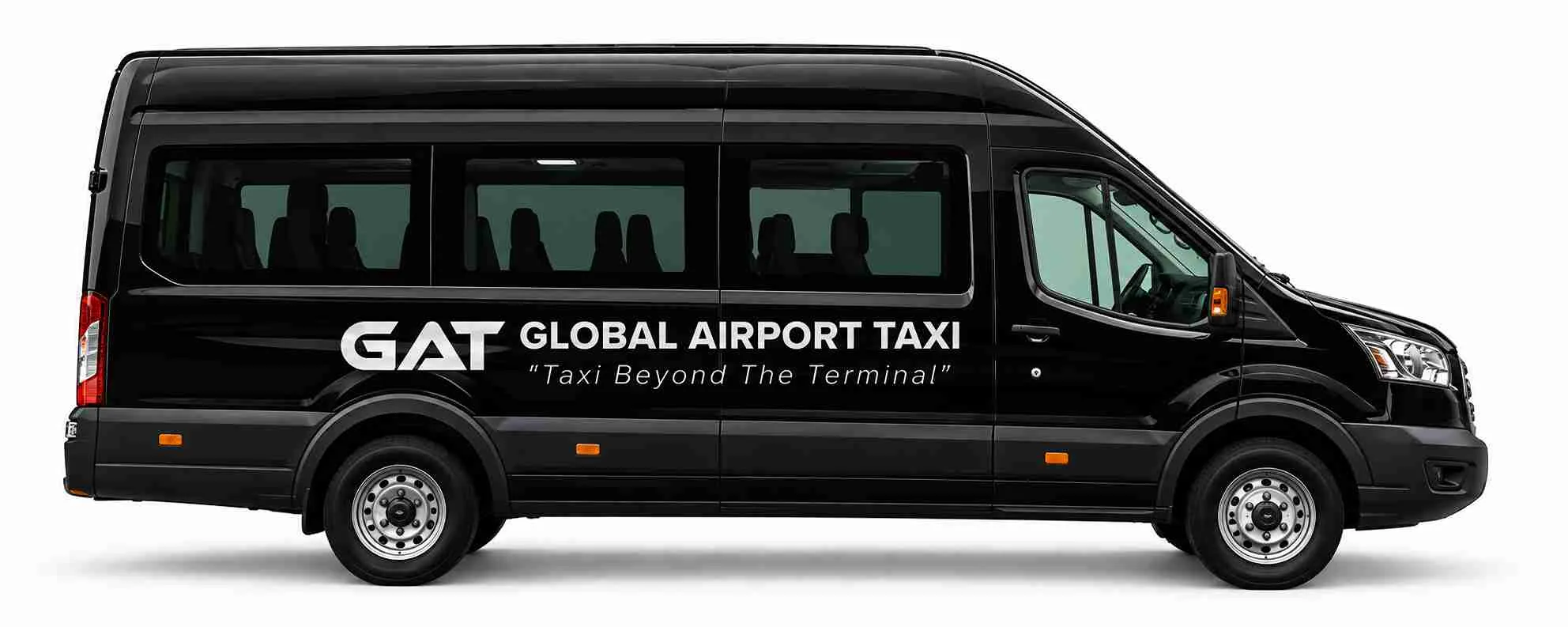
| 16-seat minicoach | Up to 16 | 14 bags | Check live fixed fare | Quoted against your own timings rather than taken off a table |
| 30-seat coach | Up to 30 | 30 bags | Check live fixed fare | Priced from the schedule, if one is free |
Standard saloon and estate taxi prices
The saloon is the class the confirmed band belongs to: four seats, two bags and two suitcases, at £90 to £100 by address. Four adults each with a large case need something larger, whatever the seat count implies. The estate is quoted live and is the cheap answer to that problem — the same four seats over a much longer load bay.
Executive Heathrow to London taxi prices
Quoted live. A Heathrow to London Private Transfer in this class — a Heathrow to London Executive Transfer — buys a better cabin and more room behind three seats rather than extra capacity, and on a run that can take an hour and a half in traffic that is usually what people are paying for. It does not buy a faster journey: the same roads carry every class.
5-seater and 6-seater airport minicabs
Both quoted live. The five-seat MPV is the ordinary family booking, with depth under the floor where a pushchair travels flat. A Heathrow to Central London 6 Seater Taxi is usually chosen for the extra seat rather than the extra bag, and the luggage column is worth reading before the seat count.
7-seater and 8-seater airport taxi prices
Quoted live. A Heathrow to London 7 Seater Minicab is published at seven bags and six suitcases, which is the largest everyday load space on the car ladder. A Heathrow to Central London 8 Seater Taxi carries eight people but seven suitcases — so eight travellers each with a full case are either a minicoach or two vehicles, and that is worth settling before the day.
Group minibuses and coaches
A sixteen-seat minicoach is published at fourteen bags and anything larger is priced from the schedule. In Central London the deciding question is rarely the mileage: it is where a vehicle that long may legally stop at the far end. The group transfers page sets out how a party of that size is arranged.


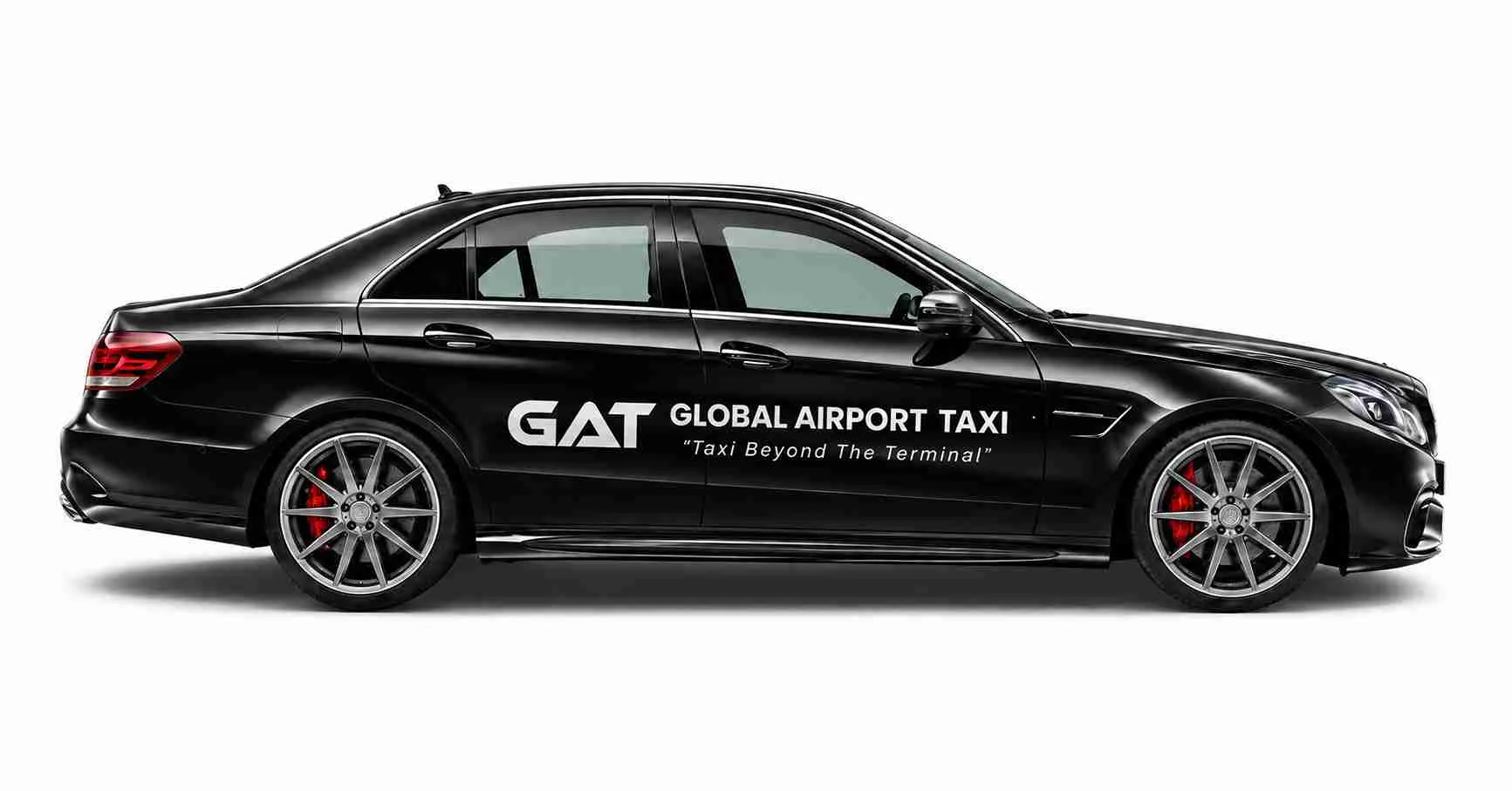
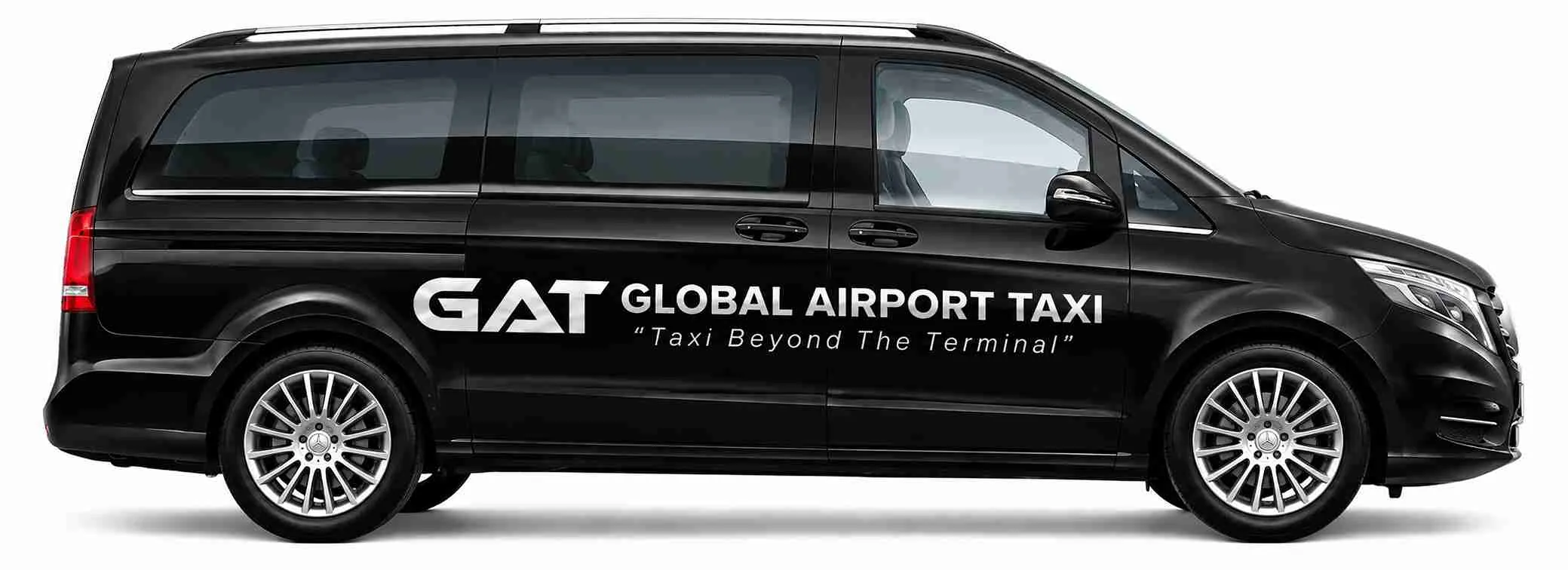
Get a QuoteSee the Whole Fleet
Nine of the ten classes below carry words rather than a number, because words are what was confirmed for them.
Reviews
What Travellers Say About These Transfers
Comments collected and served by the review platforms.
Everything in the panel is written by travellers and held by the review platforms themselves. Which entries appear, and in what order, is settled by the platform rather than by this company.
Nothing showing yet, which means the panel is loading or that this browser has stopped it. Should it stay blank, the reviews page collects the same journeys.
There is no separate star figure for this journey by itself, and none is claimed above; what the panel holds is every kind of booking together.
The direct answer
How Much Is a Taxi from Heathrow to Central London?
The confirmed band, and why it is a band rather than a number.
A Heathrow Airport to Central London Taxi, or a Heathrow Airport to London City Centre Taxi by its other name, is £90 to £100 for the standard car, confirmed for this route. It is the amount for the vehicle rather than per traveller, and where your address falls inside that band depends on the postcode: central London is an area rather than an address, and the fare follows the postcode: the same booking form prices Hammersmith and the City of London differently because they are not the same journey.
Standard car, confirmed
The standard car, carrying four people with two cases and two bags. Nothing else on this journey has an approved figure behind it; the remaining classes come back live, and the band above widens or narrows with the address rather than with the time of day.
The standard-car band below was confirmed by the client for this build; every class and area that has not been confirmed says so instead of carrying a number. That matters more here than on most routes, because three published figures disagree about this one journey: the Heathrow hub gives this band, an older prices guide gives a much lower one for the West End, and the internal fare guide gives something different again. The band above is the confirmed one. The figure belongs to the car and not to the head count, so a party of four shares one sum between them.
- From
- Heathrow Airport (LHR) — Terminals 2 to 5 inclusive
- To
- Central London: the Zone 1 districts and the areas around them
- Confirmed fare
- Standard car, £90 to £100, by address
- Every other class
- Check live fixed fare
- Road distance
- roughly 15 to 18 miles for many Zone 1 addresses, and meaningfully less for the western districts
- Typical journey
- commonly 45 to 90 minutes, and longer in the weekday peaks, which is a planning range rather than a promise
- Main roads
- The M4 or the A4, then the west London corridor
- Priced per
- the figure belongs to the car and not to the head count, so a party of four shares one sum between them
- Waiting included
- sixty minutes of waiting run from the moment the aircraft is on the ground, and a collection from any other address carries fifteen
A black cab from the rank is a different product and a different price. A metered black cab is a different product from a pre-booked fixed fare: the meter decides what a black cab costs and Transport for London publishes those rates. Nothing quoted above is a meter reading.
Get a QuoteHeathrow Price Guide
A band was confirmed for the standard car and nothing else was, which is why every row below keeps saying so.
By area
Heathrow to Central London Taxi Prices – Fixed Fares by Area
Why the postcode moves the price, and where this copy stops.
Central London is an area rather than an address, and the fare follows the postcode: the same booking form prices Hammersmith and the City of London differently because they are not the same journey. That is the single most useful thing to understand before asking what a Heathrow to Central London Taxi Price is: the question has no answer until there is an address attached to it.
A journey to a western district is meaningfully shorter than one to the eastern end of Zone 1, and the confirmed band has room in it for both. What this section will not do is publish a figure per area. The internal fare guide does group London into numbered zones with a price against each, but those are internal reference figures rather than approved customer fares, and the internal fare guide lists some area names under more than one zone, so an address in one of them is priced from the address rather than from the name.
Westminster, Mayfair and Covent Garden taxi prices
A Heathrow to Westminster Taxi, a Heathrow to Mayfair Taxi and a Heathrow to Covent Garden Taxi all end in the central band of Zone 1 and all sit inside the confirmed standard-car range. A Heathrow to Soho Taxi is the same journey with a harder last hundred yards, because much of Soho and the heart of Covent Garden are closed to traffic.
Kensington, Knightsbridge and Chelsea taxi prices
These are the western districts, reached from the A4 without crossing the middle of town, and they are ordinarily the shortest of the central runs. A Heathrow to Kensington Taxi, a Heathrow to Knightsbridge Taxi and a Heathrow to Chelsea Taxi therefore sit at the lower end of the band — but the internal guide lists South Kensington under more than one zone, so the address is what settles it rather than the name.
Paddington and Victoria station taxi prices
A Heathrow to Paddington Taxi is usually the shortest Zone 1 journey of all: the A40 arrives almost at the door. A Heathrow to Victoria Taxi runs further south and east into SW1. Both stations have their own arrangements for pre-booked cars, which is a question about where the vehicle waits rather than about the amount.
City of London and London Bridge taxi prices
A Heathrow to City of London Taxi and a Heathrow to London Bridge Taxi are the long end of Central London, and they sit at the top of the confirmed band. The City empties at weekends, which makes a Sunday run quicker than a Tuesday one without making it cheaper. A Heathrow to Waterloo Taxi crosses the river; a Heathrow to Holborn Taxi, a Heathrow to Bloomsbury Taxi, a Heathrow to King’s Cross Taxi and a Heathrow to St Pancras Taxi sit between the two ends.
The postcode districts this route serves
Below is what each central district actually contains and what it means for the journey. No figure is printed against any of them, because no figure has been approved per district — and printing one anyway is how a page ends up quoting a Kensington price for a City address.
W1
Mayfair, Soho, Marylebone and Fitzrovia
The West End. One district, several very different streets, and some of them closed to through traffic in the evening.
W2
Paddington, Bayswater and Lancaster Gate
The first central district the A40 reaches, and usually the shortest of the Zone 1 runs.
SW1
Westminster, Victoria, Belgravia, Pimlico and St James’s
Government, two mainline stations and a great deal of hotel traffic. The internal guide prices parts of SW1 differently from others.
SW3
Chelsea and Brompton
Reached off the A4 without crossing the middle of town, which makes it quicker than the postcode suggests.
SW5
Earl’s Court
Western, close to the A4 corridor, and ordinarily one of the shorter central journeys.
SW7
South Kensington and Knightsbridge
The museum district. The internal guide lists South Kensington under more than one zone, so the address decides.
WC1
Bloomsbury, Russell Square and the university quarter
Hotels and colleges, reached across the middle of town rather than round it.
WC2
Covent Garden, the Strand and the theatre district
Pedestrian streets at its heart, so the legal stopping point is rarely the front door.
EC1
Clerkenwell, Barbican and Old Street
The far side of the centre from Heathrow, and priced accordingly.
EC2
The City, Liverpool Street and Moorgate
Business addresses, and a district whose streets empty at the weekend.
EC3
Fenchurch Street, Tower Hill and the insurance quarter
Among the longest of the central runs from Heathrow.
EC4
St Paul’s, Fleet Street and Blackfriars
Eastern Zone 1, with the river crossings deciding the final approach.
SE1
Waterloo, London Bridge, Southwark and the South Bank
South of the river, which changes the route rather than the city, and the internal guide gives Southwark its own zone.
NW1
Euston, King’s Cross fringe, Regent’s Park and Camden
Northern Zone 1, usually approached round the centre rather than through it.
A business arrival into Mayfair or Knightsbridge is usually one or two travellers with a case each, and the executive saloon is the class that gets asked for by name. It carries no more luggage than the standard car; what it changes is the cabin, which matters on a run that can take ninety minutes when the A4 is full.
The class is quoted separately from the confirmed band above, so the figure for it comes back with the quotation rather than off a list. The business class transfers page sets out what the class includes.
The postcode decides the amount, so the form asks for the address rather than for the words Central London.
What is included
What’s Included in Your Heathrow to London Fixed Fare?
What sits inside the amount, and the one thing nobody confirmed.
Only the quotation in front of you binds anyone. Below is the usual shape of a Heathrow to Central London booking: what the figure takes in, what it leaves out, and the one place where this copy goes no further because nothing has been confirmed.
Inside the figure
- Every mile of the journey, terminal door to the address you entered.
- Being met: where the booking includes it, a driver waits at the agreed meeting point in arrivals with a name board.
- The waiting allowance. Sixty minutes of waiting run from the moment the aircraft is on the ground, and a collection from any other address carries fifteen.
- The flight watch. Your inbound number is followed, which means a late aircraft moves the collection along with it instead of throwing it away.
- Child seats. Baby and child seats go in at no charge when the booking asks for them, which is what this company sets out in its own published answers.
- The airport’s own bill to the car for the time it stands in an authorised pick-up area waiting for you.
Outside it
- Anything bolted on later: an extra address, a second collection, or waiting that runs past the hour.
- Anything a hotel or a private car park levies on its own land.
- Anything agreed at the kerb. Nothing should be: the confirmation is the figure.
The road charges, which are not yet answered
Whether a Central London quotation includes the Congestion Charge and the ULEZ has not been confirmed for this build, so nothing here claims it either way. The internal fare guide this company keeps warns that its own figures may leave out airport parking, terminal access, the Congestion Charge, ULEZ, extra waiting, meeting a passenger, additional stops and out-of-hours work. That is a caution about the guide rather than about your quotation — and it is exactly why the road charges section explains what each one costs and tells you to ask.
| What it is | Inside the quotation | Not inside it |
|---|---|---|
| The driving | Every mile of the booked route | Nothing, unless the destination itself changes |
| Waiting at Heathrow | 60 minutes on an airport arrival | Time beyond the allowance, at the rate your confirmation carries |
| Heathrow charges | The pick-up charge for your collection | The forecourt drop-off charge, going the other way |
| Seats and equipment | Child seats, fitted free | Equipment this fleet does not carry at all |
| Stops | Any stop named before the amount was agreed | A stop asked for on the day |
| Congestion Charge and ULEZ | Not confirmed either way for this route | Ask before booking if it matters to you |
The live version of this route page claims included Wi-Fi and no extra charges. Neither could be verified for this build, so neither is repeated here. If both are true, they are worth saying properly; if they are not, they are worth removing.
What a quotation covers is set out in the quotation, and this copy stops where the confirmed facts stop.
Heathrow terminals
Heathrow Terminal 2, 3, 4 and 5 Taxi Pickups
Four terminals, one fare, and one that changed this summer.
Every passenger terminal Heathrow still operates is served, which means 2, 3, 4 and 5. The amount is the same wherever you land. The building decides only where a car may stand and what Heathrow charges it for standing.
A pre-booked private hire car is not permitted to collect from the departures drop-off forecourt, so every collection runs through an authorised pick-up arrangement instead. That is the one thing worth knowing before you land, and it is why nobody is at the kerb: where the booking includes it, a driver waits at the agreed meeting point in arrivals with a name board.
Terminal 2 to Central London
The newest building on the central campus. Come through into the public hall and go to the point the confirmation names. The walk out to an authorised pick-up area is part of every collection here, and Heathrow charges the vehicle for the time it spends in one. The terminal 2 page covers collections there generally.
Terminal 3 to Central London
Minutes from Terminal 2 on the same central campus. Arrivals lets out at ground level. It is also the terminal from which Heathrow publishes its fifteen-minute Heathrow Express time, which matters only if you are comparing. The terminal 3 page covers collections there generally.
Terminal 4 to Central London
Across the runways from the rest, and governed by its own arrangements since the summer. The multi-storey has closed. A collection now uses the Priority Pick-Up lane, charged by the length of the stay from £7.00, or Zone A of the Park and Ride. The terminal 4 page covers collections there generally.
Terminal 5 to Central London
The westernmost building, reached by a road that serves nothing else. Its arrivals floor is at ground level next to the car parks shared with 2 and 3, and nowhere else at Heathrow reaches the M4 in less. The terminal 5 page covers collections there generally.
| Time in the car park | Charge |
|---|---|
| Up to 30 minutes | £8.00 |
| 30 minutes to 1 hour | £12.50 |
| 1 to 2 hours | £15.50 |
| 2 to 3 hours | £20.00 |
| Length of stay | Charge |
|---|---|
| Up to 10 minutes | £7.00 |
| 11 to 29 minutes | £14.00 |
| 30 to 60 minutes | £25.00 |
| Each further hour | £25.00 |
| Daily maximum | £200.00 |
There is no Terminal 1 at Heathrow any more. It has closed, and what it used to handle moved across to the terminals in the middle of the airport. If a ticket still prints that name, settle the question at home and not at a barrier.
Which terminal you land at changes where the vehicle waits and what Heathrow bills it. It does not change the fare.
The road
Heathrow to Central London – Route, Distance and Travel Time
One airport, many destinations, and no single mileage.
Roughly 15 to 18 miles for many Zone 1 addresses, and meaningfully less for the western districts, and the drive is commonly 45 to 90 minutes, and longer in the weekday peaks, which is a planning range rather than a promise. Most journeys leave Heathrow on the M4 or the A4 and come in through the west London corridor past Hammersmith, with the last few miles decided by the postcode rather than the motorway.
There is no one distance from Heathrow to Central London, and any page that gives you a single mileage has quietly chosen a destination on your behalf. Paddington is a notably shorter run than the City; Kensington and Chelsea come off the A4 without crossing the middle of town at all; the eastern districts mean traversing the centre or going round it.
- Road distance
- roughly 15 to 18 miles for many Zone 1 addresses, and meaningfully less for the western districts
- Planning range
- commonly 45 to 90 minutes, and longer in the weekday peaks, which is a planning range rather than a promise
- Main approaches
- The M4 to the A4, or the A4 the whole way
- The corridor
- West London, through or around Hammersmith
- Slowest hours
- The weekday morning and evening peaks
- Quickest hours
- Late evening and the small hours
- What changes the route
- The postcode, roadworks and overnight closures
Why the time is a range and not a figure
Because nobody can promise central London traffic. Forty-five minutes is a clear run late at night; ninety is the same journey on a wet Friday, and in the worst of the peaks it can be longer still. Nothing is promised about when you arrive, because central London traffic is not in anybody’s gift. What the booking fixes is the amount: a slow A4 is the driver’s afternoon, not your invoice.
Roadworks, closures and the last mile
The last mile is where central journeys are won and lost. Parts of the West End close to through traffic in the evening, some streets are one-way against the obvious approach, and overnight closures move from week to week. A driver who knows the area is not looking for a clever shortcut; they are looking at what is open tonight. The destinations section sets out where a vehicle can actually stop.
An hour or more in a car after a long flight is not dead time if the car is right. The cases are in the boot rather than round your feet, nobody is standing with a suitcase on the Piccadilly line, and the driver is the one deciding what to do about the Hammersmith flyover.
It is the same vehicle from the terminal to the door, with no change of train at Paddington and no second fare at the other end. The comparison section sets the two side by side on the airport’s own figures.
Heathrow publishes its own transport information comparing road and rail into London, and it is worth a look if you are weighing the two. The comparison section uses the airport’s own published times.
Get a QuoteHeathrow Airport Taxi
Miles and congestion are two different quantities, and only the miles were settled when the figure was agreed.
Where you are going
Heathrow Taxi Transfers to Central London Hotels and Stations
Hotels, stations and the places a car cannot stop.
Most of what goes wrong at the Central London end is about stopping rather than driving. A Heathrow to London Hotel Private Taxi ends at a door; the question is which door, and whether a vehicle may legally wait at it.
Westminster, Mayfair and West End hotels
The hotel band through SW1 and W1 is the densest in the city and the most restricted. Many addresses sit on streets where stopping is limited at certain hours, so a driver uses the nearest legal point and walks the cases in. Give the hotel name and its postcode on the booking rather than the area.
Paddington, Victoria and King’s Cross stations
All three have designated areas for pre-booked cars, which are not the taxi rank and are not always where you would expect. King’s Cross and St Pancras are two different stations next to one another, and a booking that names the wrong one sends the vehicle to the wrong entrance. The confirmation names the meeting point.
Covent Garden, Soho and the theatre district
The heart of both is pedestrianised. No vehicle stops on a pedestrian-only street, whatever a booking says, so the set-down is the nearest road that takes traffic — often a short walk from the door. On a theatre night that is worth planning for rather than discovering.
City of London and business hotels
The eastern end of Zone 1: offices, business hotels and the longest of the central runs. Weekday mornings are the busiest arrival window and the weekend is the quietest. The district empties on Saturday, which changes the journey time without changing the amount.
| Where | What is there | What decides where the car stops |
|---|---|---|
| Westminster and Victoria | Parliament, the government offices and a great deal of hotel accommodation, with Victoria station and the coach station alongside. | Station forecourts have their own rules for pre-booked cars, so the confirmation names where the vehicle waits rather than the concourse. |
| Mayfair and St James’s | Hotels, offices and the Piccadilly end of the West End. | Many addresses are on streets where stopping is restricted at certain hours; the driver uses the nearest legal point. |
| Soho and Covent Garden | Theatres, restaurants and hotels in the middle of the West End. | The heart of both is pedestrianised. No vehicle stops on a pedestrian-only street, so the set-down is on the nearest road that takes traffic. |
| Knightsbridge, Kensington and Chelsea | Museums, retail and a dense band of hotels and residential addresses. | Reached from the A4 without crossing the centre, which is why these districts often price and run differently from the East. |
| Paddington and Bayswater | Paddington station, the Heathrow Express platforms and the hotels around them. | The station has designated areas for pre-booked collections rather than the taxi rank. |
| Bloomsbury and Holborn | University accommodation, museums, legal offices and hotels. | Ordinary streets and ordinary stopping, with the usual central restrictions at peak hours. |
| King’s Cross and St Pancras | Two mainline stations, the international terminal and the hotels around them. | Pre-booked cars use the designated areas rather than the taxi rank, and the two stations are not the same address. |
| Waterloo, London Bridge and the South Bank | Stations, offices and the Southwark hotels. | South of the river, so the bridge the driver uses is part of the route rather than a detail. |
| The City of London | Financial offices, business hotels and the eastern end of Zone 1. | Among the longest central runs, and the quietest at weekends. |
| Canary Wharf | The eastern business district, which is not Central London and is not priced as it. | Named here so nobody assumes a Zone 1 figure covers it. It is quoted as its own journey. |
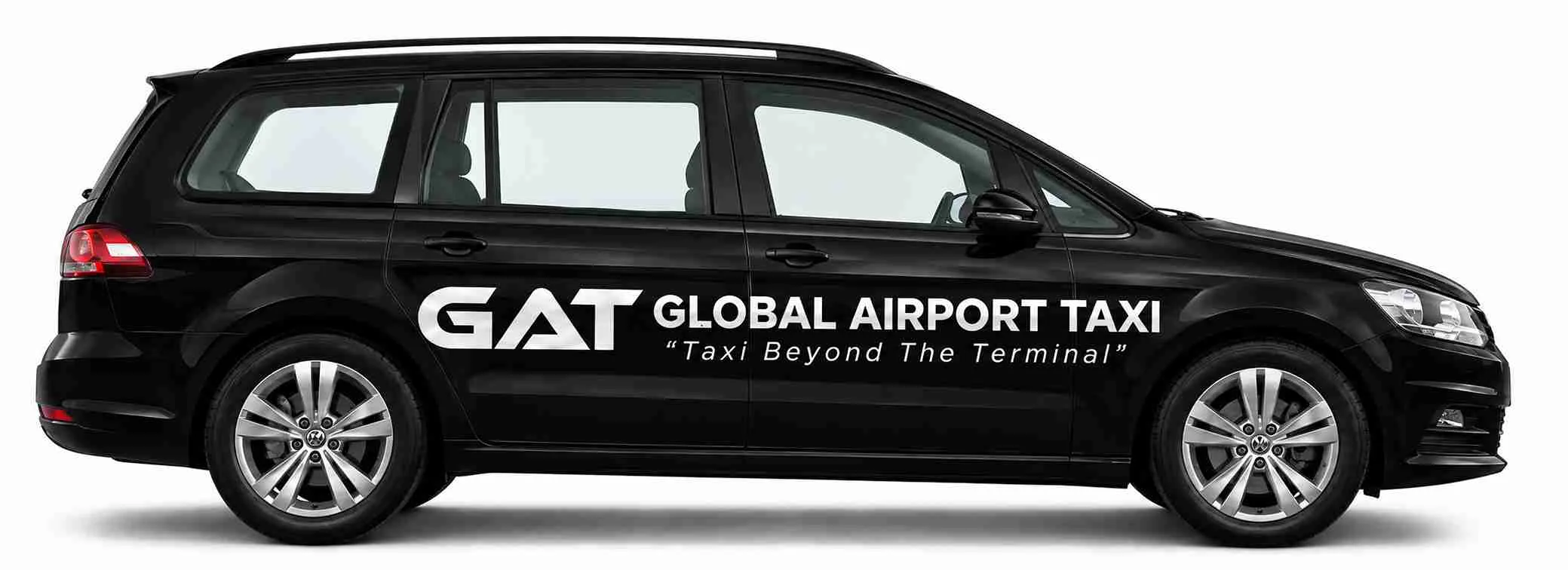
Five places with a genuinely deep well behind them, which is where a buggy lies flat instead of being wedged over somebody’s lap for the length of west London. Arrive with two weeks of luggage and a West End hotel to reach and this is normally where the choice lands.
State each child’s age on the booking and the right seats go in before the car sets off, with nothing added to the amount. The child seat guide sets out what is fitted and how it is asked for.
An address in the West End and an address in the City are different journeys, and the quotation treats them that way.
Road charges
London Congestion Charge and ULEZ – Are They Included?
Two separate schemes, two separate amounts, one honest gap.
The Congestion Charge is £18 a day, raised to that figure at the start of January, and it applies 07:00 to 18:00 on weekdays and 12:00 to 18:00 at weekends and on bank holidays, with no charge on Christmas Day or New Year’s Day. The ULEZ is a different scheme entirely: the ULEZ charge is £12.50 a day for a vehicle that does not meet the emissions standard, and it is charged for driving in the zone rather than for parking in it. Both belong to Transport for London rather than to this company, and running them together is the commonest mistake made on pages like this.
Congestion Charge
£18
- Where
- The central zone, whose boundary Transport for London publishes and which does not cover all of Central London
- When
- 07:00 to 18:00 Monday to Friday, and 12:00 to 18:00 at weekends and on bank holidays
- Not charged
- Christmas Day and New Year’s Day
- Private hire
- Not automatically exempt. The exemption that remains is for wheelchair-accessible taxis and private hire vehicles
- Electric cars
- Began paying in January, with a discount for Auto Pay users, having been exempt before
Amount, hours and exemptions as published by Transport for London. Check the current zone boundary and rules with TfL before relying on any of it.
ULEZ
£12.50
- Where
- London-wide, and Heathrow is inside it
- Since
- Heathrow states that the airport, including all of Terminals 2, 3, 4 and 5, became part of the zone
- When
- Charged for driving in the zone, not for parking in it
- Who pays
- Only a vehicle that does not meet the emissions standard. A compliant car pays nothing
- How to check
- Transport for London publishes a vehicle checker that answers it by registration
Daily amount and the zone boundary as published by Transport for London; the Heathrow date and terminal coverage as published by Heathrow.
Does ULEZ affect a Heathrow transfer at all?
Because both ends of this journey sit inside the emissions zone, ULEZ is a question about the vehicle rather than about the destination. A vehicle that meets the emissions standard pays nothing wherever it goes; one that does not is already paying before it leaves the airport. That is why the honest answer to “does ULEZ add to my fare” is a question about the fleet rather than about your postcode.
Are the charges included in the fare?
Not confirmed, and nothing here will guess. The internal fare guide warns that its own figures may exclude both. The booking form and the confirmation are where the answer lives for your own journey, and it is worth asking outright before you accept a quotation if the difference matters to you. What can be said plainly is the arithmetic: at £18 a day the Congestion Charge is a real fraction of a £90 to £100 fare, which is reason enough to ask rather than assume.
Why the postcode matters here too
Because the Congestion Charge zone does not cover everything people mean by Central London, and because the charging hours mean a journey at seven in the morning and the same journey at six in the evening are not in the same position. Transport for London publishes the boundary and the hours, and they are the authority on both.
Get a QuoteAsk What Is Included
The Congestion Charge and the ULEZ belong to Transport for London, not to this company, and whether they sit inside a quotation is a question for the form.
Taxi or train
Heathrow to London Taxi vs Heathrow Express, Elizabeth Line and Tube
Four ways in, and the one question that decides it.
Heathrow publishes the Heathrow Express at 15 minutes to Paddington, the Elizabeth line at under 40 minutes to central London and the Piccadilly line at under an hour. A car is slower than all three on a bad afternoon. It is also the only one that takes you to a door.
That is the whole comparison, and it is worth stating plainly rather than loading the table. If your destination is Paddington and you are travelling light, the train wins and no page selling cars should pretend otherwise. If there are four of you with cases and a hotel in Bloomsbury, the arithmetic changes completely: a rail fare is per person and a quotation is per vehicle.
| Option | Journey time, as published | What it costs you | Where it leaves you |
|---|---|---|---|
| Private car or minicab | commonly 45 to 90 minutes, and longer in the weekday peaks, which is a planning range rather than a promise | One amount for the vehicle, agreed in advance | The address on the booking |
| Heathrow Express | 15 minutes from Terminals 2 and 3, every 15 minutes | A ticket, per person | London Paddington |
| Elizabeth line | Under 40 minutes to central London | A ticket, per person | Paddington first, then Bond Street and Tottenham Court Road, with Farringdon and Liverpool Street further east |
| Piccadilly line | Under an hour from all terminals | A ticket, per person, and the cheapest of the four | A Piccadilly line station, then onwards |
| Black cab from the rank | As the traffic allows | A meter, at the rates Transport for London publishes | The address, like a minicab |
Is the Heathrow Express faster than a taxi?
To Paddington, yes, and not by a small margin: Heathrow publishes 15 minutes against a road journey of 45 to 90. What the fifteen minutes does not include is getting to the platform with your luggage, the wait for the next departure, or the onward journey from Paddington to wherever you are actually going. For an address in Paddington it is the obvious choice; for one in Chelsea it is a leg of a longer trip.
Is the Elizabeth line better than a taxi?
Cheaper, certainly, and it reaches five central stations directly. Whether it is better depends on the number of cases and the number of people: it is an excellent way for one traveller with a cabin bag to reach Farringdon and a poor way for a family of four with four suitcases to reach a hotel three streets from a station.
What a metered black cab is, and is not
A metered black cab is a different product from a pre-booked fixed fare: the meter decides what a black cab costs and Transport for London publishes those rates. It is not what is quoted above. A pre-booked private hire fare is agreed before the journey and does not move with the traffic; a meter does. The guide to cabs, minicabs and apps explains how the licensing differs.
No ticket prices are printed above. Fares change, the operators are the authority on their own, and what is reproduced here is their published journey times with their names on them.
Get a QuoteFixed Price vs Apps
A per-person rail fare and a per-vehicle quotation are different units, which is the mistake this comparison exists to prevent.
Families and groups
Heathrow to Central London Family and Group Minicabs
Seats, suitcases, child seats and the things that do not fold.
Baby and child seats go in at no charge when the booking asks for them, which is what this company sets out in its own published answers. Ask by the age of the child when booking, and count each seat as a seat: two adults and three young children are a party of five when the class is chosen.
| Class | Passengers | Luggage | Booked for |
|---|---|---|---|
| Saloon | Up to 4 | 2 bags and 2 suitcases | The class the confirmed band belongs to. |
| Estate car | Up to 4 | 3 large and 3 hand bags | Four travellers above a long boot, for luggage that outnumbers them. |
| Executive Saloon | Up to 3 | 4 bags and 2 suitcases | A seat fewer than the six, and a better cabin for the five. |
| MPV, 5-seater | Up to 5 | 4 bags and 3 suitcases | Five seats with a deep well behind them, taking a pushchair laid flat. |
| MPV, 7-seater | Up to 7 | 7 bags and 6 suitcases | More room for cases than anything else with four seats. |
| Executive MPV, 8-seater | Up to 8 | 7 bags and 7 suitcases | Eight aboard with seven big cases, beyond what any smaller class takes. |
| 16-seat minicoach | Up to 16 | 14 bags | Everybody collected in one go and delivered to the same door. |
| 30-seat coach | Up to 30 | 30 bags | Luggage stows under the floor instead of in a boot. |
| 50-seat coach | Up to 50 | 48 bags | The largest vehicle bookable, and the hardest to stop in the middle of town. |
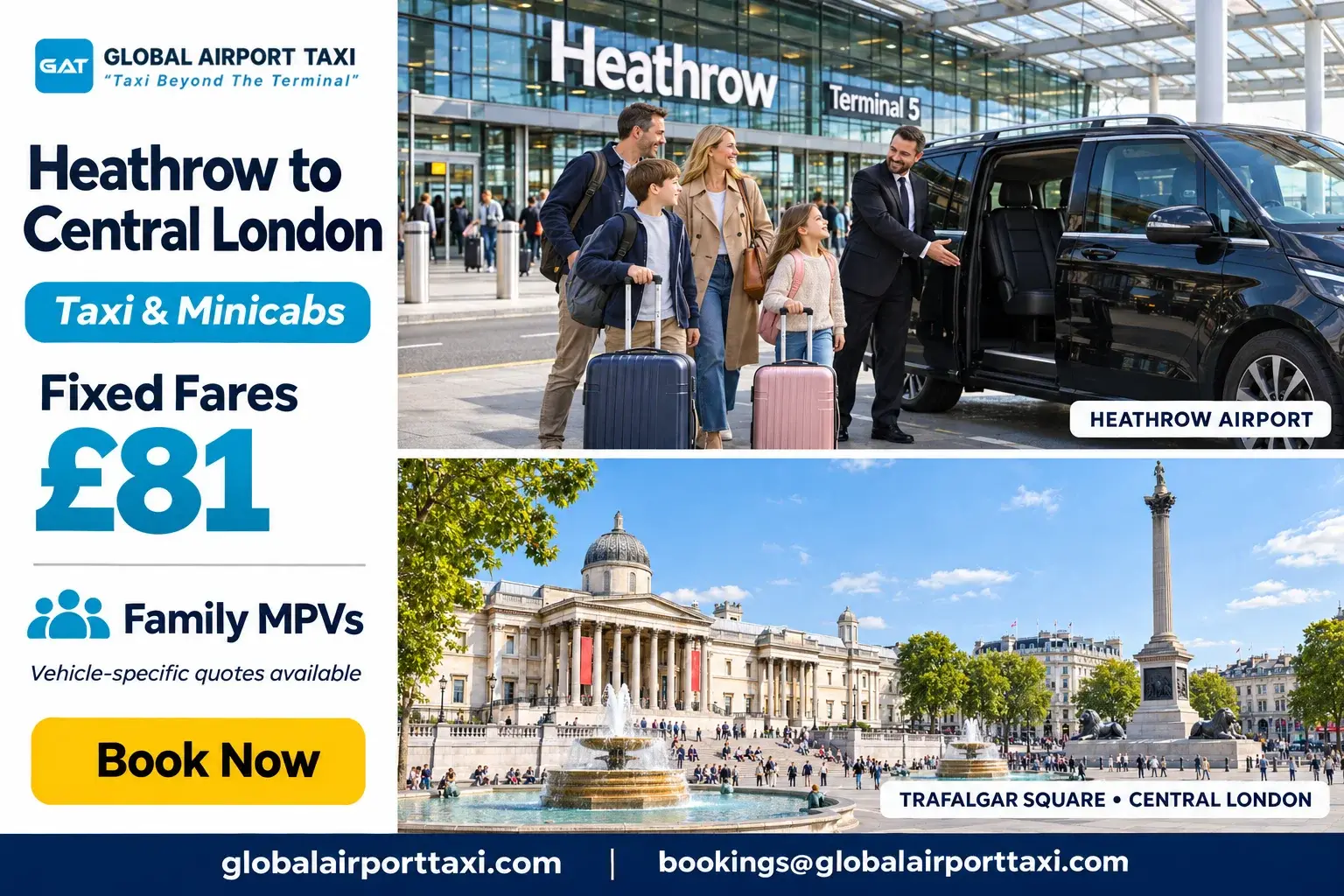
Two adults, three children, five cases and a buggy is a perfectly ordinary Heathrow arrival and a difficult one to improvise at the rank. Booked ahead it is a single vehicle with the right seats already fitted and one amount agreed before anybody left home.
Give the ages rather than the makes of seat, count the children as passengers, and name the buggy: all three change which class the quotation returns.
Choosing by the boot rather than the seats
Read the two columns as separate questions. A saloon takes four people and two suitcases; a five-seat MPV, five and three; the seven-seat class, six; the eight-seat executive MPV, seven. A Heathrow to Central London Group Minicab for eight travellers each with a full case is therefore two vehicles or a minicoach, and settling that before the day is far cheaper than settling it at a terminal.
Pushchairs, oversized luggage and mobility equipment
- A buggy takes up as much room as a large case and is needed at both ends of the journey, which is why the booking should name it.
- A set of golf clubs, a pair of skis or a boxed bicycle fail on length before they fail on weight, which puts them in estate or van territory.
- Wheelchair-accessible vehicles and mobility equipment are organised on request, and that request belongs at the booking stage and not at the kerb. An ordinary MPV is not an accessible vehicle, and no claim is made above that it is.
- State whether the chair folds; if it is powered, give its measurements and its weight. The vehicle is chosen on those figures.
International arrivals and corporate groups
A party arriving together on one flight is one booking and one amount, which is the whole case for a minicoach over four cars that have to find the same London street. For companies moving people regularly an invoiced arrangement is a conversation rather than a form field: the contact page is the way in.

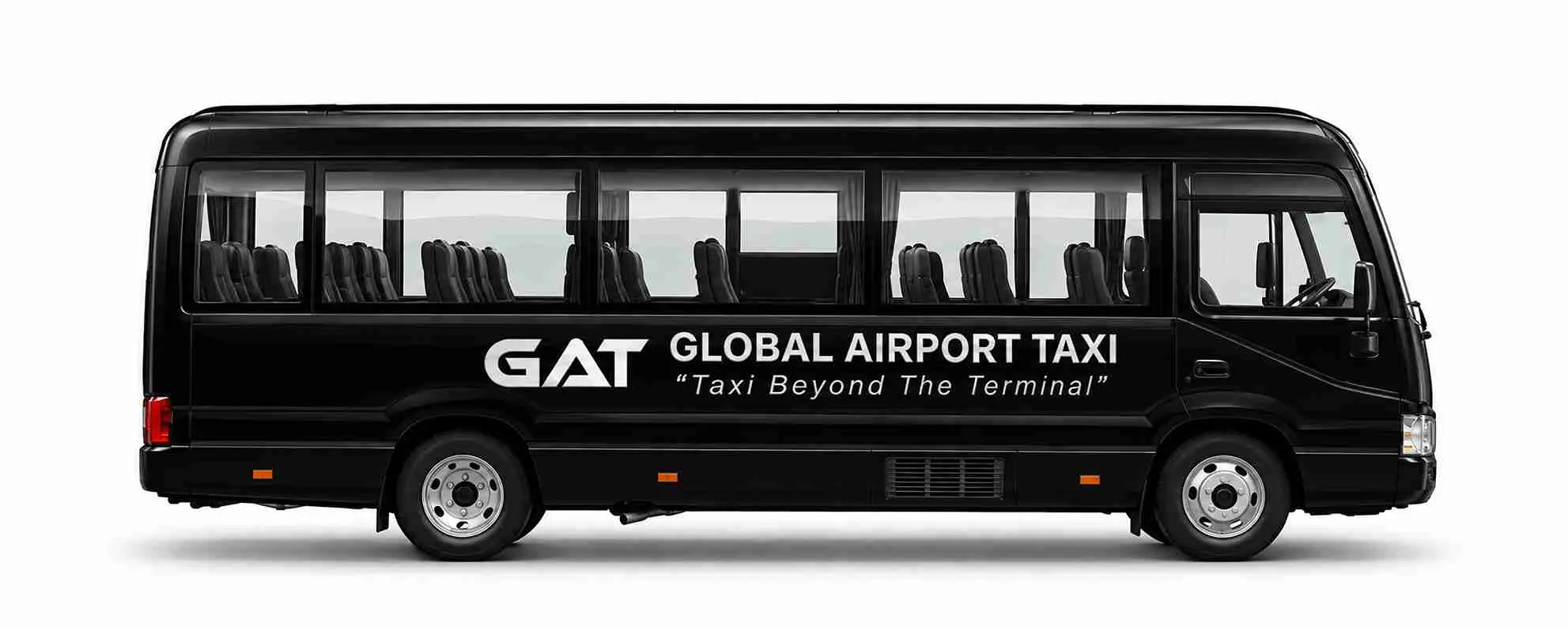
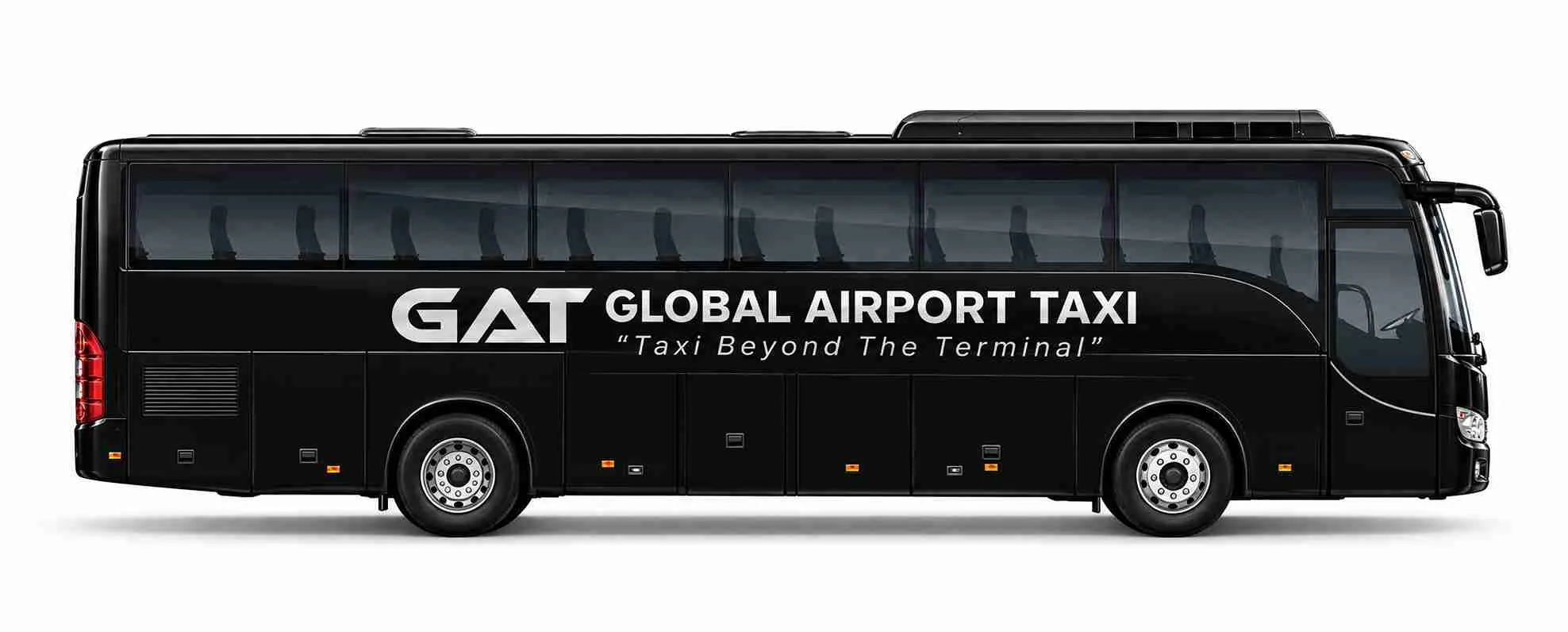
Fifty travellers and forty-eight bags come in from Heathrow without difficulty. What a coach cannot always do is use the approach a car uses: a West End street with restricted stopping is not a place for a vehicle that long, and the set-down point has to be agreed rather than assumed.
Groups of that size are costed against their own timings rather than a published row, and beyond sixteen seats everything depends on a vehicle being free that day. The group transfers page sets out what is asked for.
A child seat occupies a seat, so a family of five with two seats is a five-seat booking when the class is chosen.
Going back
Central London to Heathrow Airport – Return Fixed Fare Taxi
Into the airport, which is a different journey.
No figure for the reverse direction is printed here, because none has been confirmed. A Central London to Heathrow Taxi covers the same ground the other way and is quoted on its own: different hour, different traffic, different charges at the airport end.
The outbound journey is governed by a landing time somebody else controls. The return is governed by a check-in deadline you control entirely, which makes it the easier booking to get right and the easier one to get wrong by an hour.
What to give when booking the return
- The full pickup address, whether it is a hotel, a home or an office. A Westminster to Heathrow Airport Minicab and a Paddington to Heathrow Fixed Fare Taxi are not the same journey.
- Your Heathrow terminal and the flight departure time, so the vehicle is allocated with a sensible margin.
- Whether the airline wants bags dropped a set time before departure, which is the deadline that actually matters.
- How many people and, honestly, how many cases — the shopping of the past fortnight included.
- In this direction Heathrow is the setting-down end, and the airport asks £7 of a vehicle that uses the terminal forecourts.
Early departures and the weekday peak
A London Hotel to Heathrow Private Transfer leaving at five in the morning has the roads to itself; the same journey at seven does not. Long-haul departures usually mean an early start and an easy run, and the awkward ones are the mid-morning flights that need collecting in the middle of the peak. No universal pickup time is safe for every flight, and a page that gave one would be guessing about your airline.
Why the return is quoted separately
Because it is a different journey and because no reverse-direction figure has been confirmed for this build. Book both legs together and both amounts are shown before anything is accepted, which is plainer than assuming the way home costs what the way in did.
A fortnight in London has a way of adding a case. The estate takes the same four passengers as the standard car and gives the luggage the length of the vehicle instead of a boot, which is the difference between a clean load and a bag on somebody’s lap down the A4.
Say what is actually coming back when the return is booked rather than what went out, because the class is set from the luggage count and a case added on the last afternoon is the one that will not fit.
The way back is quoted on its own, at its own hour, from its own address.
Tracking and changes
Flight Monitoring, Meet & Greet, Waiting and Cancellation
When the plan slips, and where the cost falls.
Your inbound number is followed, which means a late aircraft moves the collection along with it instead of throwing it away, and sixty minutes of waiting run from the moment the aircraft is on the ground, and a collection from any other address carries fifteen. A delay that belongs to the airline costs you nothing; a cancellation is a change to the booking and has to be told to somebody.
What happens if my flight is delayed?
You need do nothing at all. The car follows the aircraft, and the hour that comes with the booking starts when the wheels are down rather than when the timetable said they would be, so an aircraft three hours behind is met three hours later with that hour still intact. Should the wait run past it, your confirmation gives the rate. Waiting without limit and without charge is not offered by anybody.
Passport control, baggage reclaim and coming out early
An ordinary arrival fits inside the hour with room to spare; a difficult one does not fit at all. Come off a long-haul flight into a crowded immigration hall with bags to reclaim and most of it can be gone before you are through. Clearing quickly is the reverse difficulty. A driver working to the landing time plus the usual formalities will not be standing there the second the wheels are down, and the telephone number on your confirmation reaches an office that can see where the car has got to.
How does meeting the driver work?
Where the booking includes it, a driver waits at the agreed meeting point in arrivals with a name board. It is worth being precise about that: it happens where the booking includes it rather than on every booking automatically, and your confirmation is what says which you have. A pre-booked private hire car is not permitted to collect from the departures drop-off forecourt, so every collection runs through an authorised pick-up arrangement instead, so in every case the meeting point is somewhere other than the departures kerb.
Cancellations, diversions and amendments
Cancel at least 24 hours ahead of the collection time and, where the terms are met, the whole amount is returned. The refund and cancellation policy is what governs that, with the booking terms running beside it. No amount of tracking fixes a flight that is scrapped or sent elsewhere, so pass on the replacement number the moment you have one.
| What you want to do | What applies |
|---|---|
| Cancelling at least a day before the collection | Cancel within the published terms and the whole amount comes back |
| Cancel inside 24 hours | That document governs here too and carries the detail |
| Change the flight number | Tell the office early, because the flight watch is built on that entry |
| Change the London address | Tell somebody before the day. It can change the amount, because the postcode is the fare |
| Change the vehicle class | Subject to availability, with a fresh figure for the new class |
| Add a passenger or a case | Flag it when booking, since it can move you up a class |
A delay moves the collection and leaves the amount alone; a wait past the included hour is charged as the confirmation states.
Why book here
Why Book with Global Airport Taxi?
What the agreed amount covers, and what sits outside it.
An amount agreed before you travel, a driver who is already there, an hour of waiting counted from the actual landing, and a price that follows the postcode rather than a meter. What it does not give you is a promise about London traffic.
What is actually on offer
- The standard car has a band behind it and is labelled as such; the other nine classes say plainly that their figure comes back live, which is better than printing one nobody has approved.
- One figure covering the car itself, not a charge multiplied by passengers.
- Sixty minutes included, running from wheels-down rather than from the scheduled time.
- Child seats fitted free of charge, on request.
- The Congestion Charge and the ULEZ explained with Transport for London’s own figures and the date each one changed.
- A company behind it: QMH Technologies Ltd, registered in England and Wales, company number 13506378.
What is not on offer
- Any undertaking about the hour you arrive. Nothing is promised about when you arrive, because central London traffic is not in anybody’s gift.
- A claim that the fare includes the road charges. That has not been confirmed, and the charges section says so rather than guessing.
- A price per London area. The internal guide’s zone figures are internal references and some areas appear in more than one zone.
- A verified return discount, since no schedule for one exists.
- A star figure or a review tally for this journey by itself.
Global Airport Taxi is a booking platform: the journey itself is carried out by a licensed operator under the arrangements your confirmation sets out. It is the trading name of QMH Technologies Ltd, registered in England and Wales, company number 13506378. The contact page reaches people rather than a form queue, and the company page sets out who they are.
Every figure above says where it came from, and every class without one says why.
Questions
Frequently Asked Questions
Twenty questions, each answered in its first sentence.
Each reply leads with the answer and explains afterwards. Where a figure appears it is either the single confirmed band for this journey or something Transport for London or Heathrow publishes itself, and the reply makes clear which of the two it is.
How much is a taxi from Heathrow to Central London?
£90 to £100 for the standard car, confirmed for this route. Where your own address falls inside that band depends on the postcode, and every other vehicle class is quoted live from the form.
Is the Heathrow to London fare fixed?
Yes: the amount is agreed before you travel and it does not move with the traffic. Only a change to the journey changes it — another address, an extra stop, a different class.
Do Heathrow taxi prices change by postcode?
Because Central London is an area, not an address. A western district such as Kensington is a materially shorter run than the City of London, and the confirmed band has room in it for both.
How much is a Heathrow to Westminster taxi?
Within the confirmed standard-car band, with the exact figure coming from the address. SW1 covers Westminster, Victoria, Belgravia and Pimlico, and the form prices the street rather than the district.
How much is a Heathrow to Mayfair taxi?
Also within the confirmed band for the standard car. An older prices guide on this site quotes a much lower figure for Mayfair, Soho and Covent Garden, and that guide is the one being corrected.
Can I book Heathrow to Covent Garden?
Yes, and the useful detail is the stopping point rather than the price. The heart of Covent Garden is pedestrianised, so the car sets you down on the nearest road that takes traffic.
How much is a six-seater minicab?
Check live fixed fare. No six-seat figure has been confirmed for this route, and the form returns a real amount for your own address and date.
How much is an eight-seater taxi?
Check live fixed fare. Look at the luggage line before the seat count, though: seven suitcases is what the eight-seat classes are published at, so eight loaded cases turns the booking into a pair of vehicles or a minicoach.
How long is Heathrow to Central London by car?
Commonly 45 to 90 minutes, and longer in the weekday peaks. It is a planning range rather than a promise, and the destination moves it as much as the hour does.
Is Heathrow Express faster than a taxi?
To Paddington, yes. Heathrow publishes 15 minutes from Terminals 2 and 3, against a road journey of 45 to 90 — but that fifteen minutes does not include reaching the platform with luggage or getting from Paddington to where you are actually going.
Is the Elizabeth line cheaper?
Almost always, because it charges per person while a car charges per vehicle. For one traveller with a cabin bag it is the sensible choice; for four people with four suitcases the arithmetic turns the other way.
Can I book from Terminal 2?
Yes, as it is from 3, 4 and 5 as well. No terminal costs more than another; what the building settles is the standing place for the car and the airport’s charge for using it.
Where is Terminal 4 private pickup?
With the multi-storey shut, a car now meets you in the Priority Pick-Up lane, for which Heathrow bills by how long the vehicle stays, starting at £7.00 for ten minutes or less; Zone A of the Park and Ride is the other option.
Does the driver meet me inside Arrivals?
Where the booking includes it, a driver waits at the agreed meeting point in arrivals with a name board. Your confirmation says which arrangement you have, and in every case it is not the departures forecourt, where a pre-booked car may not collect.
Does Heathrow to London taxi include Congestion Charge?
Not confirmed either way for this route, so nothing here claims it. The charge itself is £18 a day as Transport for London publishes it, and it is worth asking outright before you accept a quotation.
Does ULEZ affect my fixed fare?
It depends on the vehicle rather than on your destination. Heathrow has been inside the ULEZ since the zone went London-wide, so a non-compliant car is already paying the £12.50 daily charge before it leaves the airport, and a compliant one pays nothing anywhere.
Are private hire cars exempt from the Congestion Charge?
Not automatically. Transport for London’s remaining exemption is for wheelchair-accessible taxis and private hire vehicles, and electric cars began paying in January after being exempt before.
What if my flight is delayed?
Nothing is required of you: the inbound flight is watched by number and the collection moves with it, with the included hour counted from the actual landing rather than the scheduled one.
Can I book a taxi to my London hotel?
Yes. Give the hotel name and its postcode rather than the area, because the postcode is what prices the journey and the hotel entrance is what decides where the car can legally stop.
Can I book Central London to Heathrow?
Yes, and it is quoted separately: no reverse-direction figure has been confirmed, so nothing is assumed from the inbound amount. Give the pickup address, your terminal and the flight departure time.
Whatever the twenty above leave out sits on the general questions page, or belongs in a conversation instead: the contact page reaches the office that arranges these journeys.
The answers below quote the same band the form will, because that is the only confirmed figure there is.
Book
Book Your Heathrow to Central London Fixed Fare Taxi
Ten entries, and the one that decides the amount.
A quotation costs nothing and the figure is in front of you before anything is agreed. Of the ten fields, one carries far more weight than the rest: the Central London address in full.
- Give the full Central London address, not the areaThis is the field that decides the amount. The words Central London are not an address; a street and a postcode are. The difference between a western district and the City is real money.
- Name the Heathrow terminal you land atThe boarding pass carries it. For Terminal 4 the answer governs how the collection is arranged altogether, not simply how far you walk.
- Put the date in British local timeA flight that leaves in the evening arrives the next morning, so enter the day you land here and not the day you boarded.
- Copy the inbound flight number acrossTwo letters and the digits, exactly as the ticket prints them. Everything the flight watch does rests on that one entry.
- Include every passenger, babies among themA baby carried on a lap in the air still occupies a seat in a car. Two adults with three small children is a party of five.
- Give hold cases and cabin bags as two numbersThe form asks them apart because they are different questions: two of each on a saloon is not the same as four bags.
- Name the child seats you want, by ageGive the age, not the make. Each seat goes in free of charge and takes up a place in the car.
- Declare any extra stop while you are still quotingAnother door, a passenger picked up en route, a hotel called at before the office. Every one of them lengthens the route that is being priced.
- Ask what the amount covers, if the road charges matter to youWhether a Central London quotation includes the Congestion Charge and the ULEZ has not been confirmed for this build, and a page that guessed would be worse than one that asks.
- Look at the figure before agreeingA single sum covering the car and the journey end to end. Agree to it and what comes back records the class, where you will be met and a telephone number.
That is the whole of it: your own address, your date and the class you choose are what the form prices, and the figure appears before you agree to anything. What comes back names the vehicle, says where you will be met, states the included waiting and gives a telephone number answered round the clock.
Nothing is charged for a quotation, and you see the figure well before anything is agreed.
Book Your Heathrow to Central London Fixed Fare Taxi — one vehicle, one amount, one address.
One field carries the weight: the London address, in full. Pricing works off the postcode, and Central London is a description rather than one. Give the terminal, the date here, the inbound flight number and truthful counts of people and bags; what returns is a car chosen for the luggage, a figure settled before you have left home, a named spot to meet and an aircraft being watched for you. The way back is quoted separately, so settle that now too.