At the rank
A queue, and a meter
Open to anyone, priced by the meter, and at some stations the only cars allowed on it.
Cheap airport transfers
At a big railway station the taxi rank and the pre-booked pickup point are usually two different places, and at some stations a booked car is not allowed on the rank at all. That one fact decides whether your transfer works, and almost no transfer page mentions it. This page covers 41 stations across 81 countries: where a booked car may legally stop at each one, what it costs to drive in, which airports each station genuinely connects.

At the rank
Open to anyone, priced by the meter, and at some stations the only cars allowed on it.
Booked ahead
Per vehicle, agreed before you travel, at the point the station allows.
Your transfer, in three
Start here
Six questions that decide whether a station transfer works, answered in full before the page goes station by station. Nothing below contradicts anything here.
Our vehicles
From a saloon up to a 50-seater coach. The fare is for the vehicle rather than the seat, so the number that picks your class is the case count — and rail luggage is often bulkier than hand baggage, because nobody weighed it at a check-in desk.
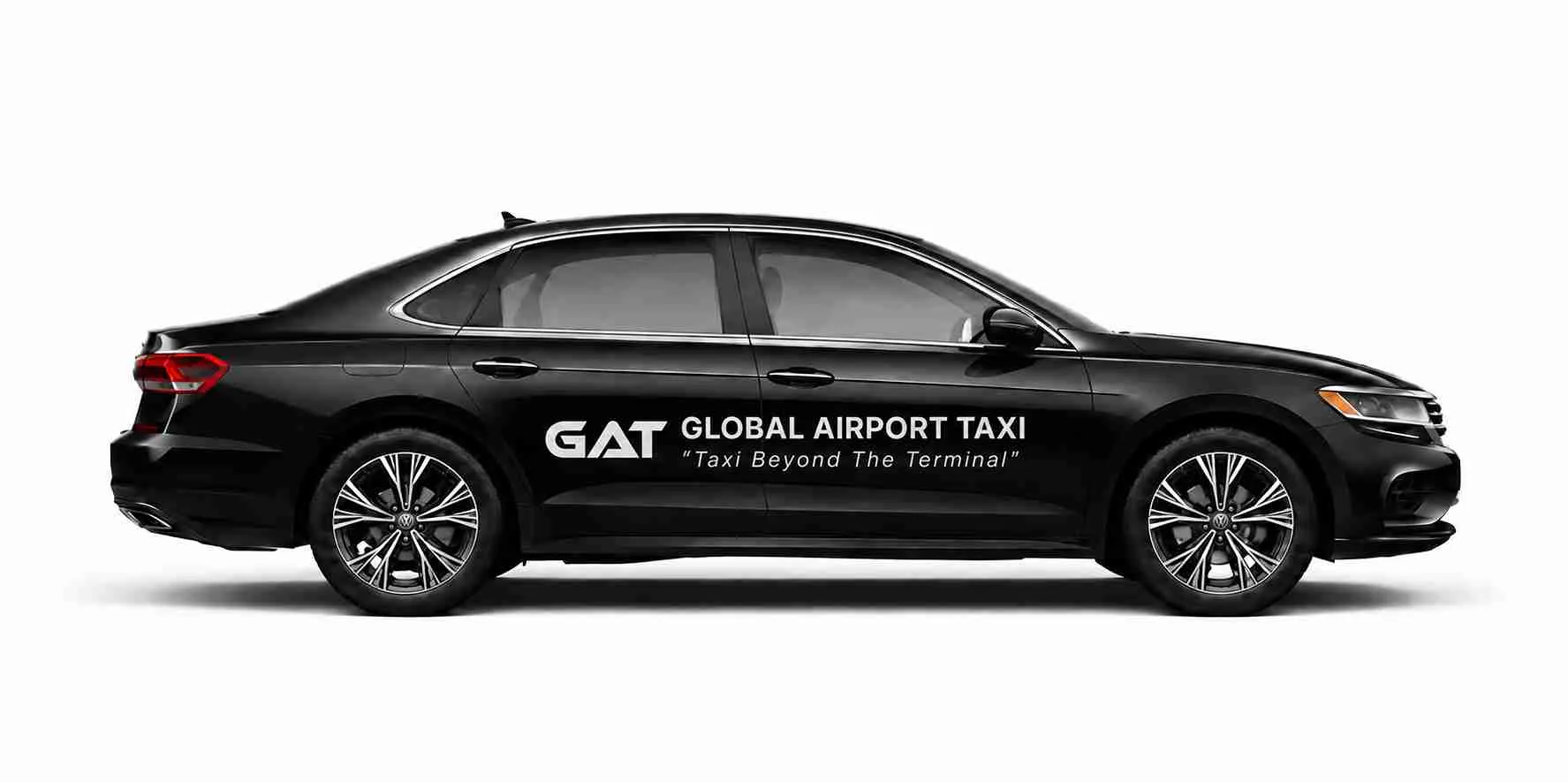 Normally a Volkswagen Passat or similar
Saloon taxi
4 passengers, 2 large bags
Two people off a train with a case each. The commonest station booking there is.
View vehicle →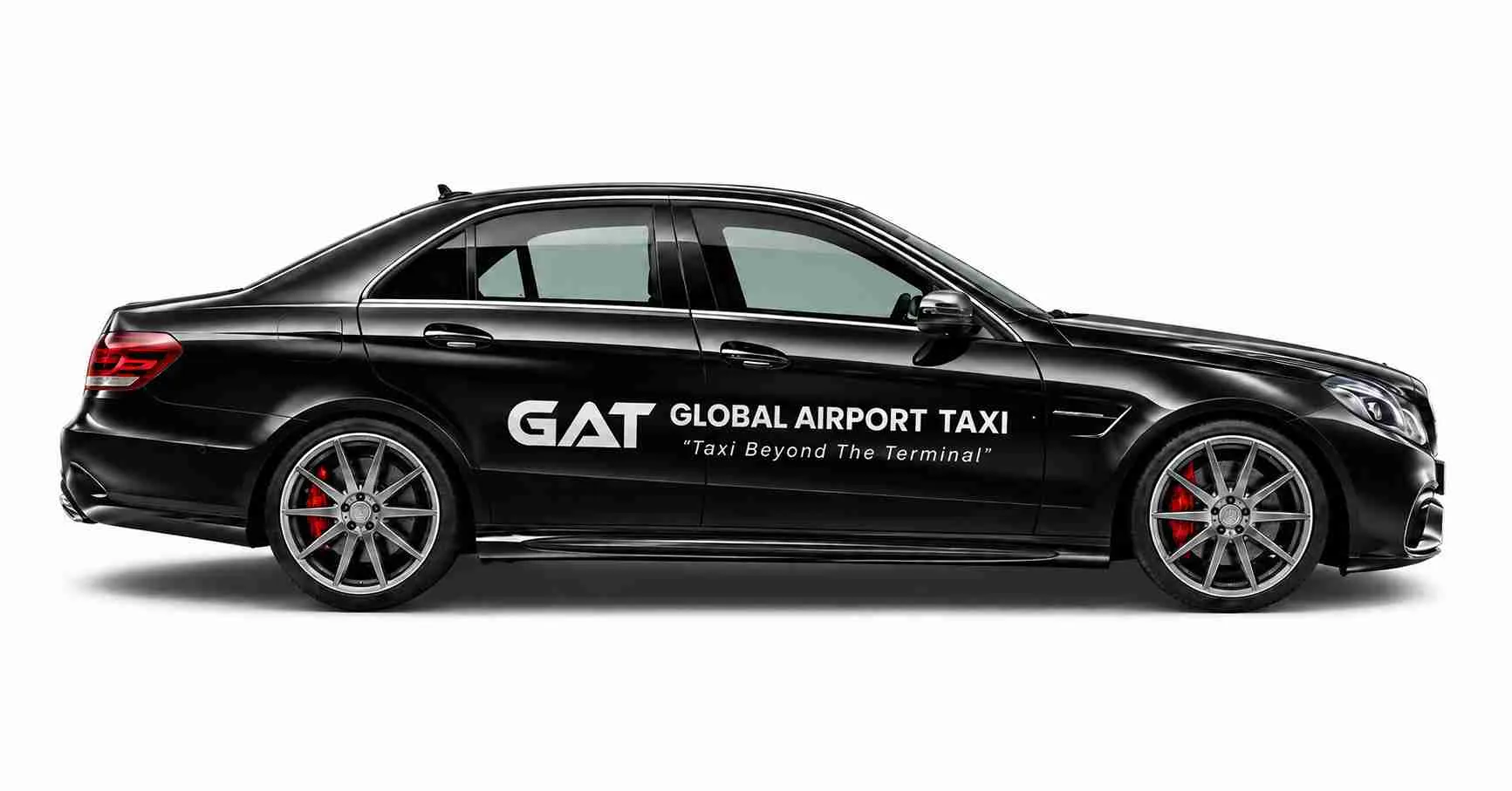 Normally a Mercedes E-Class or similar
Executive car
3 passengers, 2 large bags
Up to three, when the meeting starts the moment the train does not.
View vehicle →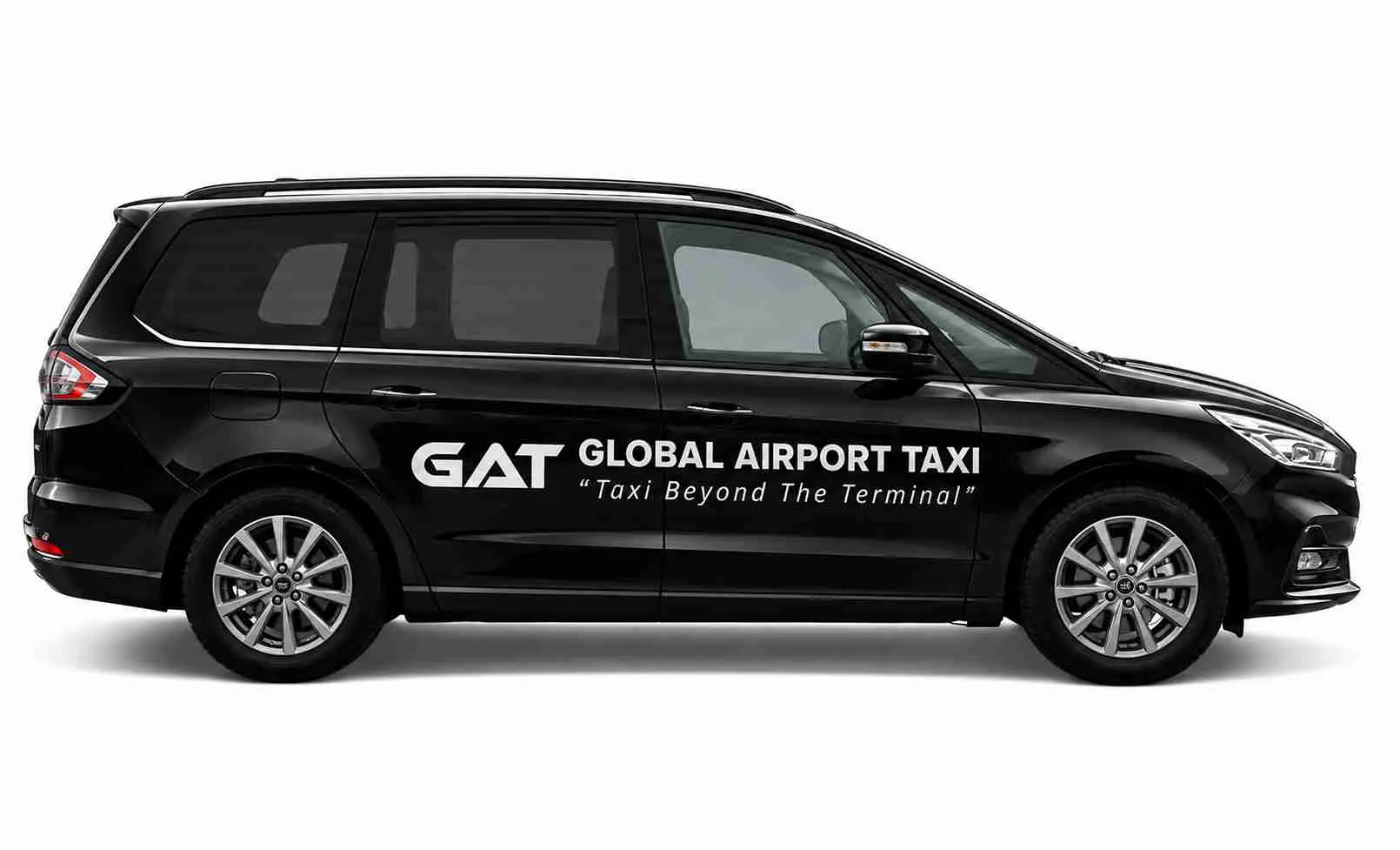 Normally an estate taxi
Estate taxi
4 passengers, 3 large bags
Four people and three large cases off a long-distance service.
View vehicle →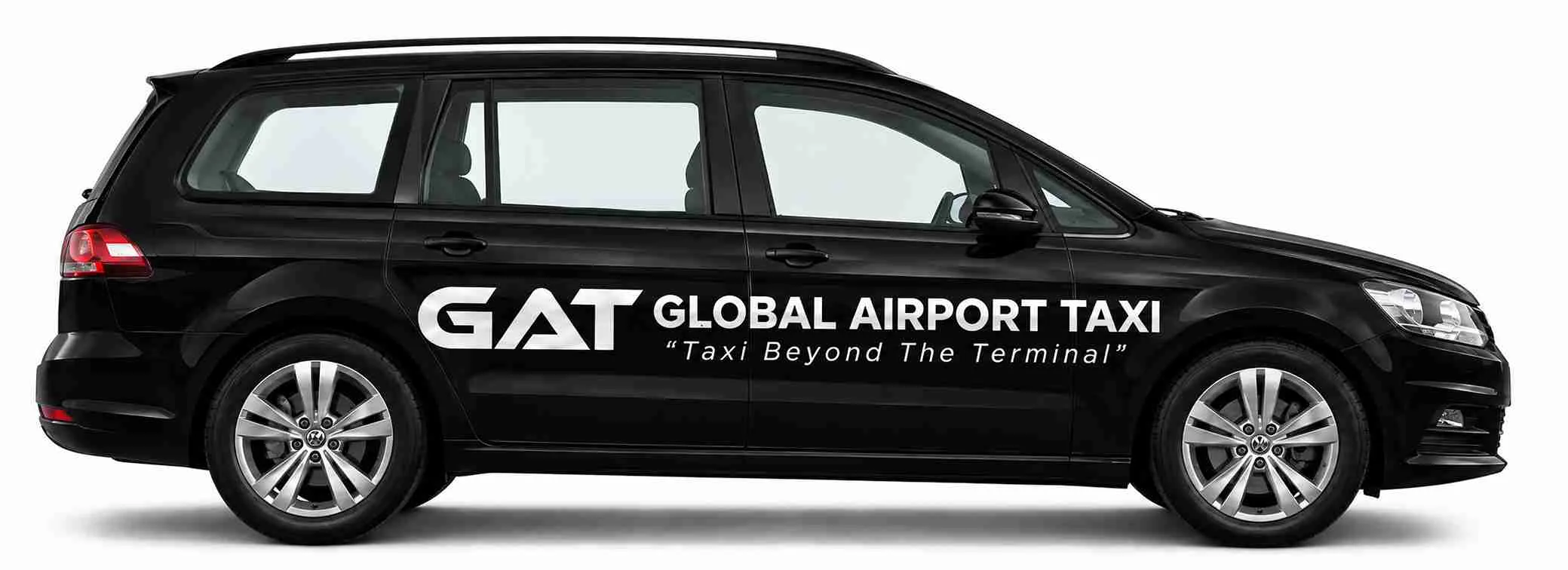 Normally a 6-seater MPV people carrier
People carrier
5 to 6 passengers, 4 to 5 large bags
Five or six with a pushchair, which no rank taxi is guaranteed to take.
View vehicle →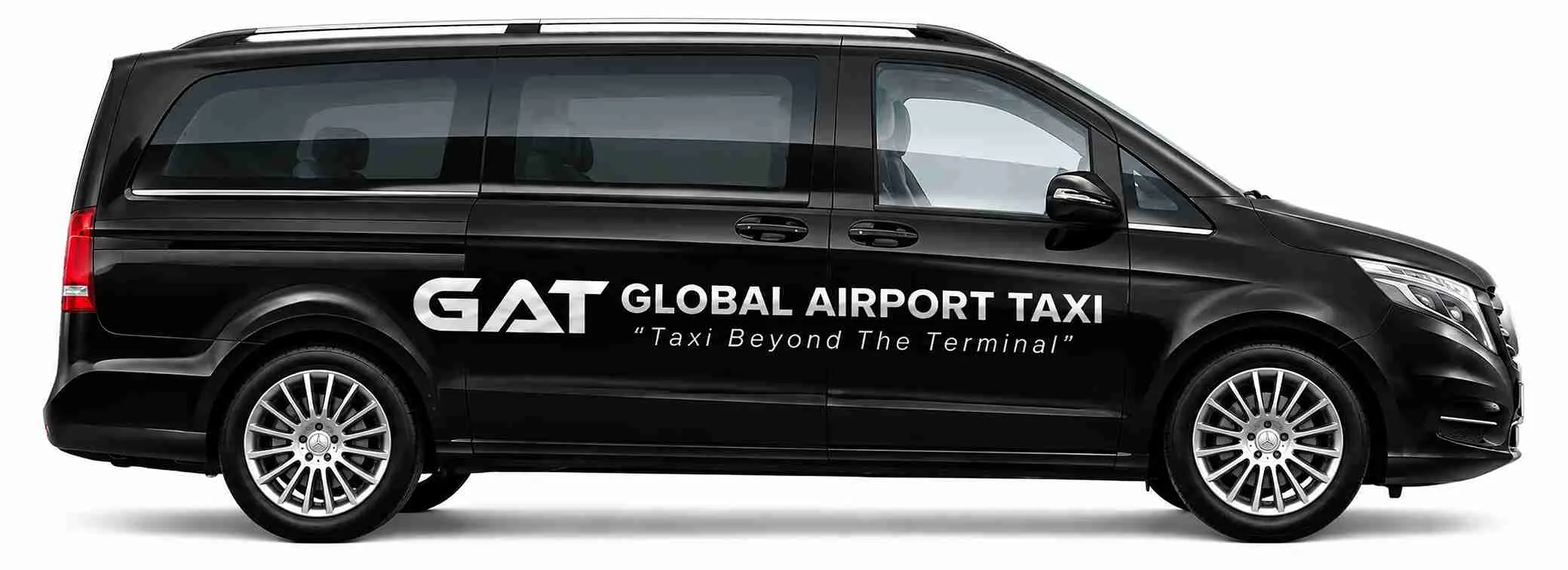 Normally a 7 seater taxi
7 seater taxi
7 passengers, 7 cabin bags
Seven travelling light, off one service, to one address.
View vehicle →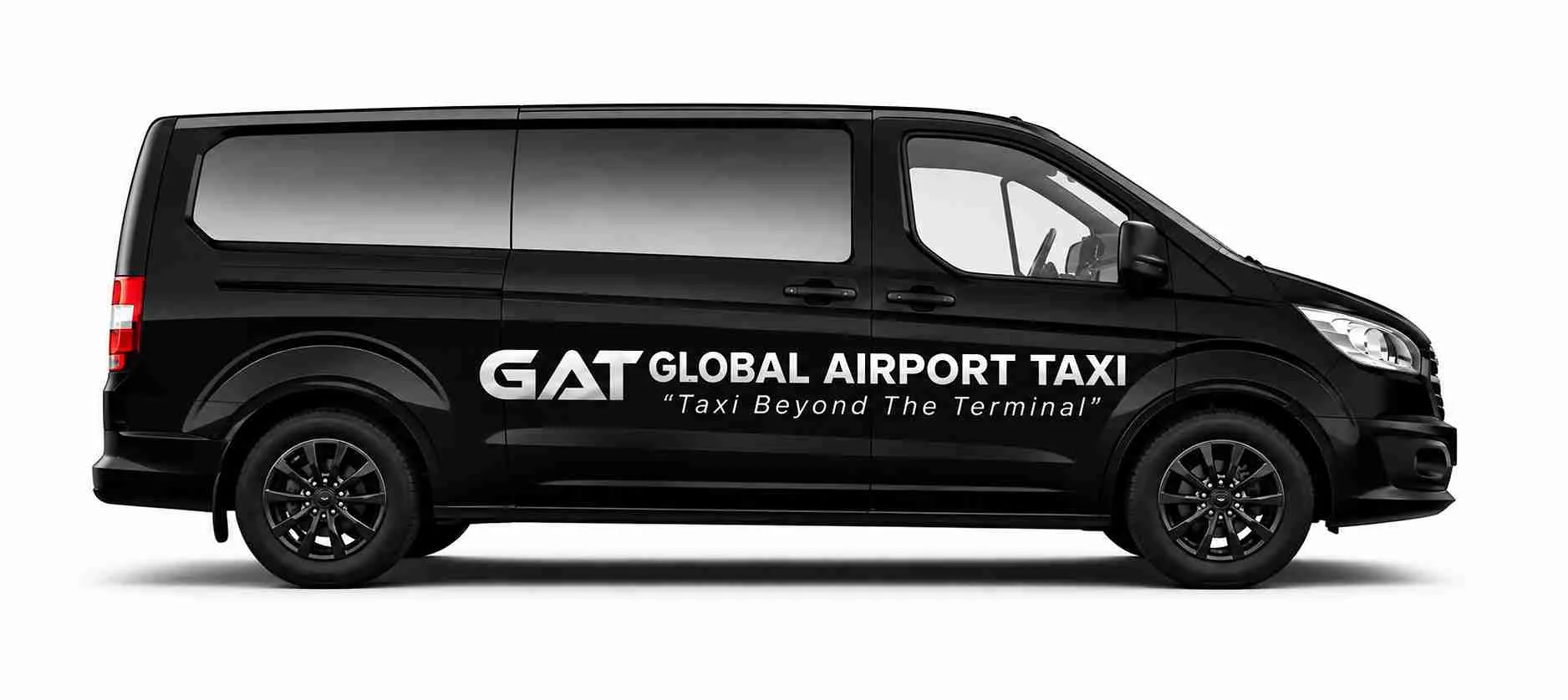 Normally an 8 seater taxi
8 seater taxi
8 passengers, 6 to 8 large bags
Eight people and six large cases, kept together to one pickup point.
View vehicle →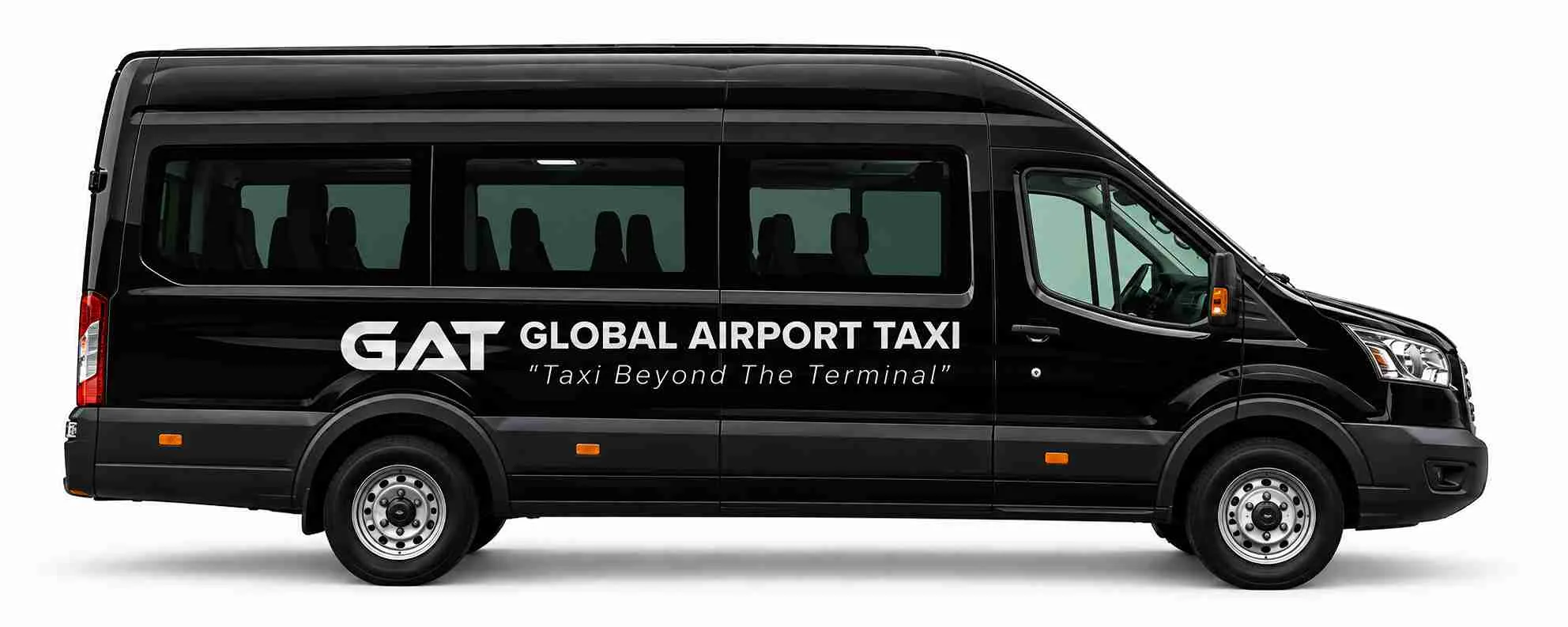 Normally a 16 seater minibus
16 seater minibus
16 passengers, about 14 large bags
A delegation or a touring party arriving on a single train.
View vehicle →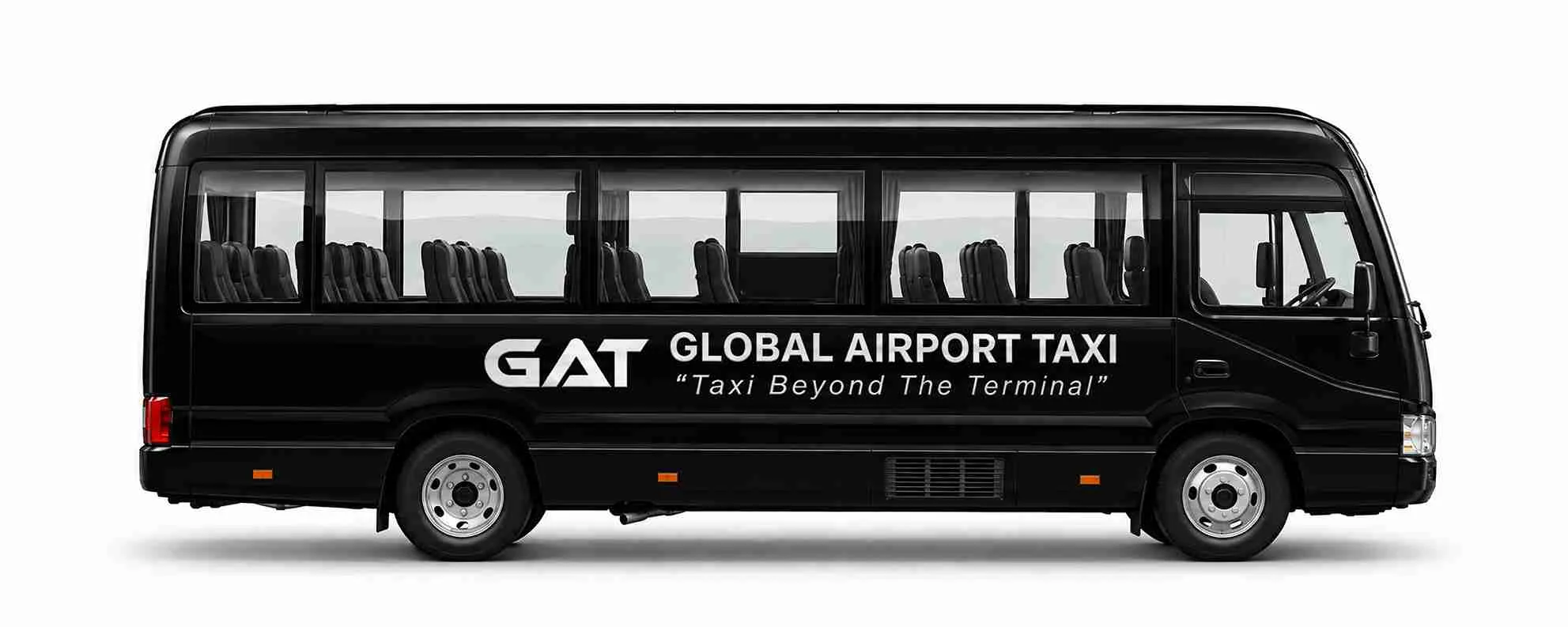 Normally a 30-seater coach
30-seater coach
30 seats
Conference intakes, and rail replacement work at short notice.
View vehicle →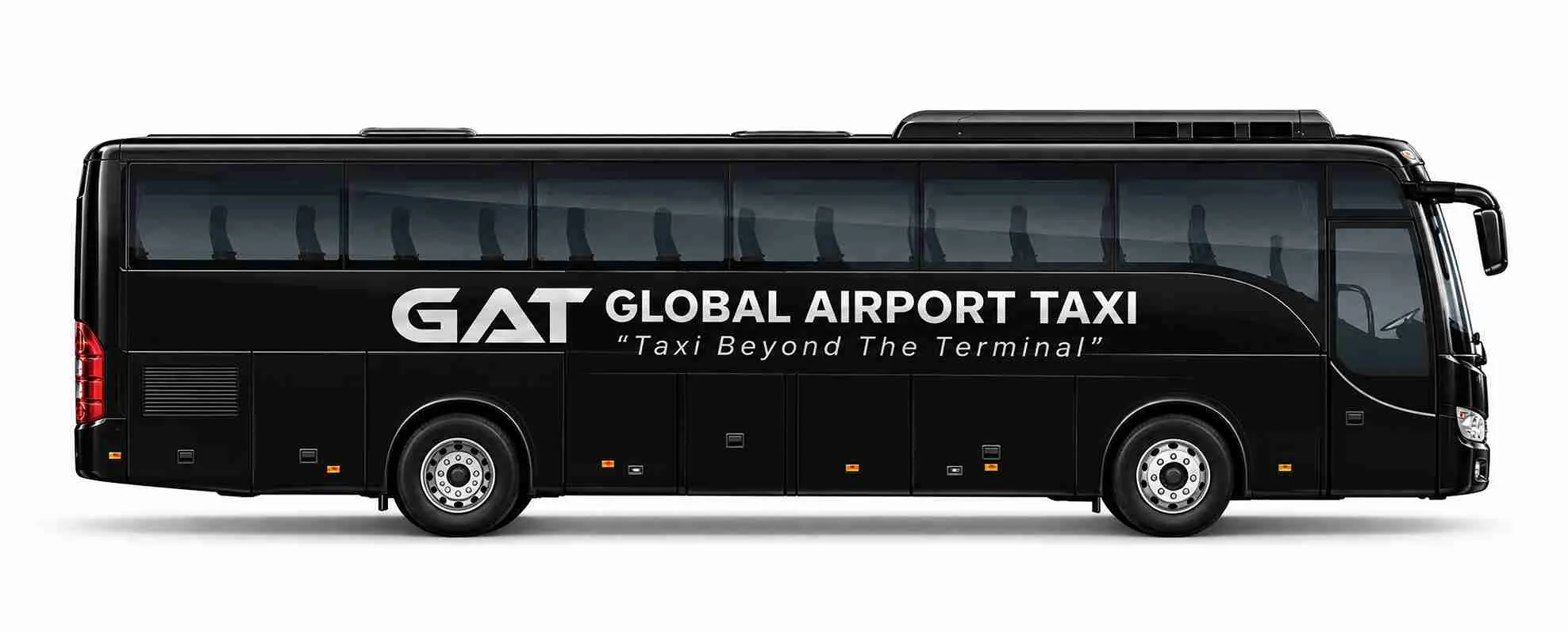 Normally a 50-seater coach
50-seater coach
50 seats
Large groups moving between a station and an airport, booked well ahead.
View vehicle →| Extra | What to know |
|---|---|
| Child seats | Infant, child and booster seats are available on request at no extra cost. In Spain a seat is needed for children under 135 cm, with a narrow exemption for taxis on urban journeys, so give us the children’s ages when you book. |
| Bikes, skis, instruments, trade tools | Fine with notice. Tell us the item and its length at booking so a vehicle with the right load space is allocated. |
| Wheelchair-accessible vehicles | Request one at booking so we can confirm a suitable vehicle for your route and date. |
Every vehicle is shown on our fleet page. Models are typical for each class, so your quote confirms what is offered. Tell us your party size and bag count so the right vehicle is allocated.
Reviews
The scores below are the ones our review widget publishes, checked on 14 October 2026. They come from travellers at airports across our network, and we show a selection of passenger reviews about airport transfers. Every review stays on the platform where it was written.
Excellent4.9453 reviewsShowing all 10 reviews
Excellent service...arrived at terminal and driver was waiting...helped with luggage to the car...smooth drive...perfect overall
Very reliable and easy to get a hold of. I was very confused leaving the airport - user error haha - and they were super helpful. My flight was also delayed and the guy who picked me up was on top of it.
Super affordable and professional service! The pricing was very clear from the start, with no hidden charges, which I really appreciated. Everything went smoothly, and the professionalism of the global airport taxi service stood out. Highly recommended for anyone looking for a hassle-free and budget-friendly option.
Amazing taxi service to the airport! Our driver was friendly, on time, and made the whole trip so easy. The car was clean and comfortable, and we got to the airport right on time. Would definitely use this service again!
Excellent service , driver waited for us as flight was delayed, clean car and smooth ride
I would totally recommend Global Airport Taxi to anyone needing a taxi service for their airport commute. I decided on way to the airport that I was flying out of that I will need a cab service at LHR. They were quick to respond to and accommodated some of my last minute schedule change requests after I had landed at LHR. Totally reliable and willing to be flexible. Outstanding customer support provided by Jennifer and Root. Keep it up guys !!
This was a brilliant service our driver was excellent he was friendly and helpful. Used again for the return journey and driver was professional and ensured we made it to the airport on time with heavy traffic
The service was extremely reliable. My cab arrived exactly on time for my early morning flight, which was a huge relief. Everything went smoothly, and I felt confident choosing this service. Highly recommend global airport taxi for stress-free airport transfers!
Amazing customer service, on time driver helped with cases. A pleasant experience Thank you
Very clean car and on time very polite driver will use them again
These scores cover the whole network rather than station transfers alone. Trustindex supplies the widget, and every review appears exactly as its author wrote it. Nothing on this page is a review we wrote.
The service
A pre-booked private hire vehicle, priced per vehicle before travel, meeting you at the point your station permits rather than at the rank by default.
The short answer A pre-booked private hire vehicle between a railway station and an airport, hotel or address. The fare is agreed per vehicle before you travel, the pickup point is the one that station actually allows a booked car to use, and the pickup time is one you set, because we track flights rather than trains.
Not a taxi off the rank. In Britain that is a legal distinction rather than a marketing one: a private hire car cannot be hailed and must be booked before the journey, which is exactly why it can be waiting for you with a name board when you walk out.
There is no flight number here. You choose the pickup time, 15 minutes of waiting are included from it, and if the train slips a message moves the booking. We would rather give you that plainly than imply a tracking service we do not run.
Nobody weighed it at a check-in desk, so rail luggage runs bigger than air luggage. The class is set from the case count, which is why four people off a long-distance service usually need an estate or a people carrier.
Per vehicle, in the currency of the booking, settled before you travel, with any station access charge already inside it. No meter, so a slow road out of the city does not change it.
Airport to station, station to airport, and hotel to station. The first is the one the network is built around and the only one where your booking can follow a live arrival time, because an aircraft has a flight number and a train does not travel with one we can watch. The second is the one where timing matters most, because you are working to a boarding deadline rather than an arrival. The third is the quiet one that goes wrong most often, because hotel names repeat across a city.
It is not a taxi, in the strict sense, and we will not call it one to make it sound simpler. It is not a railway service and we have no relationship with any railway or station company — everything this page says about a station comes from what that station’s own operator publishes. And it is not a train-tracking service.
A short hop into the city centre from a station with a well-run rank, off-peak, for one or two people with a bag each. The rank is right there, the queue moves, and a metered fare over a couple of kilometres will usually come in under a pre-booked one. We would rather you knew that than booked a car you did not need. What the rank cannot promise is a specific vehicle, a child seat, a known price before you travel, or a driver at 05:40 on a Sunday.
The one fact
At a large station these are two different places, and the rule changes from station to station even under one operator. This is the fact this whole page is built on.
The short answer The taxi rank is for licensed taxis that can be hailed. A pre-booked private hire vehicle is a different licence class and is usually directed elsewhere — at London Euston, Network Rail states the rank is for black cabs only and private hire is directed to Euston Square Gardens West, while at London Paddington the same operator says pre-booked taxis are on the rank. Always go by the point named on your confirmation.

A licensed taxi may be hailed and may sit on a rank. A private hire vehicle — which is what every pre-booked transfer is — must be booked before the journey. Transport for London puts it plainly: “only black taxis… can be hailed on the street or hired at a rank without a booking”, and “minicabs can only be booked in advance”.
It means the rank you can see is not necessarily where your car is. We should be precise here: no official source we read states in so many words that a private hire vehicle may never stand on a rank. What it does state, station by station, is where each kind of vehicle is directed — and at some stations that is two different places.
| Station | The rank | A pre-booked car |
|---|---|---|
| London Euston | A 36-space rank on the Euston Square Gardens East site, at the front of the bus station next to Eversholt Street and Euston Road, open since 7 April 2024. | The best-evidenced separation in Britain. |
| London King's Cross | Outside the Great Northern Hotel on Pancras Road. | Not published. |
| London St Pancras International | Two ranks on different streets — Midland Road and Pancras Road — which is unusual and worth knowing before you choose an exit. | Eurostar publishes “an accessible set-down and pick-up point on Pancras Road”, adding that “vehicles should not be left unattended here”. |
| London Paddington | Next to Platform 12, off Bishops Bridge Road, fully covered and signposted from inside the station, with an accessible rank on the deck above Platform 12 reached by the Platform 12 lifts. | The clearest arrangement in London, and the opposite of Euston’s. |
| London Victoria | At the front of the station on Terminus Place, described by Network Rail as “a designated TfL taxi rank operating black cabs, all of which are wheelchair accessible”. | Not published for the rank. |
| London Waterloo | On Station Approach outside Exit 1, opposite Platform 1, “a designated TfL taxi rank for black cabs, all wheelchair accessible”, with a further black-cab rank on Cab Road outside Exit 3. | The only station we found whose operator publishes a point named after a ride-hailing company: Network Rail lists a “Drop off and pick up point (UBER), Sandel Street” — but marks it drop-off only, so it does not solve the collection. |
| London Liverpool Street | Two ranks split by function — one for drop-off and one for pick-up — both uncovered, both with no help point nearby, and neither given a street name beyond “Liverpool Street”. | Not published, and the thinnest official information of any station this size. |
| Manchester Piccadilly | At the Fairfield Street entrance, alongside the short-stay car park and the pick-up point, described as a designated rank operating black cabs, all wheelchair accessible. | Not named as such, but APCOA, which runs the short-stay car park immediately beside the rank, states plainly that “private cars can pick up and set down at this location” and that “the taxi rank is situated alongside this area”. |
| Birmingham New Street | Four ranks, and Network Rail gives street names for only two of them — Station Street / Dudley Street and Smallbrook Queensway. | Here the exclusion is physical rather than inferred. |
| Edinburgh Waverley | Outside the station on Waverley Bridge and on East Market Street — the 2014 release calls the second one Market Street and the current page calls it East Market Street. | There is no pickup inside the station for anyone. |
| Glasgow Central | Three ranks on three different streets: Hope Street, Gordon Street and Union Street. | Not published. |
A licensed taxi — a black cab in London — may be hailed and may sit on a rank. A private hire vehicle, the minicab, must be booked before the journey and cannot be hailed on the street or at an airport. Every pre-booked transfer in Britain is the second kind, which is why rank access is not ours to assume.
The French distinction is between the taxi and the VTC, and it runs the same way: the taxi works the rank and the meter, the VTC works on a booking made in advance at a price agreed in advance. A VTC has no right to sit on a rank waiting for trade. Which is precisely why a VTC can quote you a figure beforehand and a rank taxi cannot.
Italy separates the metered taxi from the NCC, the pre-booked hire-with-driver class that every “private transfer” in the country actually runs under. The NCC is a booked service rather than a rank service, so the same rule applies: the pickup point is the one the station designates, not the taxi stand.
When the train is late
The one place this industry is routinely vague, answered plainly — including about what we do not do.
The short answer We track flights and we do not track trains, and we will not imply otherwise. A station pickup runs to the time you set, with 15 minutes of waiting included from it. If the train is delayed or you are rerouted to a different station, a message to the driver moves the booking — that is the mechanism, and it is free.
That sentence is the whole of our position, and it is worth stating because the industry around us mostly does not. On an airport pickup your booking is tied to a flight number, which gives a reliable live arrival time, so a delayed inbound moves the car by itself. A railway journey has no equivalent that a transfer operator can lean on: running data is fragmented across operators and borders, and a “train number” means different things in different countries. So a station pickup runs to the time you set, with 15 minutes of waiting included from it, and a message from you is what moves the booking.
Three patterns are common enough to be worth naming. The first is flight-tracking wording left on a railway station page — a page about a station that promises to track your flight has not been written for you. The second is a delay tolerance so short it cannot survive a real disruption; a half-hour allowance is routine, and rail delays are not measured in half hours. The third is the quiet one: terms that treat a cancelled train as a no-show and charge the fare in full. A train being cancelled is not something you did.
Message the driver on the number in your confirmation — that is the fastest route, because the driver is the person standing there. The booking moves to the new time where the driver is still available, and where they are not we tell you rather than leaving you to find out at the kerb. If you are rerouted to a different station in the same city, which happens more often than most people expect, tell us the new station and we move the pickup; a reasonable transfer operator treats that as a change, not a cancellation.
Because it is measured from a different thing, and a longer number would be a worse promise. An airport allowance of 60 minutes starts when the aircraft actually lands, whenever that is. A station allowance starts at a clock time you chose, so it is a buffer for the walk out of the building rather than cover for the journey. Stretching it would not help a train running an hour late; telling you to send one message would.
Coverage, honestly
A station transfer rides on the airport network rather than a rail one, so the footprint is the same 81 countries. What follows is the inside and the outside of that line, named.
The short answer Coverage follows the airport network rather than a separate rail network: the transfer works wherever the station’s city has an airport among the 81 countries with a published airport page, which includes every station in the tables below. Airport to station and station to airport are the core of it; a run with no airport at either end is worth asking about first.
We are an airport transfer operator and a railway station is an address. So the question is never whether we have a rail network — it is whether the city that station sits in has an airport among the 81 countries the network publishes pages for. Where it does, the station is a destination like any other. Where it does not, no amount of willingness makes a car appear, and we would rather tell you before you plan the journey than after.
The strongest version of this service is the one the network is actually shaped for: airport to station and station to airport. A station-to-hotel or station-to-station run inside the same city is perfectly possible where we have supply there, but it has no airport at either end, so it is worth asking rather than assuming. We would rather draw that line in public than take a booking we cannot honour.
United Kingdom
11 stations, every one read at Network Rail or the operator that runs its car park. Only 7 of them publish where a pre-booked car may collect. The rest say nothing, which is itself the finding.
The short answer Of 11 major British stations, only 7 publish anything about where a pre-booked vehicle may collect. Network Rail says the Euston rank is for black cabs only and sends private hire to Euston Square Gardens West; at Paddington it says pre-booked taxis wait on the rank itself; and at Birmingham New Street the car park operator states that rank entry needs a taxi association pass. Edinburgh Waverley admits no vehicles at all.
| Station | Operator | Pre-booked point | Airports |
|---|---|---|---|
| London Euston | Network Rail | Published | London Heathrow LHR, London Gatwick LGW, London Luton LTN, London Stansted STN |
| London King's Cross | Network Rail | Not published | London Heathrow LHR, London Gatwick LGW, London Luton LTN, London Stansted STN |
| London St Pancras International | Network Rail High Speed Ltd | Published | London Heathrow LHR, London Gatwick LGW, London Luton LTN, London Stansted STN |
| London Paddington | Network Rail | Published | London Heathrow LHR, London Gatwick LGW, London Luton LTN |
| London Victoria | Network Rail | Not published | London Gatwick LGW, London Heathrow LHR |
| London Waterloo | Network Rail | Published | London Heathrow LHR, London Gatwick LGW, London City LCY |
| London Liverpool Street | Network Rail | Not published | London Stansted STN, London Heathrow LHR, London City LCY |
| Manchester Piccadilly | Network Rail | Published | Manchester MAN |
| Birmingham New Street | Network Rail | Published | Birmingham BHX |
| Edinburgh Waverley | Network Rail | Published | Edinburgh EDI |
| Glasgow Central | Network Rail | Not published | Glasgow GLA |
Every amount on this page belongs to somebody else — a station operator, a car park company or a taxi regulator — and each of them revises on its own calendar. Read them as background and read your quote as the price.

London, United Kingdom
Network Rail
London, United Kingdom
Network Rail
London, United Kingdom
Network Rail High Speed Ltd, on behalf of HS1 Ltd, with Eurostar running the international platforms and Network Rail the low-level areas
London, United Kingdom
Network Rail
London, United Kingdom
Network Rail
London, United Kingdom
Network Rail
London, United Kingdom
Network Rail
Manchester, United Kingdom
Network Rail
Birmingham, United Kingdom
Network Rail
Edinburgh, United Kingdom
Network Rail
Glasgow, United Kingdom
Network Rail
Europe
The continental stations, with the taxi and VTC rules that separate them. Read at the station operator or the city’s transport authority.
The short answer French law keeps taxi and VTC apart: a VTC must be booked in advance, may not wait on a taxi rank and may not be hailed. Italy draws the same line between the metered taxi and the pre-booked NCC. The practical result is the same as in Britain — the rank is not where a booked car waits.
| Station | Operator | Pre-booked point | Airports |
|---|---|---|---|
| Paris Gare du Nord | SNCF Gares & Connexions | Not published | Paris Charles de Gaulle CDG, Paris Orly ORY, Paris Beauvais BVA |
| Paris Gare de Lyon | SNCF Gares & Connexions | Not published | Paris Charles de Gaulle CDG, Paris Orly ORY |
| Brussels Midi / Zuid | SNCB / NMBS | Not published | Brussels BRU, Brussels South Charleroi CRL |
| Amsterdam Centraal | NS | Not published | Amsterdam Schiphol AMS |
| Berlin Hauptbahnhof | Deutsche Bahn / DB InfraGO | Not published | Berlin Brandenburg BER |
| Frankfurt (Main) Hauptbahnhof | Deutsche Bahn / DB InfraGO | Not published | Frankfurt FRA |
| München Hauptbahnhof | Deutsche Bahn / DB InfraGO | Not published | Munich MUC |
| Roma Termini | RFI | Not published | Rome Fiumicino FCO, Rome Ciampino CIA |
| Milano Centrale | RFI | Not published | Milan Malpensa MXP, Milan Linate LIN, Bergamo Orio al Serio BGY |
| Barcelona Sants | Adif | Not published | Barcelona El Prat BCN, Girona GRO, Reus REU |
| Madrid Puerta de Atocha – Almudena Grandes | Adif | Not published | Adolfo Suárez Madrid-Barajas MAD |
| Zürich Hauptbahnhof | SBB | Not published | Zurich ZRH |
| Wien Hauptbahnhof | ÖBB | Not published | Vienna VIE |
Station charges in particular move quietly: a car park operator can reprice without the station page ever changing. Nothing above is a quotation.

Paris, France
SNCF Gares & Connexions
Paris, France
SNCF Gares & Connexions
Brussels, Belgium
SNCB / NMBS, with Eurostar on the international platforms
Amsterdam, Netherlands
NS, with the City of Amsterdam regulating the rank
Berlin, Germany
Deutsche Bahn / DB InfraGO
Frankfurt, Germany
Deutsche Bahn / DB InfraGO
Munich, Germany
Deutsche Bahn / DB InfraGO
Rome, Italy
RFI, with Grandi Stazioni Rail running the building
Milan, Italy
RFI, with Grandi Stazioni Rail running the building
Barcelona, Spain
Adif
Madrid, Spain
Adif
Zurich, Switzerland
SBB
Vienna, Austria
ÖBB
The rest of the world
The stations outside Europe, with the same question asked of each: where may a pre-booked vehicle actually stop.
The short answer Outside Europe the pattern repeats with local names: several large stations route ride-hailing and pre-booked vehicles to a specific level, street or garage that is not the taxi stand, and publish it in their own station information rather than anywhere a traveller would look.
| Station | Operator | Pre-booked point | Airports |
|---|---|---|---|
| New York Penn Station | Amtrak | Published | New York JFK JFK, New York LaGuardia LGA, Newark Liberty EWR |
| Grand Central Terminal | Metro-North Railroad and the Long Island Rail Road | Not published | New York JFK JFK, New York LaGuardia LGA, Newark Liberty EWR |
| Washington Union Station | Owned by the US Department of Transportation | Not published | Washington Reagan National DCA, Washington Dulles IAD, Baltimore/Washington BWI |
| Chicago Union Station | Amtrak | Not published | Chicago O'Hare ORD, Chicago Midway MDW |
| Los Angeles Union Station | Los Angeles Union Station | Not published | Los Angeles International LAX, Long Beach LGB |
| Seattle King Street Station | Published by Sound Transit and the City of Seattle | Not published | Seattle-Tacoma International SEA |
| Toronto Union Station | City of Toronto | Published | Toronto Pearson YYZ |
| Vancouver Pacific Central | VIA Rail | Not published | Vancouver International YVR |
| Beijing South Railway Station | Published by the Beijing municipal government | Published | Beijing Capital PEK |
| Shanghai Hongqiao Railway Station | Published by the Shanghai municipal government | Not published | Shanghai Pudong PVG, Shanghai Hongqiao SHA |
| Kyoto Station | JR West | Not published | Osaka Kansai KIX |
| Tokyo Station | JR East | Not published | Tokyo Haneda HND, Tokyo Narita NRT |
| Sydney Central | Transport for NSW | Not published | Sydney Kingsford Smith SYD |
| Melbourne Southern Cross | Southern Cross Station Pty Ltd | Not published | Melbourne Tullamarine MEL |
| Brisbane Roma Street | Queensland Rail | Not published | Brisbane BNE |
| Auckland Waitematā Station | Auckland Transport | Not published | Auckland AKL |
| Sandton Gautrain Station | Gautrain | Not published | O. R. Tambo International JNB |
These came off the operators’ own pages on the day this was written. They are not promised to hold until you travel.

New York, United States
Amtrak, at Moynihan Train Hall
New York, United States
Metro-North Railroad and the Long Island Rail Road
Washington DC, United States
Owned by the US Department of Transportation, with Amtrak and the Union Station Redevelopment Corporation involved in its management
Chicago, United States
Amtrak
Los Angeles, United States
Los Angeles Union Station
Seattle, United States
Published by Sound Transit and the City of Seattle, neither of which states who owns it
Toronto, Canada
City of Toronto
Vancouver, Canada
VIA Rail
Beijing, China
Published by the Beijing municipal government
Shanghai, China
Published by the Shanghai municipal government
Kyoto, Japan
JR West, with the station building run by Kyoto Station Building Development
Tokyo, Japan
JR East
Sydney, Australia
Transport for NSW
Melbourne, Australia
Southern Cross Station Pty Ltd, under a management agreement with the state transport department
Brisbane, Australia
Queensland Rail
Auckland, New Zealand
Auckland Transport
Johannesburg, South Africa
Gautrain
Driving in
Ten published access rules, read at the station operator or the company that runs its car park. Where a station levies a charge, it is inside the figure we quote.
The short answer Most British stations publish a time limit rather than a fee — 40 minutes at King’s Cross, five at Victoria and free while the driver stays in the car, two at St Pancras. Where the pickup runs through a short-stay car park there is a real tariff: Manchester Piccadilly charges £3.00 after ten free minutes and £12.50 at two hours, Birmingham New Street £2.00 after twenty free minutes.
| Station | Allowance or tariff | Published by | What it actually says |
|---|---|---|---|
| Manchester Piccadilly | 10 min free, then £3.00 to 40 min | APCOA | The steepest escalation found: £5.50 to an hour, £12.50 to two hours, £35.00 to three, and £20.00 for each additional hour. APCOA states that private cars can pick up and set down here and that the taxi rank is alongside. Fairfield Street, M1 2QF, open around the clock, 44 spaces. |
| Birmingham New Street | 20 min free, then £2.00 to 40 min | APCOA | £3.40 to an hour, £6.20 to two hours, £9.00 to three and £12.00 to four, which is the maximum stay. A pay-and-display ticket must be taken even within the free period. Queens Drive, B2 4ND — and the site is closed roughly 01:45 to 04:30, so an overnight arrival has nowhere to be set down here. |
| London King's Cross | 40 minutes, no fee | Network Rail | Pick-up and drop-off on the forecourt off Pancras Road, satnav N1C 4TB, with three Blue Badge spaces. Network Rail’s disabled-access page says one hour for Blue Badge holders where its accessible guide says 40 minutes, and the two pages also disagree on whether a station car park exists. |
| London Waterloo | 4 hours maximum, no fee | Network Rail | Two accessible bays outside the station reception on Station Approach, satnav SE1 8SW, operating Monday to Friday 08:30 to 18:30 — reduced to one bay while roof works run to mid-2026. Blue Badge holders with a valid International Blue Badge park free. |
| London Victoria | 5 minutes, free while the driver stays in the car | Network Rail | The Eccleston Road car park, satnav SW1W 9SJ, doubles as the pick-up and drop-off point with no charge provided the driver remains in the vehicle. The only rule of its kind we found anywhere. Cars cannot wait at the Hudson’s Place or Terminus Place points. |
| London St Pancras International | 2 minutes, 5 for Blue Badge | Network Rail | The tightest published allowance on this page, at the Pancras Road drop-off zone. Eurostar adds that vehicles should not be left unattended there. No fee is published. |
| London Paddington | No waiting permitted | Network Rail | The operator states you will be unable to wait at its drop-off and pick-up points, and that a vehicle may not be left unattended at the Bishops Bridge Road rank. The car park on Bishop’s Bridge Road, satnav W2 6AA, is run by APCOA, which sets the tariff. |
| Edinburgh Waverley | 30 or 40 minutes free, off site | Network Rail | No vehicle may enter the station at all. Private drop-off is on Calton Road and Market Street, with free short-term parking at the New Street car park — given as 30 minutes in Network Rail’s 2014 release and 40 on its current station page. |
| London Euston | Nothing published | Network Rail | No forecourt or drop-off charge is published, you cannot wait at the drop-off and pick-up point, and there is no station car parking at all because of the HS2 works. |
| London Liverpool Street and Glasgow Central | Nothing published | Network Rail | Neither publishes a drop-off fee, a time limit, a barrier or a permit scheme. Liverpool Street has no station car parking at all, and Glasgow Central’s Hope Street point holds one vehicle at a time. |
Reference figures, not our prices. The one that binds your journey is printed on your confirmation.
British airports charge a drop-off fee as a matter of course — our own airport pages carry them. British stations mostly do not. What they do instead is cap your time, or route the pickup through a short-stay car park that has a tariff of its own. The practical effect is the same — waiting costs something — but the mechanism is different, and a page that calls a car park tariff a “drop-off charge” has not read the source.
At the two stations that publish a full tariff. Manchester Piccadilly gives ten free minutes and then climbs fast: £3.00 at 40 minutes, £12.50 at two hours, £35.00 at three. Birmingham New Street gives twenty free minutes but still wants a pay-and-display ticket, and closes the site altogether between roughly 01:45 and 04:30. Both are reasons to give a realistic pickup time rather than an optimistic one, and both are inside the figure we quote you.
Car park tariffs at most of the London stations, left luggage prices at every station except Euston, and the penalty for overstaying an enforced drop-off zone. Operators state that charges apply and then do not say what they are. Where that is the case this page says so rather than filling the gap.
Airport and station
The two journeys the network is actually built around, and the one case where we tell you to take the train instead.
The short answer Airport to station is the leg that can follow a live flight arrival, so a delay moves the car rather than losing it. Station to airport is the leg where timing matters most, because you are working to a check-in deadline. Where a city has a fast direct rail link from its airport and you are travelling light, take the train.
Airport to station is the leg where your booking follows a live arrival time, because the flight number gives us one. If only one half of your journey is pre-booked, this is the half where booking ahead buys the most.
Station to airport is the opposite problem: you are working to a check-in deadline, not an arrival. Build the ground leg in first, then the station access rule, then the walk — and remember that a missed advance rail ticket is often simply gone, where a flight is rebooked.
Several of these cities run a direct rail link from the airport that is faster than any car in traffic. Where that is true and you are travelling light at a sensible hour, take it. A transfer earns its place on luggage, groups, odd hours, accessibility and a price known in advance — not on beating a dedicated rail link down a clear line.
An airport-to-station transfer usually ends at a kerb with a time limit, and the walk from that kerb to the platform is on you. At the larger stations it is a genuine distance with luggage. Build five minutes into your own plan that nobody else will build for you.
Luggage
The case count picks the vehicle, and at a railway station the distance between your platform and your car is a real part of the journey.
The short answer Book by the case count rather than the seat count: rail luggage runs bigger than air luggage, so four people off a long-distance service usually need an estate or a people carrier. Allow for the walk too — at a large station the permitted pickup point is often on a different level from your platform, with no trolley past the gateline.
Nobody weighed it at a check-in desk. Rail passengers carry what fits in a car boot rather than what an airline allows, which is why a party that would share a saloon flying often needs an estate or a people carrier off a train. The fare is per vehicle, so the case count picks the class and getting it right at booking costs nothing.
At an airport the trolley goes to the kerb. At a station there is often no trolley past the gateline, the pickup point can be on a different level from your platform, and at the oldest stations there are steps. Paddington’s own guide routes the accessible rank to a deck above Platform 12; Edinburgh Waverley’s pickup streets are at different levels altogether. If you are moving heavy bags, say so at booking and we will name the closest permitted point rather than the most convenient one for the driver.
Most of these stations have a left luggage office and almost none publishes what it costs. Euston is the exception: up to three hours is £7.50 and 12 to 24 hours is £12.50. Everywhere else the operator says the service exists and stops there, so budget for it rather than planning around a number you have read on a travel site.
All carried, with notice, and the figure we need is the length of the item rather than its weight, because length decides the load space. A station is one of the few places people routinely arrive with a bicycle, so flag it at booking rather than at the kerb.
On the day
Five steps each way. Two of the ten are fields on a booking form, and the other eight depend on getting those two right.
The short answer Arriving, the order is: book the station by its full name, read the pickup point off your confirmation before you board, message the driver if the train slips, follow the signs to that point rather than to the taxi rank, and check the car against your confirmation. Leaving, work the pickup time back from the boarding deadline rather than the departure time.
Booking
What is included, what is not, and what happens if you change your mind — in numbers rather than adjectives. Lines still marked are waiting on the operator’s own confirmed figures.
The short answer The fare is per vehicle, paid in full at booking, cancellable free up to 24 hours before pickup. A station pickup includes 15 minutes of waiting from the time you set; an airport pickup includes 60 minutes from the actual landing time. Child seats are free, there is no deposit, and we do not track trains.
The vehicle, in the currency of the booking, before you travel. There is no per-person multiplier, no meter and no surge, so the figure does not move because the traffic did or because the station was busy when you came out. Where a station charges for access, that charge is inside the quote rather than added at the kerb.
Because it is measured from a different thing. An airport pickup is tied to your flight number, so the 60 included minutes start when the aircraft actually lands, however late that is. A station pickup has no such anchor — the clock starts at the time you chose, so the 15 included minutes are a buffer for the walk out of the building rather than for the journey itself. If the train is late, the fix is a message, not the allowance.
A confirmation naming the licensed operator, the driver, the vehicle and — the part that matters here — the exact meeting point at that station, with the fare and any charges itemised rather than presented as one figure. The figure printed on it is the figure you pay.
Car park tariffs are revised more often than anything else here. Treat the table as orientation and the quote as the commitment.
Vehicles
Nine classes, saloon up to a 50-seater coach. You are paying for the vehicle, so the question that matters is how much luggage has to fit in it.
| Class | Seats | Large cases | Cabin bags | Who it is for |
|---|---|---|---|---|
| Saloon | 4 | 2 | 2 | Two people off a train with a case each. The commonest station booking there is. |
| Estate | 4 | 3 | 3 | Four people and three large cases — a family coming off a long-distance service. |
| Executive | 3 | 2 | 2 | Up to three, when the meeting starts the moment the train does not. |
| People carrier | 6 | 4 | 4 | Six seats and four large cases, which is what a group off one service usually is. |
| 7-seater | 7 | 4 | 5 | Seven people, four large cases. The seventh belt comes out of the load space. |
| 8-seater | 8 | 6 | 8 | Eight people and six large cases, kept in one vehicle to one pickup point. |
| 16-seater | 16 | 14 | 16 | A delegation or a touring party off a single train. |
| 30-seater coach | 30 | 30 | 30 | Rail replacement work, conference intakes and school groups. |
| 50-seater coach | 50 | 50 | 50 | Large groups moving between a station and an airport, booked well ahead. |
What is included
Every extra that a meter or an app might add is covered in the fare you are quoted. The conditions behind each line are in our terms and in your confirmation.
At the point the station actually allows a pre-booked car to use, with a name board, and the cases are the driver’s job from there.
On an airport pickup the booking follows your flight number. On a station pickup there is no equivalent, so the time you give us is the time we work to — and a message from you moves it.
For airport arrivals the first 60 minutes after landing cost nothing, enough for the border and the carousel (see your booking terms).
Agreed at booking for the whole vehicle rather than per head, with any station access charge already inside it. Charges are broken out on the summary rather than buried in it.
Baby, toddler and booster seats on request. In Spain a seat is needed for children under 135 cm, with a narrow exemption for taxis on urban journeys, so ask for one.
Every journey is run by a licensed local operator, and the driver and vehicle are named on your confirmation before you travel.
Free to cancel until 24 hours ahead of the pickup time. Inside that, and on a no-show, the booking terms govern.
Phone, WhatsApp or email, from booking until you reach your hotel or the station.
Luggage up to the class capacity is inside the fare. A second address, or waiting past the included time, is priced onto the booking first and never improvised at the kerb.
Trust
Here is who arranges your booking, what we commit to and where the full wording lives.
Global Airport Taxi is a trading name of QMH Technologies Ltd: company no. 13506378, VAT GB 469 6859 13, registered in England and Wales, 10-16 Tiller Road, London E14 8PX. Contact: bookings@globalairporttaxi.com or WhatsApp.
We handle the booking; a licensed local driver does the trip, and your confirmation names the driver and the vehicle.
You can pay by card, PayPal or Google Pay via secure, certified gateways. Personal data follows UK data protection law and the GDPR.
| Promise | What it means | Where to check |
|---|---|---|
| Fixed fare | The fare on the booking page is the one you confirm. | Booking page |
| Flight following | The pickup tracks your flight number and landing. | Booking confirmation |
| Free waiting | Up to 60 minutes after landing at airport arrivals. | Your booking terms |
| Child seats | Free if asked for, with the child’s age noted. | Booking notes |
| Licensed driver | A licensed local driver, named in your confirmation. | Booking confirmation |
| Free cancellation | Until 24 hours before pickup. | Terms, “Cancellations & refunds” |
| Late cancellations and no-shows | Not refunded unless the transport provider is at fault. | Terms, “Cancellations & refunds” |
| Right details | Flight, pickup and contact details must be correct, or extra charges may follow. | Terms, “General booking terms” |
If your confirmation says something different from this page, follow the confirmation. The complete conditions are in our terms and privacy policy.
How it works
Booking takes a few minutes. These are the four things that happen afterwards, in order.
On an airport pickup it is the field that matters most, because the booking follows the real landing time. On a station pickup there is no flight to follow, so the pickup time you set is the one we work to — and the section on late trains explains exactly what to do about it.
Ahead of the pickup you get the driver’s name, a mobile number and the exact meeting point — which at a large station is a named door, bay or street rather than “the entrance”.
Airport arrivals include 60 minutes of waiting from landing. A station pickup includes 15 minutes from the time you set, because there is no landing to measure from. Running late either way, message the driver.
Payment is taken online at booking through a certified gateway, and the confirmation is mailed the moment it clears. Whatever figure is printed on that confirmation is the figure, start to finish.
Who we are
The registered details, who actually drives, what we are not, and an honest list of what is not finished here yet.
Because the rest of this market writes about train station transfers as though a station were an airport with fewer shops. It is not. The thing that decides whether your car reaches you is a licensing distinction most passengers have never heard of, and almost no transfer page mentions it: a licensed taxi may sit on the rank and be hailed, a private hire vehicle must be booked in advance and at many stations may not use the rank at all. Everything else on this page follows from that.
Four photograph slots are marked and waiting on images, and the booking-policy lines marked CONFIRM are waiting on the operator’s own confirmed figures for waiting charges, cancellation inside the free window, no-shows and extra stops. They are shown as markers rather than filled with plausible numbers, because a plausible number in a policy table is worse than a visible gap.
Everything else
35 questions in 8 groups, each answered in its opening line. Where an operator or a policy figure settles the point, the answer names it rather than talking round it.
Book it
One form, one figure for the whole vehicle, and a confirmation that tells you which door, bay or street to walk to.
The short answer Pricing a train station transfer takes three fields: the station by its full name, the pickup time, and the bag count. The total covers the vehicle rather than each passenger, your confirmation names the exact meeting point the station permits, and it cancels free until 24 hours before pickup.
The station, by its full name, because several cities have more than one and a wrong one is a different postcode. The time, because no one is tracking your train. The bag count, which picks the class. The total for the whole vehicle is on screen before any payment page is, and your confirmation names the exact point the driver will be standing at.
Get an instant quoteBook your transfer
Paid by Visa, Mastercard, American Express and more, in full at booking, with 24 hours of free cancellation behind it. And the standing caveat of this page: for one or two people walking out of a station into a short, off-peak run, the rank is often the better answer, and we would rather tell you that here.
None of this is a price list. Each figure is the property of whoever publishes it, and any of them can change tomorrow.
An executive car from the network fleet, a Mercedes E-Class or similar. Photograph: Global Airport Taxi.
The figure is settled before you travel, for the vehicle rather than per person, and the driver is at the point your station actually allows a booked car to use — named on your confirmation, not left to chance. Airport pickups follow the flight number, with 60 minutes of waiting from landing. Station pickups run to the time you set, with 15 minutes included, and a message from you moves them. Child seats are free for the asking, and the whole thing cancels free up to 24 hours out.