Heathrow Airport to London Areas Taxi – Private LHR Transfers
A Heathrow to London taxi arranged before you fly, at one figure agreed in writing, with the driver held against your flight number at LHR. Heathrow does not allow a car to collect from the terminal forecourt: a booked vehicle waits in the airport’s own private hire area and meets you at the point your confirmation names, which at Terminals 2, 3 and 5 is a car park about two minutes from the doors and at Terminal 4 is the lane beside the building. A black cab from the rank is the other way to do it, metered under the Transport for London tariff with an extra for starting at the airport. Both are set out below, with every London area this page covers — Westminster to Wimbledon, Ealing to Romford — and the trains, for anybody travelling light.
No car may collect from a Heathrow forecourt, whoever booked it. A pre-booked transfer meets you at the point named in the confirmation and the figure is agreed before you travel; a black cab from the rank runs on the meter under the Transport for London tariff.
Vehicles
Vehicles for a Heathrow to London Transfer
Seats are the easy part. The boot is what decides.
Four people with four large suitcases have run out of luggage space long before they run out of seats. On a route that can end at a hotel door in zone 1 twenty minutes later or at a house in Bexleyheath an hour and a half after that, the cases choose the class far more often than the head count does.
Capacities here are the network’s and hold on every route it runs. What this one adds is the spread a single table has to serve: a lone traveller with a laptop bag bound for Mayfair and six people with a fortnight of luggage heading for Sutton, choosing from the same nine rows.
Vehicle classes, passengers and luggage
Class
Passengers
Luggage
Booked for
Saloon
Up to 4
3 large (3 passengers), or 2 large and 2 hand bags (4 passengers)
Two people with a case each going to a hotel in zone 1. The commonest booking off a long-haul arrival, and the one that runs out of boot the moment a third suitcase appears.
Estate car
Up to 4
3 large and 3 hand bags
The same four seats with a longer load space behind them, which is what a family of four with winter coats and a fortnight of luggage actually needs for the run into town.
Executive car
Up to 3
2 large and 2 hand bags
Three seats and a quiet cabin for an arrival going straight into a meeting in the City, Canary Wharf or Mayfair.
MPV, 5-seater
Up to 5
Up to 4 large suitcases
Five people and their bags in one vehicle rather than two cars that lose each other on the M4 and arrive twenty minutes apart.
MPV, 6-seater
Up to 6
4 to 5 large suitcases
Six places over a deep boot: the family landing for a half-term week, with the buggy flat underneath it.
Executive 7-seater
Up to 7
Up to 7 bags
A seventh seat with a boot that still works, for a party going out to Richmond, Wimbledon or Bromley rather than into zone 1.
Executive MPV
Up to 7
Up to 7 bags
Seven places in a car an office is content to send for a visitor. The booking made when somebody is being received rather than collected.
Van, 8-seater
Up to 8
Up to 7 bags
Eight seats, and the largest vehicle still booked as a single car. A ninth passenger makes it a group movement instead.
16-seat minicoach
Up to 16
Luggage confirmed with the booking
A tour group, a wedding party or an airline crew off the same aircraft, moved in one vehicle from one meeting point with the bags handled once.
Saloons, estates and executive cars
Three people in a saloon travel with three large cases. Seat a fourth and the allowance falls to two large and two hand bags. An estate answers that by keeping all four seats and adding load length behind them — which is the shape a long-haul family arrival takes once the coats come off and go in the boot as well. A Heathrow executive taxi goes the other way, giving up a seat for a cabin somebody can work in, and it is ordered by an office far more often than by the passenger, which is why the business section asks for two telephone numbers.
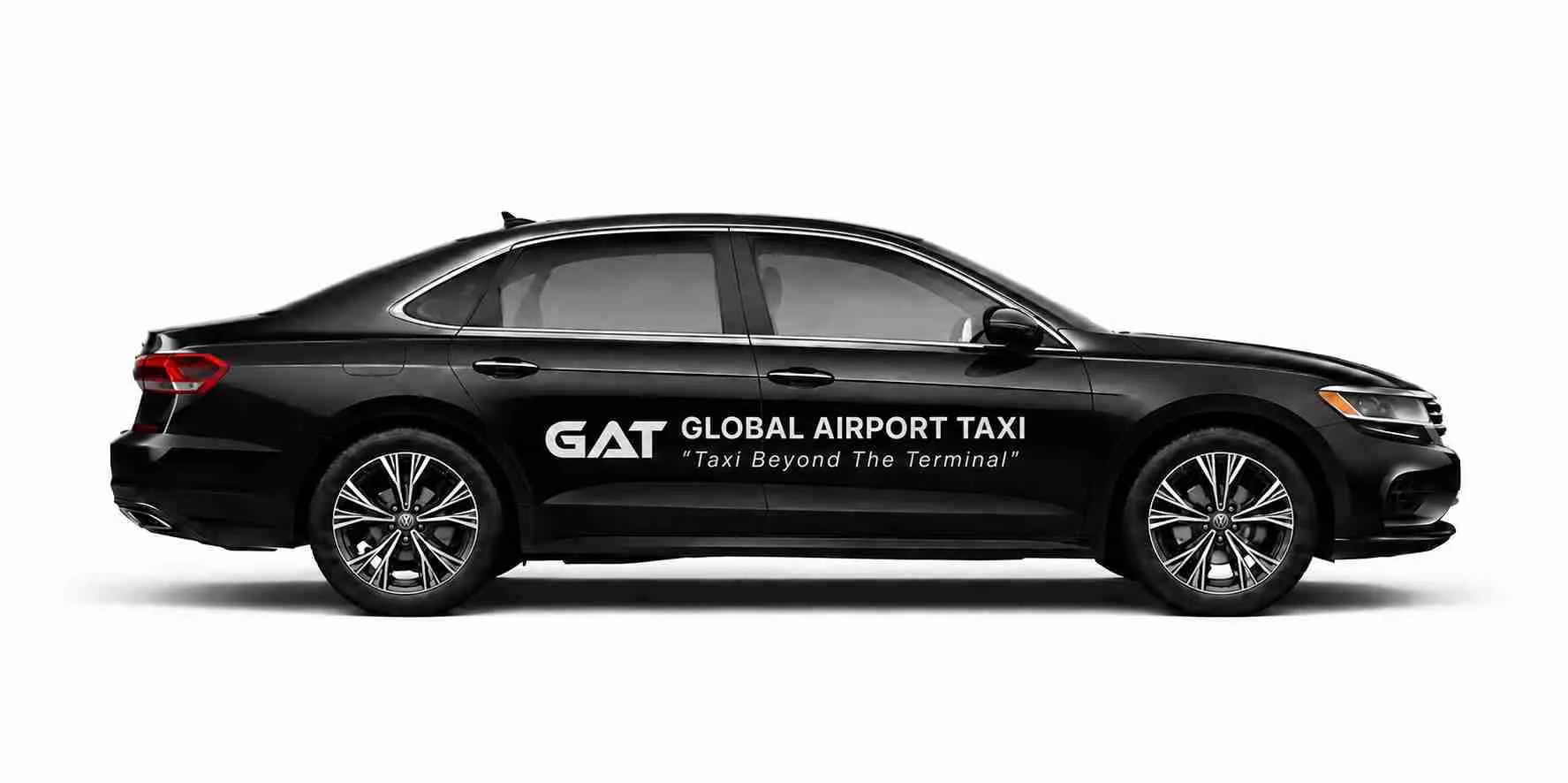
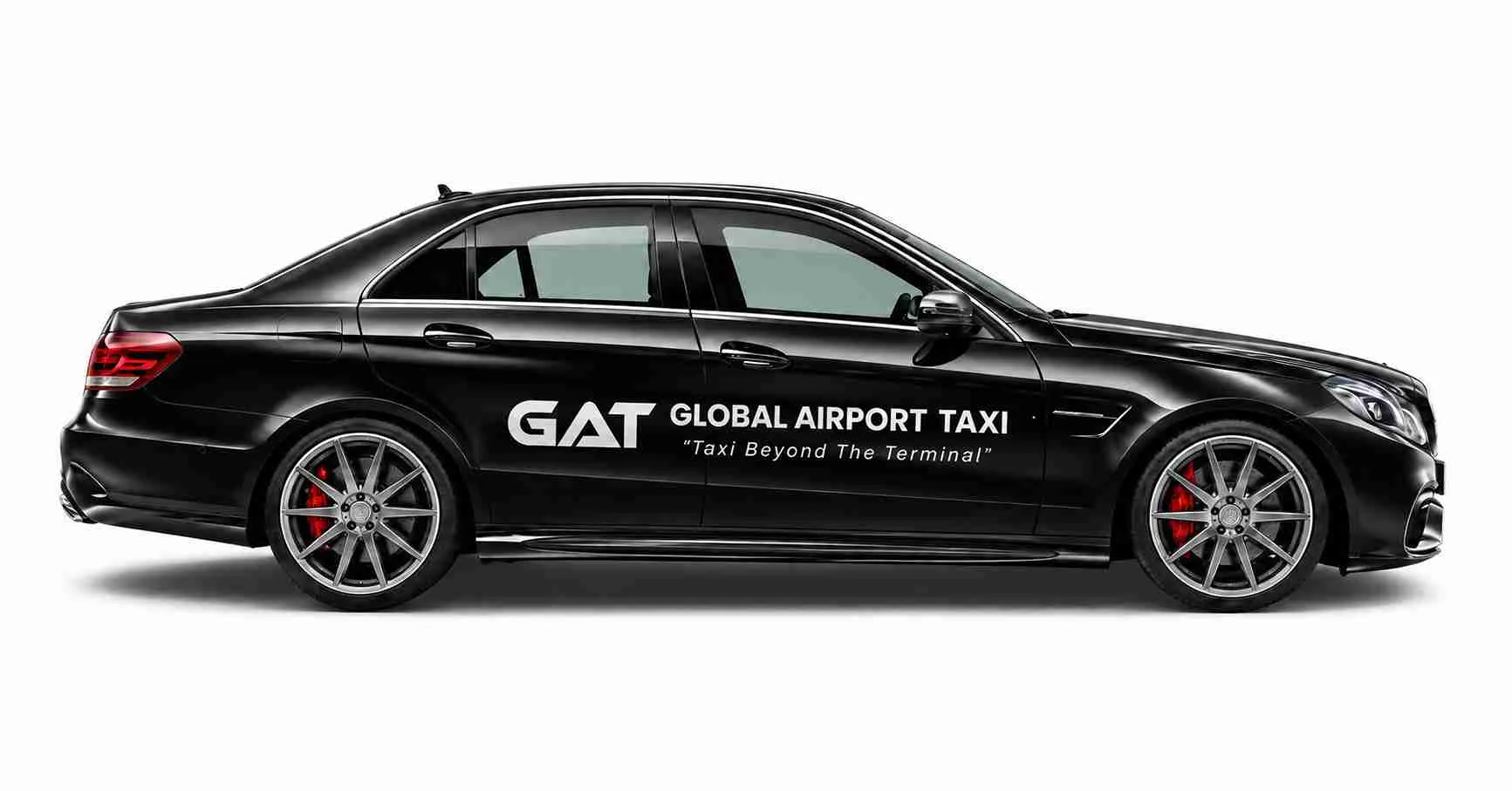
A couple with a case each, and nothing left to work out.The same four seats over a load space that takes a fourth case.One seat surrendered in exchange for somewhere to take a call.Six places above a deep boot, for the arrival that brought everything.
Family MPVs, seven and eight seats
Most families on this route end up in an MPV: five or six people and all of what they flew with, the buggy included, which never folds down to the size it managed in the shop. Above it sit the two trims of the Heathrow 7-seater taxi, standard and executive, and then the Heathrow 8-seater taxi, which is the largest vehicle the network books as a single car.
Minicoaches, group movements and coach hire
With nine people aboard the booking stops being a car at all and becomes a group movement, carried in one vehicle rather than by three cars losing each other somewhere on the M4. A Heathrow minibus transfer is quoted on what a saloon is quoted on — the address, the hour and a luggage count somebody has actually done — with one addition that matters on this route: whether the whole party is on one flight or spread across two.
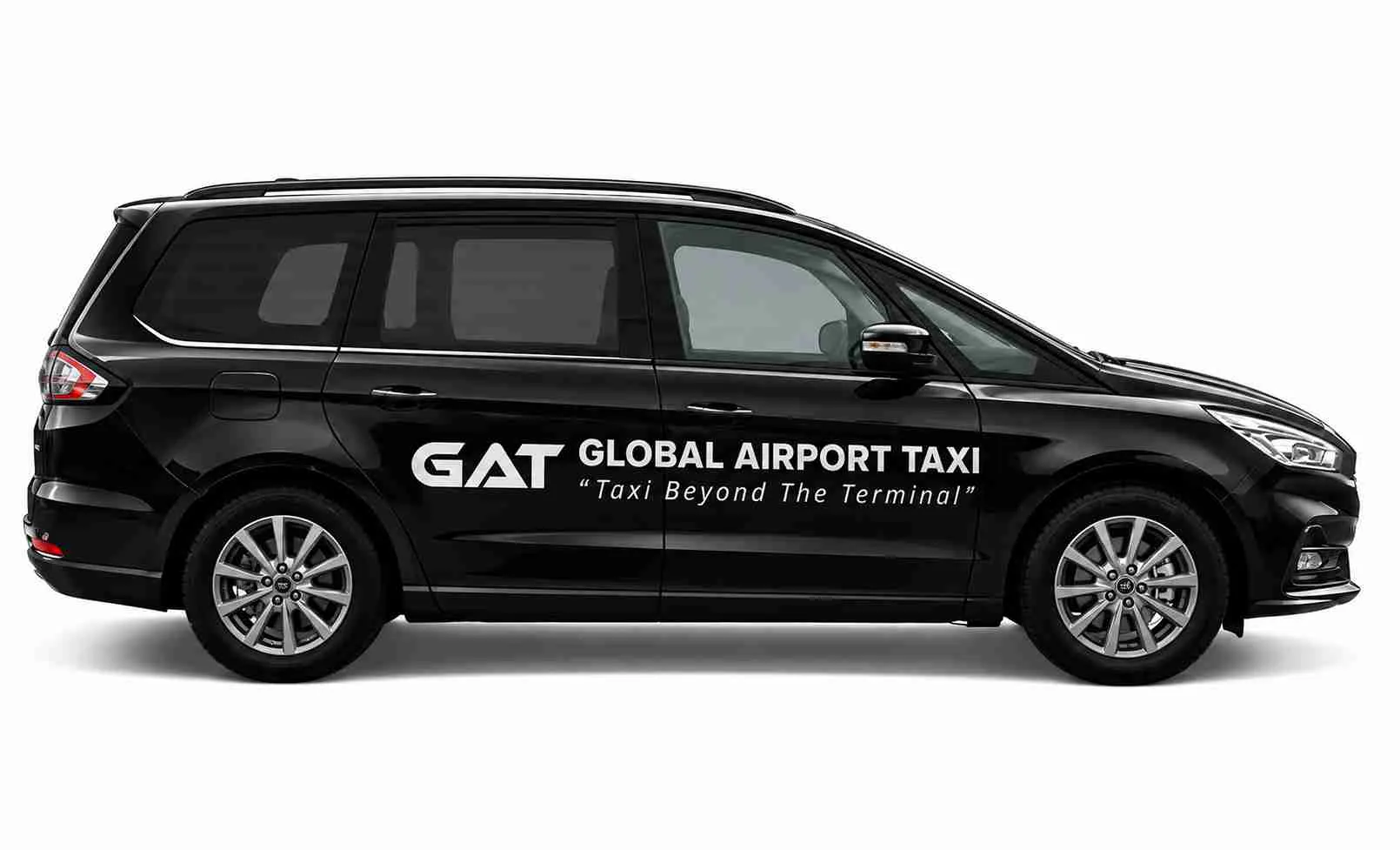
A third row adults will accept for an hour of London traffic.The biggest thing still booked as one vehicle.Sixteen people, one arrival time, one place to meet.The coach, where dividing the party would leave half of it waiting at the far end.
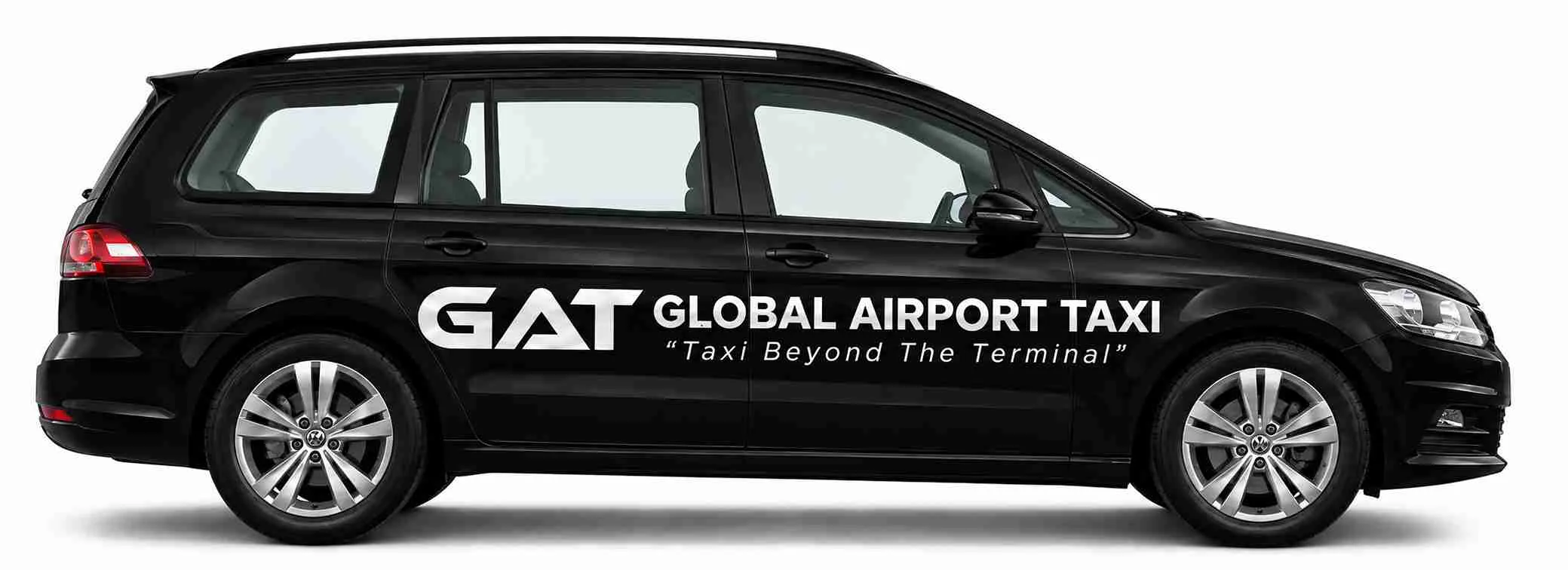
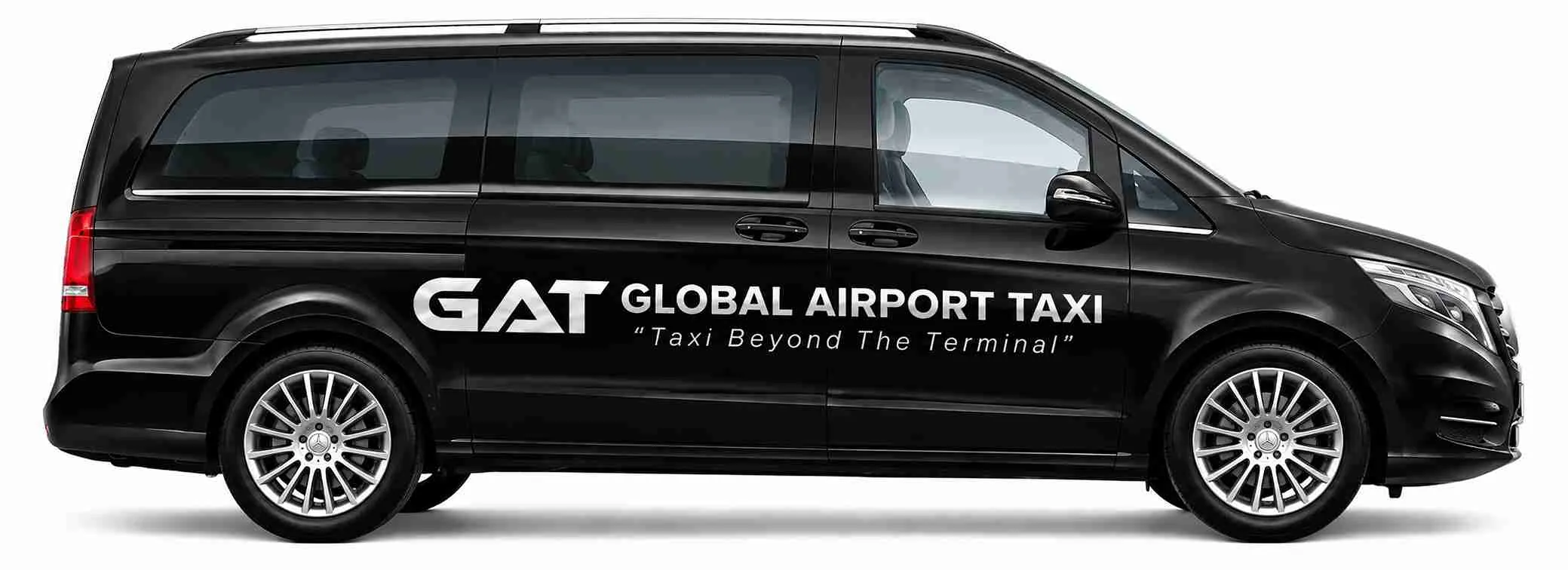
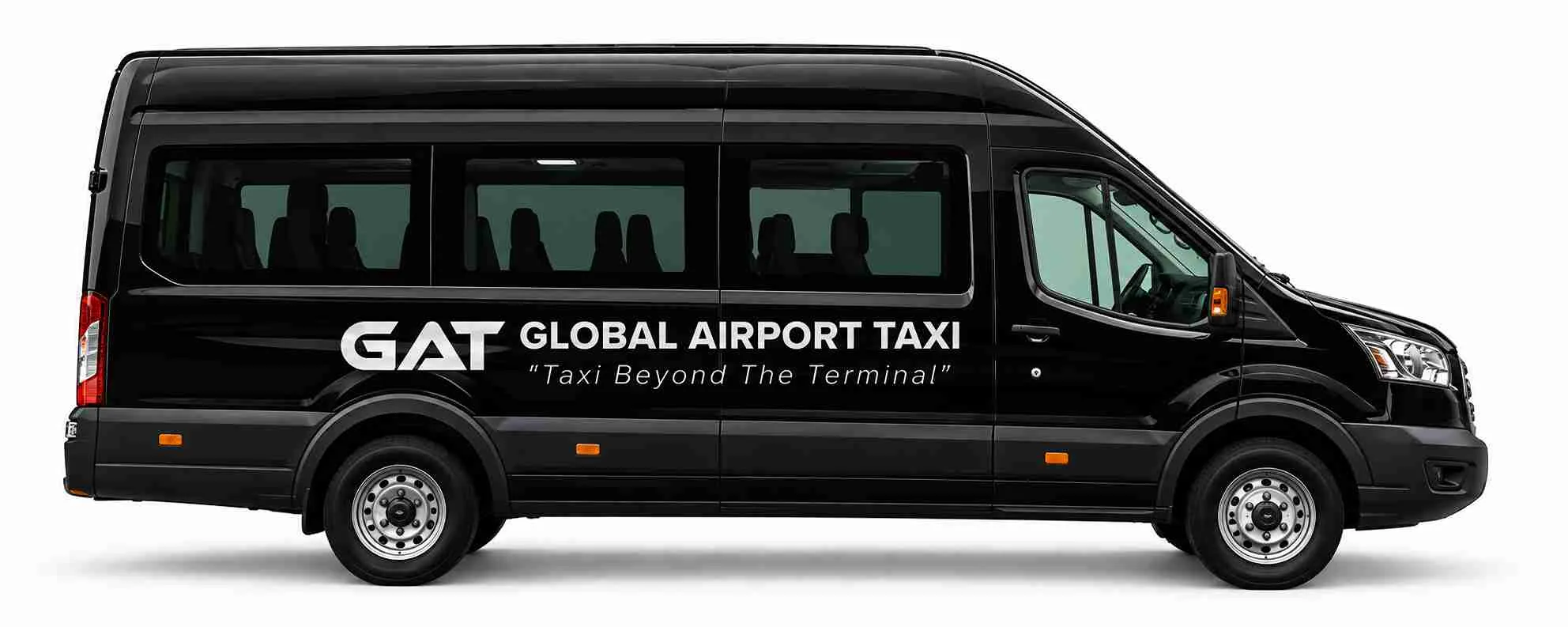
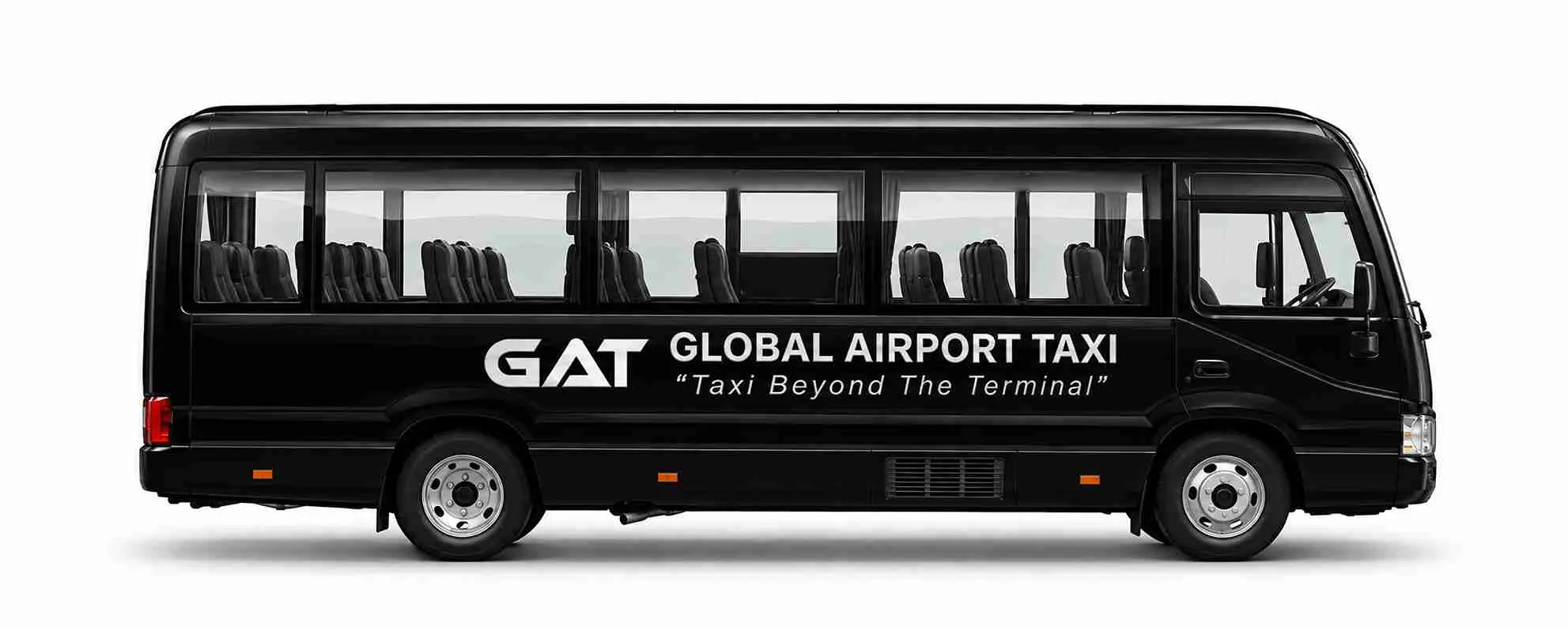
About these vehicle photographs. They show the classes as the network photographs them, and no caption beneath them names a terminal, a car park or a kerb. The four wider pictures further down were supplied for Heathrow and say so; these cars were not, and captioning one as though it stood in the Terminal Parking car park would be the first untrue line in the build.
A class is not a price. Which vehicle a party needs is one input into the figure, and the fixed saloon fare printed further down belongs to the smallest of these and to none of the others.
Reviews
What Travellers Say About Their Transfers
Written by passengers, kept where they wrote them.
What appears below is served by the review platforms, and written by passengers rather than by anybody here. Which reviews show, and in what order, is decided at their end and not at ours.
No Heathrow-only score is shown, and none has been manufactured to fill the gap. The panel reflects every route the network runs, written up by whoever felt like writing.
Nothing is showing here yet. Either the panel has not finished loading or the review platform cannot be reached from this browser, so the same journeys sit on our reviews page.
At a glance
Heathrow to London Areas: the Short Answers
The whole arrangement, pressed into one table.
What you book here is an entire vehicle for your own party at a figure you have read beforehand, from a Heathrow terminal to a London address. The rank outside is a different arrangement: a metered black cab under the Transport for London tariff, with an extra for starting at the airport.
Heathrow is LHR to an airline and EGLL to a pilot, and it stands in the London Borough of Hillingdon at the western edge of Greater London. Each line here comes back in full lower down, with whoever published it standing next to it. Heathrow is credited with what it charges a vehicle, the regulator with the fares it sets, the rail operators with theirs — and what is ours is marked as ours and claimed no further.
The short answers about a Heathrow to London transfer
The question
The answer
Airport
London Heathrow Airport (LHR), EGLL to a pilot
Where it is
The western edge of Greater London, in the London Borough of Hillingdon
Terminals open
Four: 2, 3, 4 and 5
Where a booked car waits
Terminal Parking at 2, 3 and 5, about two minutes from the doors; the Priority Pick-Up lane at Terminal 4
Where it may not wait
The forecourts. Heathrow prohibits pick-ups there and forbids waiting on departures altogether
Where the driver sits until you land
The airport’s Authorised Vehicle Area, open around the clock to licensed operators only
Drop-off charge
Payable by card on each entry to a terminal drop-off area: £7
Black cab to central London
Transport for London publishes £61.00 to £114.00, in thirty to sixty minutes
Extra on a cab from the rank
£3.60, set by the regulator, on top of the meter
What a booking covers
the whole vehicle for your party, terminal to London address, at a sum settled before the day
What it is not
a metered fare, a shared seat, or a price that moves because the road did
Free waiting
From the landing itself: 60 minutes, rising to 90 when the hold bags are the delay
Areas covered
Central, west, north, north-west, east, south and south-east London
Currency
Pound sterling (£)
The four kinds of money on this route
Keeping them apart is most of the work. Heathrow charges the vehicle for entering its roads and car parks. Transport for London sets what a metered cab may charge and adds three extras to it. The rail operators sell tickets. A Heathrow to London taxi price in the sense most people mean — one number, agreed in advance, for a named journey — is none of those three: it is the quotation the form gives you.
Charged by the airport
The drop-off charge, the pick-up car parks and the private hire waiting area
Set by Transport for London
The tariff a black cab meters on, the minimum fare and the airport extras
Set by the rail operators
Heathrow Express, Elizabeth line and Underground fares
Quoted by us
A single sum for a single journey, shown first and held afterwards
Three kinds of money appear below and none is mixed with another: what the airport charges a vehicle, what Transport for London allows a meter to charge, and what a seat on a train costs.
Terminals
Terminals 2, 3, 4 and 5: Where a Booked Car Meets You
Four terminals, four different walks to the car.
Four passenger terminals are open - 2, 3, 4 and 5 - and the terminal on the ticket decides the whole of the meeting arrangement. Heathrow prohibits picking passengers up from the terminal forecourts, and its traffic regulation orders forbid waiting on the departures forecourt altogether, so where your driver meets you is decided by the building you land in rather than by what you booked.
That one rule is what most Heathrow transfer pages omit, and it is why an arriving passenger occasionally stands outside the doors looking for a car that is not there and could not have been.
A terminal transfer as it is actually arranged: the building named on the booking, and the meeting point named on the confirmation.
Terminals 2 and 3 share the central area and a station, Terminal 4 sits on its own to the south and Terminal 5 is furthest west. A driver cannot cover two of them at once, which is why the terminal is the field worth checking twice before you confirm.
If the airline moves your flight between terminals - and at Heathrow that does happen - send the new one. The booking moves with it; nothing has to be cancelled and rebooked.
Terminals 2 and 3
Terminal 2 is the Queen’s Terminal, next door to Terminal 3 in the central area. Terminal 3 shares the central area and its station with Terminal 2, which is why the two are so often confused on a booking. For a Heathrow Terminal 2 taxi and a Heathrow Terminal 3 taxi, for Terminals 2, 3 and 5 a collection happens in the Terminal Parking car park, which the airport puts at about a two-minute walk from the terminal doors. Terminal Parking has no free period at all: the charge starts from the moment the vehicle enters, which is why a driver waits elsewhere until you are actually at the door. One message from the baggage hall is what moves the car.
Terminal 4
Terminal 4 stands on its own on the southern side of the airport, and it is the terminal whose collection arrangements changed when its multi-storey car park closed. At Terminal 4 the arrangement is different again: a Priority Pick-Up area outside the building, where a vehicle may not be left unattended, or the Park & Ride zone. A Heathrow Terminal 4 taxi therefore works differently from the other three, and instructions written for Terminal Parking do not apply here at all.
The part the guides get wrong. Park & Ride gives the public 29 free minutes, and two free hours in the Terminal 4 zone, but the airport states plainly that these car parks are not available to private hire and trade vehicles. The free period is real and it is for the public; a booked car cannot use it, which is why any page offering Park & Ride as a collection option for a minicab is describing something that is not permitted.
Terminal 5
Terminal 5 is the furthest west, with its own station and its own road approach. A Heathrow Terminal 5 taxi uses the same arrangement as Terminals 2 and 3: the car is in the Terminal Parking car park, about a two-minute walk, and the confirmation names where in it to go.
Terminal 2
Terminal Parking, about two minutes from the doors
Terminal 3
Terminal Parking, shared central area with Terminal 2
Terminal 4
The Priority Pick-Up lane beside the building, where a vehicle may not be left unattended
Terminal 5
Terminal Parking, its own approach and its own station
Our terminal-by-terminal guidance, and what to do when a flight is moved, is set out in the Heathrow pick-up guide.
The building you land in decides the walk and where the car waits. The sum is unaffected: it is set by the two addresses on the booking.
How to book
How to Book a Heathrow to London Taxi
Eight answers, and the figure comes back.
Can you pre-book a Heathrow taxi to a London address? Yes, and it is the only way to land with the figure already agreed and a meeting point already named. A pre-booked Heathrow taxi carries your name, your flight, your terminal and the postcode you are heading for before the aircraft has even left.
The form asks eight questions. Six of the answers decide which vehicle leaves the yard; the other two decide whether it is waiting in the right car park when you walk out.
Choose Heathrow, and then the terminalTerminal 2, 3, 4 or 5. It is on the ticket, it decides where the car waits, and it is the one field people leave blank.
Give the London address in fullStreet, number and postcode, or the hotel and its postcode. A district name on its own covers several square miles here, and the quotation is built from the address rather than from the area.
Set the day and the hourArriving? Use the scheduled landing time, not your own estimate of the immigration queue. Leaving? Work back from check-in, then add London traffic on top of it.
Add the flight number for an arrivalTerminals change, aircraft are substituted and boards are rewritten. The flight number survives all of it, so the collection is tied to that rather than to a time.
Count the passengers, then count the casesIt is the luggage that normally decides. A party of four with four big suitcases fills the boot of a saloon with a seat still unused.
Say what is travelling that is not a suitcaseSkis, a cello, a bicycle in a bag, a pushchair, a wheelchair, a child seat. None of it stacks the way a suitcase does, and two such items together usually mean the next class up.
Pick a class, or let the luggage pick itCapacities are in the table near the top. A party sitting between two classes should take the larger one: it is the cheaper of the two mistakes by a distance.
Read the figure, then decideWhat appears is the whole journey, terminal to door, in one number. Accept it and a confirmation follows carrying the class, the driver and exactly where to go.
What the figure is built from
What goes into the quotation is the journey: class, postcode, the hour it is driven, and whatever was declared beyond that — an extra stop, a seat for a child, a bicycle in a bag. All of it came off the form, which is why a district name instead of an address means quoting the same run twice. The airport taxi page describes the service in general; this is Heathrow and London in particular.
Arriving, and leaving again
Inbound, the car is held against the flight number and the free waiting starts when the wheels touch down. Outbound, it collects from a house, a hotel, an office or a station and sets you down at the terminal your flight leaves from — where the drop-off charge applies, which the section on airport charges explains. The section on going back covers what a departure needs that an arrival does not.
Travelling late at night or before dawn? Our guidance for those hours is worth two minutes, because the trains are not running for part of that window and the roads are at their fastest.
Putting a journey into the form costs nothing and ties you to nothing. Address, class and flight produce a figure, and you see it well before anything is confirmed.
Arrivals
Meet and Greet, Waiting Time and the Walk to the Car
From the baggage belt to the car, step by step.
A pre-booked Heathrow arrivals taxi is not on the kerb, because no car is allowed to be. It is in the car park your confirmation names, or in the Terminal 4 lane, and the driver walks in to meet you with a board carrying your name.
A Heathrow Airport arrivals taxi therefore ends with a short walk rather than a kerbside door, and a Heathrow Airport taxi pickup is an arrangement between you, a driver and a car park rather than a queue. Heathrow flight tracking is what keeps the two in step.
That walk is short — the airport puts Terminal Parking at about two minutes from the doors — and knowing it is coming is the difference between a calm arrival and ten minutes of looking for a car that was never going to be outside.
Land, and clear the hallPassport control and the baggage belt take as long as they take. Free waiting is already running from the moment the wheels touched down, not from the scheduled time.
Tell the driver you have your bagsOne message is enough. It is the signal that moves the car from the waiting area to the collection point, and it is what keeps the airport’s own charges down.
Walk out and read the confirmationIt names the terminal, the car park or lane, and the driver. Nothing about the meeting point is guesswork and none of it is on a sign in the hall.
Meet the boardYour name, the driver, and a hand with the cases. That is what Heathrow Meet and Greet means on this booking: a person and a board, not a product sold beside the fare.
LeaveThe figure was agreed before you flew. Nothing about the traffic between the airport and the address changes it.
The meeting itself: the agreed point, the name board and the bags, before the journey into London begins.
Heathrow runs a waiting area for licensed private hire and taxi operators, open around the clock, and that is where a driver sits while an aircraft is on approach. It is charged by the hour, which is one reason a driver asks to be told when you actually have your luggage.
It is also the reason a booked car can hold a collection through a two-hour delay without anybody renegotiating anything: the waiting has been arranged and paid for by somebody other than you.
What Meet and Greet means here, and what it does not
It means a driver standing at the agreed point with a board and helping with the cases, as part of the transfer rather than as an extra sold beside it. It does not mean a car at the door, because the airport does not permit one. The meet and greet page sets out what the arrangement covers across the network.
Flight tracking, and the free time
Tracked on
The number of the inbound flight itself
Free waiting, arrivals
From the landing: 60 minutes, or 90 when hold luggage is the reason for the wait
Free waiting, London addresses
On a collection anywhere that is not a terminal: 15 minutes
Free cancellation
Up to 24 hours before the collection time
Exactly when free waiting stops is a contractual matter rather than an advertising one, so it is set out in the terms and conditions, which every confirmation links to.
Waiting at this airport costs a driver money from the minute the car moves. That cost sat inside the figure you accepted, which is why it never reappears afterwards as a line of its own.
Fares
Heathrow to London Taxi Prices and What Sets Them
What sets the figure, and who sets everything else.
A Heathrow to London taxi price is built from the postcode, the hour, the class and whatever else is travelling — and once you have accepted it, it stops moving. That is the whole of the difference between a quotation and a meter.
Our own saloon fare is published, district by district, rather than hinted at. Every area further down carries the fixed figure for the postcodes inside it, and the full list of London districts carries all of them in one place. They come from the fixed price file this company keeps for this airport, which is why they are printed as sums and not as ranges with a tilde in front.
What is not printed is a figure for anything larger than a saloon, because that file holds none. A six-seater, an eight-seater, a minicoach and a coach are quoted by the booking system against the vehicle and the journey you ask for, and the section on groups explains why a van cannot simply be sold at a car price. Alongside our figure sits every charge somebody else sets, credited to whoever sets it.
Which arrangement charges what
The arrangement
How it is priced
Where it takes you
Pre-booked private transfer
Quoted for the address you enter, and held once you accept it
Door to door, with the driver meeting you at the agreed point
Black cab from the rank
The meter, under the TfL tariff that applies at that hour, plus the rank extra
Door to door, once the rank has worked its way round to you
Heathrow Express
A rail fare set by the operator
Paddington, and onward travel from there
Elizabeth line or Piccadilly line
A TfL fare, paid with contactless or Oyster
A station, and whatever gets you from it to the door
What a Heathrow taxi cost actually depends on
The postcode you are going to, which is what fixes the distance in the first place.
The hour, because the same route is a different journey at eight in the morning and eleven at night.
The class, which the luggage usually chooses rather than the head count.
Extras declared on the booking: another stop, a seat for a child, equipment that will not stack.
Whether the journey enters the Congestion Charge zone, which depends on the destination and the time.
What the airport charges the vehicle, which is settled inside the quotation rather than at the barrier.
Why a district name is not an address
Chelsea runs from the river to the Fulham Road. Croydon covers four stations. Ealing has five. A Heathrow to Central London taxi fare quoted on a district would be a guess at the middle of it, so the form asks for the postcode and quotes the journey you are actually making. Our London airport transfer price guide explains how the same inputs behave across all the London airports.
Taxi, minicab, VTC: what the words mean here
A Heathrow Airport taxi, strictly speaking, is a licensed black cab from the rank. What is booked in advance is a Heathrow Airport minicab — private hire — and a Heathrow Airport chauffeur service is the executive end of the same thing. All three are a Heathrow airport transfer in ordinary speech, and a private Heathrow transfer is the one with the figure agreed in advance. An LHR to London taxi search returns all of them at once, which is why the difference is worth two sentences.
What is fixed, and what fixed means
A fixed fare Heathrow taxi is fixed in one specific sense: the sum is calculated for the journey you described and shown to you before anything is confirmed. Accept it and it does not move afterwards, whatever the M4 does. It is not a tariff, it is not an average, and it is not a starting price that grows on the way. How that compares with app pricing is set out separately, because surge pricing behaves in exactly the opposite way.
Two sorts of money are kept apart here: our own fixed saloon fare, which comes out of the price file this company keeps for this airport, and every charge somebody else sets, printed beside the body that sets it.
Groups
Groups of Six and More: Minicabs, Minibuses and Coaches
Nine people is not two bookings. It is one movement.
A Heathrow group transfer is decided by the luggage, agreed as one vehicle and quoted as one figure. Six, eight, sixteen or fifty people arriving together have the same three problems: where everybody meets, what the bags add up to, and who answers the telephone.
Every saloon fare given above is per vehicle and one way, and those are the only fares printed anywhere here. A Heathrow group minicab, a Heathrow 16-seater minibus and Heathrow coach hire are quoted by the booking system against the vehicle and the journey, because the fixed price file this company keeps for this airport holds a saloon column and nothing else. Printing a van at a car price would be a guess dressed up as a fixed fare.
How a party of this size usually travels from this airport
Party
What it usually becomes
What decides it
Five or six
One six-seater
Four or five large cases is the ceiling. A pushchair that will not fold is a sixth case in everything but name.
Seven or eight
One eight-seat van
Eight seats and eight full-sized suitcases do not go in the same vehicle. Count the cases before the people.
Nine to sixteen
One minicoach, or two cars
One vehicle if the party is on one flight. Two cars if it lands in two halves an hour apart.
Seventeen to thirty
A coach, quoted on the itinerary
Where the coach may legally stop at both ends, which is a question about the hotel and not about the coach.
Thirty and above
A larger coach, or a pair of them
The hold. Thirty people with a case and a cabin bag each is a luggage problem long before it is a seating one.
A Heathrow 6-seater minicab and a Heathrow MPV taxi are one class under two names, and it is the one most parties of five or six finish in. Above it the names go by seat count rather than by shape, and above that they stop being cars at all.
Per vehicle, not per head
A private transfer is quoted for the vehicle and the journey, so the figure does not move when a seventh passenger joins a six-seat booking that already had room. Dividing it afterwards is something groups do among themselves and nothing to do with how it was sold: one agreed fare, split six ways, is still one agreed fare. Nobody here charges a fare each, and no per-person price exists to be quoted.
Is one large vehicle cheaper than two small ones?
Sometimes, and sometimes not. One eight-seat van against two saloons is a straight comparison you can make on the booking form in a minute, and the answer moves with the destination. What does not move is the second half of the comparison: two cars arrive separately, lose each other on the M4 and leave half the party standing outside a hotel with the keys in the other vehicle. Price the luggage capacity alongside the fare rather than the fare on its own.
Eight seats, eight suitcases. A fully occupied vehicle has lost most of its luggage space to the row that made it fully occupied. If the party has a large case each, say so in the booking and let the class be chosen from the total rather than from the head count.
The size at which the question stops being the vehicle and starts being where it may stop.
A coach needs somewhere legal to pull in at both ends. Most central London hotels have a coach bay or a named street they use; a residential address almost never does.
Give the venue by name when you ask for a figure. It is the line that decides whether a coach can serve the address at all, and it is quicker to settle in advance than at a junction.
One party, two flights
Groups rarely arrive in one piece. Where half the party lands at Terminal 5 and the rest at Terminal 2 ninety minutes later, there are only two honest answers: one vehicle that waits for the later flight, with the waiting allowance understood before anybody agrees to it, or two vehicles that leave as each flight clears. Give every flight number on the booking and the question gets settled at that point instead of in a car park.
One lead passenger, with a telephone that is switched on and has roaming that works on landing.
Every flight number, including the one belonging to the two people who booked separately.
A luggage total for the whole party rather than per person, because that is what the class is chosen from.
Which terminal each half of the group lands at.
Whether anybody needs a child seat, a wheelchair space or help with steps at the far end.
Collecting a group at a terminal
The meeting arrangement is the same one the arrivals section sets out, with one difference that matters at this size: nobody moves to the vehicle until the whole party has its bags. A group that walks to the car park in two waves pays for the wait twice over, and a driver cannot hold a space in a pick-up area while half a party is still at a carousel. One message when everybody is together is worth more than six messages saying nearly.
Several stops on the way in
A group that arrives together often needs to be put down in three places: a hotel in Paddington, a flat in Kensington and a house beyond it. That is one booking with the stops named in it, quoted on the route it actually takes, and it has to be asked for in advance. A stop added to the driver at the kerb is a different journey from the one that was priced, which is why the booking form has a line for it.
Weddings, events and parties arriving for one date
Wedding guests, conference delegates and a party coming in for a concert at a stadium all book the same way and all share one complication: the date is fixed and the roads around the venue may not behave as they do on an ordinary day. Say which event it is. Where a stadium or a venue is operating traffic orders, the set-down point is agreed in advance rather than discovered at a closed junction, and the group transfers page covers the arrangements that sit around a movement of that size.
No figure for anything larger than a saloon is printed, because that file carries none. A van, a minicoach and a coach are quoted for the journey asked for, and the quotation is the only figure anybody here stands behind.
Black cabs
Black Cab or Pre-Booked Minicab from Heathrow?
The regulator’s own figures, for the other way of doing it.
How much is a black cab from Heathrow? Transport for London publishes £61.00 to £114.00 between Heathrow and central London, in thirty to sixty minutes. That is the regulator’s figure rather than a third party’s, and it is lower and narrower than the ranges most guides quote.
Licensed black cabs wait at the ranks outside each terminal and are metered, which is a different arrangement from a booked car at an agreed figure. Transport for London sets three tariff periods: the weekday daytime rate from five in the morning to eight at night, an evening and weekend rate until ten, and a night and public holiday rate from ten at night until five, so the same journey has three different prices depending on when it is driven. TfL publishes its own indicative figure for a black cab between Heathrow and central London, and says the journey takes between thirty and sixty minutes, which is a narrower window than most guides print.
A journey that starts from a Heathrow rank carries an extra charge set by TfL, on top of whatever the meter reads. A black cab dropping off in a terminal drop-off zone may add a charge for it as well. Booking a black cab by telephone, through an app or online may add a further charge, and the Christmas period carries one of its own. No metered journey may be charged below the minimum fare, whatever the distance.
What the regulator adds to a metered journey
The item
The figure
When it applies
Minimum fare
£3.80
At all times, whatever the distance
Extra from a Heathrow rank
£3.60
On journeys that start at one of the airport ranks
Extra for a terminal drop-off
Up to £5.20
When a cab sets down in a terminal drop-off zone
Extra for booking ahead
Up to £2
When the cab is booked by telephone, app or online
Christmas and New Year extra
£4
Between the evening of 24 December and the morning of 27 December
Cab or minicab: the honest comparison
A Heathrow black cab fare is whatever the meter reads under the tariff of the hour, plus the airport extra. A booked car is one figure agreed beforehand. The Heathrow taxi vs Heathrow Express question is answered the same way: by the party, the luggage and the address, not by the headline price of either.
For one traveller going to a central address at a quiet hour, a cab from the rank is a perfectly good answer and nobody needs to book anything. The comparison changes with the party, the luggage, the hour and the distance: a meter running through rush-hour traffic to Enfield is a different proposition from the same journey agreed in advance. The full comparison of cabs, minicabs and apps sets out where each one wins.
Heathrow to London: how the options compare
The option
Suits
The thing to know
Pre-booked private transfer
Parties, luggage, outer London and fixed budgets
One figure, agreed in writing before you fly
Black cab from the rank
Arriving without a plan, central addresses
Metered, plus the airport extra, and three tariff periods
Heathrow Express
One or two people going to Paddington
Fifteen minutes, every fifteen minutes
Elizabeth line
Light luggage, central and east London
Under forty minutes, contactless or Oyster
Piccadilly line
The cheapest way in, if you are travelling light
Serves every terminal, under an hour to the centre
Private minibus or coach
Groups too large to divide
Quoted against a confirmed itinerary
The figures in this comparison are the regulator’s rather than ours. They describe what a metered journey may come to; a booked car is quoted instead.
Airport charges
The Drop-Off Charge, the Car Parks and the Road Charges
What the airport charges a vehicle, and who pays it.
A charge applies every time a vehicle enters one of the terminal drop-off areas, and entering again means paying again — £7 a time. It is a charge on the vehicle rather than a ticket for the passenger, and it arises on the way to a flight rather than on the way from one.
It is paid by card, in advance or by midnight the day after, and it cannot be paid at a machine in the zone itself. No pick-up and no waiting is permitted in a drop-off area, and an unattended vehicle may be towed, which is the rule behind everything in the terminals section.
The free alternative the airport publishes
Dropping off at a Park & Ride car park is free, with a free bus to the terminal, which is the airport’s own alternative for anybody who would rather not pay it. It costs a quarter of an hour and nothing else, and for a departure with time in hand it is a perfectly sensible choice. Our guide to UK airport drop-off charges compares what every British airport now charges for the same two minutes at a kerb.
Who is exempt
Emergency and military vehicles are exempt; motorcycles, buses, coaches and recovery vehicles get a full discount; electric cars get neither. Blue Badge holders are dealt with separately by the airport, and an account has to be set up in advance for the discount to apply.
The pick-up side, and why it is charged at all
Terminal Parking has no free period at all: the charge starts from the moment the vehicle enters, which is why a driver waits elsewhere until you are actually at the door. Private hire cars and licensed taxis wait in the airport’s Authorised Vehicle Area, open around the clock on the Northern Perimeter Road and restricted to licensed operators. Using it costs the operator an hourly fee for the first five hours, which is one of the reasons a driver is told to wait there rather than circle the terminal, at £1.00 an hour for the first five. Those are the airport’s charges on the vehicle; what matters at your end is that they were counted when the quotation was built.
Heathrow airport parking charges, in one sentence
They are charges on the vehicle for being on airport land, and they are counted when a quotation is built rather than added to it afterwards at a barrier.
Congestion Charge, ULEZ and the rest
Central London has a Congestion Charge, and Greater London has an ultra low emission zone; both are set by Transport for London and both change, so neither amount is printed here. Heathrow itself sits outside the Congestion Charge zone, so the charge is a question for the London end of the journey rather than the airport end. Whether a particular journey enters the zone, and whether that is inside your figure, is answered by the quotation rather than by a page that cannot know your destination.
These charges belong to the airport and are paid by the vehicle rather than by the passenger. Whether a particular one sits inside your quotation is answered by the quotation.
Delays
Flight Delays, Waiting Time and Diversions
A delayed landing, and what it does to the arrangement.
Nothing happens to the booking. The flight number on it means the vehicle is following the aircraft, and the collection moves with the aeroplane rather than with the timetable printed this morning.
Heathrow is an airport where delay is ordinary: a stand that is occupied, an immigration hall at a bad hour, a bag that takes forty minutes to appear. Flight tracking is attached to every booking here rather than sold as an extra, because on this route it would be useless as anything else.
A late arrival
The collection shifts with the aircraft and free waiting starts at touchdown
A slow baggage hall
Covered by the longer allowance, since that wait happens after the aircraft is on stand
A terminal change
Send the new terminal; the booking moves and nothing is rebooked from scratch
A diversion
Tell us from the aircraft if you can: the journey now starts at a different airport
If you are diverted
Gatwick, Stansted and Luton take most of Heathrow’s diversions, and each is a different journey with a different figure. Our Heathrow to Gatwick guide covers the commonest of them, and the comparison of the London airports explains how far apart they actually are once you are on the road.
The hours when nothing else is running
A good many arrivals here land before the first trains of the day and a good many departures leave before them. That window is where a booked car stops being a convenience and starts being the only certain thing, which is why the late-night and early-morning guidance is worth reading before you choose a flight, not after.
What happens beyond the free allowance is a contractual term, so it lives in the terms rather than in a page that is trying to sell you something.
Rail
Heathrow Express, the Elizabeth Line and the Piccadilly Line
Three trains, and the one question that decides between them.
Is Heathrow Express cheaper than a taxi? For one person going to Paddington, almost certainly. Heathrow Express runs non-stop to Paddington in fifteen minutes, every fifteen minutes, and the airport’s own rail page lists it as serving Terminals 2 and 3. The question is never which is quickest in the abstract; it is what you are carrying and where you are actually sleeping.
The Elizabeth line reaches central London in under forty minutes, calling at Paddington, Bond Street, Tottenham Court Road, Farringdon, Liverpool Street and Stratford, and it is paid for with contactless or Oyster. The Piccadilly line serves every terminal and reaches central London in under an hour, which the airport calls the most budget-friendly option of the three.
Heathrow Express
Fifteen minutes to Paddington, every fifteen minutes
Elizabeth line
Under forty minutes to central London, contactless or Oyster
Piccadilly line
Every terminal, under an hour, and the cheapest of the three
A booked car
The address itself, with the luggage in the boot
Where the trains stop being the right answer
All three rail options end at a station, which is the whole of the difference: a car ends at the address, and the gap between the two is measured in suitcases. A family of four with six cases changing twice on the Underground is not saving money, it is spending an hour. One traveller with a cabin bag going to Farringdon is saving a serious amount, and we will say so.
The airport also publishes road times of its own: about forty minutes from Victoria, about fifty from Waterloo, about fifty-five from Euston and about an hour from London Bridge. Those are the airport’s own road figures for four London stations, and they are the only journey times printed anywhere here: nothing here carries a drive time of ours, because the same route at eight in the morning and at midnight is two different journeys.
Travelling as a family and weighing the two? Our note on family transfers in London works through the arithmetic honestly, including the cases where the train wins.
Rail fares belong to the operators who set them and change without telling anybody who wrote them down, which is why none is printed here.
Central London
Heathrow to Central London: Westminster to Knightsbridge
The postcodes everybody books, and the kerbs nobody may use.
A Heathrow Airport to Central London taxi is a dozen different journeys wearing one name. Westminster, Victoria, Paddington, Mayfair, Soho and Knightsbridge are each a different approach, a different set of restrictions and a different place a car may legally stop.
None of that changes the quotation, which is built from the two addresses. All of it changes the last two hundred metres, which is why the useful line in a booking is the name of the building rather than the square nearest to it.
Westminster and WhitehallHeathrow Airport to Westminster taxi
Government, the river and the hotels between them. Parliament Square, Whitehall, St James’s Park and the hotels around them. Several streets here close at short notice for state occasions and demonstrations, so the building name does more work than the postcode.
Victoria and PimlicoHeathrow Airport to Victoria taxi
The station, the coach station and the streets behind them. Victoria railway station, Victoria Coach Station and the hotels down towards Pimlico. The two stations are a five-minute walk apart and the forecourts are different; naming the one you want saves the circuit of a one-way system.
Paddington and BayswaterHeathrow Airport to Paddington taxi
Where the airport train lands, and where people stay instead. The station itself, and the hotels spread through Bayswater, Lancaster Gate and Westbourne Grove. A car is worth having here when the party has more cases than hands, because the walk from the platform is longer than it looks.
Mayfair and St James’sHeathrow Airport to Mayfair taxi
Hotels, offices and a lot of single-lane streets. The squares between Park Lane and Regent Street, where most of the addresses are hotels and company offices. Deliveries, filming and resident parking bays all narrow the kerb, so the drop-off point is agreed from the building rather than the street.
Soho and Covent GardenHeathrow Airport to Covent Garden taxi
The part of London a car cannot always reach. Theatreland, the market and the streets around them, several of which are pedestrianised or closed to traffic for part of the day. Where the hotel is inside one of those, the nearest legal set-down is agreed when the booking is made.
Knightsbridge and BelgraviaHeathrow Airport to Knightsbridge taxi
Brompton Road, the squares, and the embassies. Hotels and apartments around Harrods, Sloane Street and the Belgravia squares. Diplomatic plates and event traffic can close a square entirely, which is another reason the porter’s entrance beats the postcode.
Fixed saloon fares from Heathrow to central London
Area
Postcode districts
Saloon, one way
Westminster and Whitehall
SW1A, SW1H, SW1P, SW1Y
£48–£72
Victoria and Pimlico
SW1E, SW1V, SW1W
£48
Paddington and Bayswater
W2, W9
£43–£54
Mayfair and St James’s
W1J, W1K, W1S, SW1X
£48–£52
Soho and Covent Garden
W1D, W1F, WC2H, WC2E
£48
Knightsbridge and Belgravia
SW1X, SW3, SW7
£48–£54
Saloon fares, per vehicle and one way, from the fixed-price table the client supplied for this airport. Larger classes are quoted by the booking system, because the file carries no figure for them.
Hotels, and the doors they actually use
Give the hotel by name as well as the postcode. Large central hotels have a set-down bay that is not on the street you would expect, and the staff know it even when a map does not. The hotel transfers page covers apartments with keypads and everything else without a reception desk.
Streets a car cannot enter
Parts of Soho and Covent Garden are pedestrianised for most of the day, several Westminster streets close for state occasions, and the squares in Belgravia can be shut at an hour’s notice. Where your address is inside one of those, the nearest legal set-down point is agreed when the booking is made rather than negotiated at the barrier.
The fare beside each area is one saloon, one way, to the districts named with it. The hour, the class and anything extra on the booking are settled when the journey itself is quoted.
West London
Heathrow to West London: Hounslow, Ealing and Richmond
The nearest half of London, and the one with the shortest runs.
West London is the quickest part of the city to reach from this airport, and the part where a train change makes the least sense. Hounslow is minutes away; Ealing, Hammersmith, Chiswick and Richmond are a straight run in on the A4 or the South Circular.
Hounslow, Cranford and FelthamHeathrow Airport to Hounslow taxi
The borough the airport sits beside. Hounslow Central, West and East, with Cranford and Feltham around them. Minutes from the terminals, which makes these the shortest runs on the whole route and the ones most often needed at four in the morning.
Ealing, Acton and HanwellHeathrow Airport to Ealing taxi
Broadway, the commons and the streets behind them. Ealing Broadway, West, North and South Ealing, Ealing Common, Hanwell and Acton. A straight run in on the A4 or the Uxbridge Road, and a district where a good many addresses are flats above shops with a keypad rather than a reception.
Hammersmith and Shepherd’s BushHeathrow Airport to Hammersmith taxi
Offices, the flyover and the river. Hammersmith Broadway, Brook Green, Ravenscourt Park and the Bush. The gyratory makes the last two hundred metres the slowest part of the journey, so the side of the road matters as much as the number.
Chiswick and BrentfordHeathrow Airport to Chiswick taxi
The Thames end of the A4. Chiswick High Road, Turnham Green, Grove Park and the developments along the river at Brentford. New riverside blocks often have one service entrance and a gate code, both of which belong in the booking.
Richmond, Kew and TwickenhamHeathrow Airport to Richmond taxi
The park, the river and the stadium. Richmond town centre, Kew, East Sheen and Twickenham. On an international rugby day the roads around the stadium close and the collection point moves, which is worth saying when the booking is made rather than on the morning.
Uxbridge, Hayes and West DraytonHeathrow Airport to Uxbridge taxi
The Hillingdon side, north of the runways. Uxbridge, Hayes, West Drayton, Yiewsley, Harlington and Sipson. Close enough to hear the aircraft and far enough that the route differs with every postcode, so the full one is worth typing.
Fixed saloon fares from Heathrow to west London
Area
Postcode districts
Saloon, one way
Hounslow, Cranford and Feltham
TW3, TW4, TW5, TW13, TW14
£51–£56
Ealing, Acton and Hanwell
W5, W13, W3, W7
£43
Hammersmith and Shepherd’s Bush
W6, W12, W14
£43
Chiswick and Brentford
W4, TW8
£43–£46
Richmond, Kew and Twickenham
TW9, TW10, TW1, TW2
£46–£51
Uxbridge, Hayes and West Drayton
UB8, UB3, UB7, UB10
£41
Saloon fares, per vehicle and one way, from the fixed-price table the client supplied for this airport. Larger classes are quoted by the booking system, because the file carries no figure for them.
The short runs, and why they are still quoted properly
A Heathrow Airport to Hounslow taxi can be shorter than the walk from the baggage hall, and it is quoted exactly as a run to Bromley is: from the two addresses, with a vehicle and a driver inside the figure. Hotel staff moving between airport hotels, crews, and families staying near the airport before an early flight make up most of this traffic.
Richmond, Twickenham and the event days
A Heathrow Airport to Richmond taxi is an easy journey on an ordinary day. On an international rugby day at Twickenham the roads around the stadium run on traffic orders, the bridges back up and a set-down point has to be agreed in advance. Say which day it is when you book and the problem disappears.
The shortest runs from this airport carry a fixed fare exactly as the longest ones do. Five minutes of road is still a journey with a driver and a vehicle in it.
Kensington
Heathrow to Kensington, Chelsea and Notting Hill
One borough, a dozen postcodes, and very little kerb.
A Heathrow Airport to South Kensington taxi and a Heathrow Airport to Chelsea taxi finish a mile and a half apart, and the word that separates them is the postcode. This is the part of London where a district name does the least work of all.
South KensingtonHeathrow Airport to South Kensington taxi
The museums, and the hotels behind them. The Natural History, Science and Victoria and Albert museums, with hotels and serviced flats in the streets around. Exhibition Road is shared space and often busy, so the hotel’s own entrance is the useful instruction.
Chelsea and Sloane SquareHeathrow Airport to Chelsea taxi
King’s Road, the Embankment and the squares. Sloane Square, the length of the King’s Road, Chelsea Embankment and the streets between. Chelsea is large and its postcodes run from the river to Fulham Road, which is why the postcode does the deciding.
Earl’s Court and West BromptonHeathrow Airport to Earl’s Court taxi
Short-stay hotels, and a lot of basement flats. The hotel streets around Earl’s Court and West Brompton, where a great many addresses are a converted terrace with steps down to the door. A car that stops at the right number saves carrying cases twice.
Notting Hill and Holland ParkHeathrow Airport to Notting Hill taxi
The crescents, the market and carnival week. Notting Hill Gate, Ladbroke Grove, Westbourne Park and Holland Park. Over the August bank holiday the carnival closes most of it to traffic, and a collection point has to be agreed outside the cordon.
Fulham and Parsons GreenHeathrow Airport to Fulham taxi
Residential west London, and the football. Fulham Broadway, Parsons Green, Hurlingham and the roads down to the river. On a match day the streets around the ground are controlled, which moves where a car may stop.
Shepherd’s Bush and White CityHeathrow Airport to White City taxi
The centre, the studios and the new blocks. Westfield, the television studios and the residential towers behind them. Large sites with several entrances, so the entrance name is what a driver actually needs.
Fixed saloon fares from Heathrow to Kensington and Chelsea
Area
Postcode districts
Saloon, one way
South Kensington
SW7
£54
Chelsea and Sloane Square
SW3, SW10
£54
Earl’s Court and West Brompton
SW5, SW6
£54
Notting Hill and Holland Park
W11, W8, W10
£43
Fulham and Parsons Green
SW6
£54
Shepherd’s Bush and White City
W12
£43
Saloon fares, per vehicle and one way, from the fixed-price table the client supplied for this airport. Larger classes are quoted by the booking system, because the file carries no figure for them.
Museums, exhibitions and the streets behind them
Exhibition Road is shared space and gets very busy; the hotels behind it are on quiet terraces where a car can stop properly. For a Heathrow Airport to Notting Hill taxi the same applies in reverse: the main road is simple, the crescents behind it are narrow, and over the August bank holiday the carnival closes most of the area to traffic altogether.
Basements, steps and sixth floors
A great many addresses here are converted terraces: steps up to the door, steps down to the flat, and no lift anywhere. If the party has heavy cases, say so in the notes. It changes nothing about the fare and quite a lot about how the driver parks.
A figure follows the postcode rather than the district name, which matters most where one name covers a square mile and several of its streets are closed.
North London
Heathrow to North London: Camden, Islington and Barnet
Across the top of the city, where the route decides the time.
Can you book a Heathrow Airport to Camden taxi, or one to Islington, Hampstead or Barnet? Yes — and which road the driver takes matters more here than on any other run described. North London is reached round the top of the city or straight through the middle of it, and the two are not the same journey.
Camden Town and Regent’s ParkHeathrow Airport to Camden taxi
The markets, the canal and the terraces. Camden High Street, Primrose Hill and the streets around Regent’s Park. At weekends the market traffic slows everything to walking pace, so the last turn is agreed from the address rather than from the main road.
Islington and AngelHeathrow Airport to Islington taxi
Upper Street, and the squares either side. Angel, Highbury, Canonbury and the Georgian squares between them. Resident parking is tight here and a good many buildings have no frontage at all, which makes the door number worth checking twice.
King’s Cross and St PancrasHeathrow Airport to King’s Cross taxi
Two stations, one address, and a Eurostar deadline. King’s Cross for the north, St Pancras International for Paris and Brussels. They share a block and they do not share an entrance: naming the one you need is the difference between walking out to your train and walking the length of two stations with luggage.
Hampstead and Belsize ParkHeathrow Airport to Hampstead taxi
The hill, the heath and the lanes. Hampstead village, Belsize Park and Swiss Cottage. The lanes above the high street are narrow, steep and often one-way, so the nearest practical stopping place is settled in advance.
Finchley, Hendon and BarnetHeathrow Airport to Finchley taxi
The northern suburbs, out past the north circular. Finchley, North and East Finchley, Whetstone, Hendon, Mill Hill, Edgware and Barnet. A long run across the top of London, and one where the road chosen matters more than the distance.
Enfield and SouthgateHeathrow Airport to Enfield taxi
The far north of the borough map. Enfield Town, Southgate, Palmers Green, Winchmore Hill and Edmonton. Among the longest journeys inside Greater London from this airport, and one quoted as such.
Fixed saloon fares from Heathrow to north London
Area
Postcode districts
Saloon, one way
Camden Town and Regent’s Park
NW1W, NW5, NW8
£48–£53
Islington and Angel
N1, N5, N7
£61
King’s Cross and St Pancras
N1C, WC1H, WC1X
£48
Hampstead and Belsize Park
NW3, NW6
£53
Finchley, Hendon and Barnet
N3, N12, N20, NW4, NW7, EN5
£53–£66
Enfield and Southgate
EN1, EN2, N14, N13, N9
£61–£66
Saloon fares, per vehicle and one way, from the fixed-price table the client supplied for this airport. Larger classes are quoted by the booking system, because the file carries no figure for them.
King’s Cross, St Pancras and the Eurostar question
A Heathrow Airport to King’s Cross taxi and a run to St Pancras International share a block and not an entrance. If you are connecting onto a Eurostar, say so: check-in closes well before departure and the margin wanted at the London end is bigger than most people allow. The station transfers page covers connections either side of the journey.
The hill, and the lanes above it
A Heathrow Airport to Hampstead taxi finishes on streets that are narrow, steep and frequently one-way, and the same is true of Highgate. A sensible stopping place a few doors away beats a three-point turn with a boot full of luggage, and the driver will usually suggest one.
Where one card covers districts the file prices differently, the span is shown instead of the middle of it, because the middle of a span is nobody’s fare.
North-west
Heathrow to North-West London: Wembley and Harrow
Wembley, Harrow and the roads that close on event days.
A Heathrow Airport to Wembley taxi is an ordinary journey on an ordinary day and a different thing entirely on a match or concert night. The stadium area runs on temporary traffic orders, and the set-down point moves with them.
Wembley and Wembley ParkHeathrow Airport to Wembley taxi
The stadium, the arena and the hotels around them. Wembley Stadium, the arena, Wembley Central and the new blocks at Wembley Park. On event days the whole area runs on traffic orders and the set-down point moves, so the booking needs the event as well as the address.
Harrow and PinnerHeathrow Airport to Harrow taxi
The hill, the schools and the suburbs. Harrow-on-the-Hill, Harrow Weald, North, South and West Harrow, Pinner and Rayners Lane. A straightforward run up the A312 or the A40 depending on the hour, and a district of long residential roads where the number is everything.
Kilburn, West Hampstead and CricklewoodHeathrow Airport to West Hampstead taxi
The Jubilee corridor, north-west out of town. Kilburn High Road, West Hampstead’s three stations and Cricklewood Broadway. Red routes run through all of it, which is why a side street is usually the sensible stopping place.
Brent Cross and Golders GreenHeathrow Airport to Brent Cross taxi
Retail, the north circular and the roads around them. The shopping centre, the new town being built beside it and Golders Green. Large sites with multiple entrances and construction diversions, so the entrance belongs in the notes.
Maida Vale and St John’s WoodHeathrow Airport to St John’s Wood taxi
The canal, the cricket and the mansion blocks. Little Venice, Maida Vale and the streets around Lord’s. Mansion blocks here share one entrance between a hundred flats, so the block name matters more than the street.
Edgware, Stanmore and Mill HillHeathrow Airport to Edgware taxi
The top of the Northern line. Edgware, Stanmore, Mill Hill and the roads out towards the county boundary. Longer than it looks from a tube map, because the journey runs across the grain of every main road.
Fixed saloon fares from Heathrow to north-west London
Area
Postcode districts
Saloon, one way
Wembley and Wembley Park
HA9, HA0
£44
Harrow and Pinner
HA1, HA2, HA3, HA5
£44
Kilburn, West Hampstead and Cricklewood
NW6, NW2
£53
Brent Cross and Golders Green
NW11, NW4
£53
Maida Vale and St John’s Wood
W9, NW8
£43–£53
Edgware, Stanmore and Mill Hill
HA8, HA7, NW7
£44–£53
Saloon fares, per vehicle and one way, from the fixed-price table the client supplied for this airport. Larger classes are quoted by the booking system, because the file carries no figure for them.
Telling us about the event helps more than you think
A hotel at Wembley Park on a cup final evening, an arena concert that empties at eleven, a school event at Harrow: each has its own road closures and its own approach. Put the event in the booking notes and the driver plans the approach rather than discovering it.
The long residential roads
A Heathrow Airport to Harrow taxi, like most journeys out here, ends somewhere down a road that runs for a mile with numbers on both sides. The postcode gets the car to the right end of it; the number gets it to the right door. Both belong in the booking.
An event changes the roads rather than the figure. What a stadium does to the last half mile is settled in the booking notes.
East London
Heathrow to East London: Canary Wharf, Stratford and Romford
Right across the city, and the only question is which way round.
Can you book a Heathrow Airport to Canary Wharf taxi? Yes, and it is the longest of the common runs described here. Everything in this section means crossing London from the far west to the far east, and the sensible route changes several times a day.
Canary Wharf and the Isle of DogsHeathrow Airport to Canary Wharf taxi
The towers, the hotels and the security gates. Canary Wharf itself, South Quay, Westferry, Poplar and Blackwall. The estate runs on controlled access and underground service roads, so the tower name and the entrance are what get a car to the right door.
Stratford and the Olympic ParkHeathrow Airport to Stratford taxi
Westfield, the park and the station complex. Stratford, Stratford International, East Village and the venues around the park. Two stations with the same name and a shopping centre between them; naming which one avoids a long walk.
Shoreditch and HoxtonHeathrow Airport to Shoreditch taxi
The City fringe, and its one-way system. Shoreditch High Street, Hoxton, Old Street and the streets between. Hotels here are often on corners with no stopping at all, so the side street is agreed in advance.
Whitechapel and the City fringeHeathrow Airport to Whitechapel taxi
The hospital, the hotels and the market streets. The Royal London Hospital, the hotels along Whitechapel Road and the offices creeping east from Aldgate. Market days narrow the road to one lane for much of its length.
Ilford, Seven Kings and GoodmayesHeathrow Airport to Ilford taxi
Outer east London, along the Elizabeth line. Ilford town centre, Seven Kings, Goodmayes and Newbury Park. A long crossing of London from the west, and one where the route taken depends entirely on the hour it is driven.
Romford, Barking and DagenhamHeathrow Airport to Romford taxi
The eastern edge of Greater London. Romford, Gidea Park, Hornchurch, Upminster, Barking, Dagenham and Chadwell Heath. Often quicker around London than through it, which is the sort of decision a local driver makes on the day.
Fixed saloon fares from Heathrow to east London
Area
Postcode districts
Saloon, one way
Canary Wharf and the Isle of Dogs
E14
£62
Stratford and the Olympic Park
E15, E20
£61–£63
Shoreditch and Hoxton
E1, E2, EC2A
£48–£62
Whitechapel and the City fringe
E1, E1W
£62
Ilford, Seven Kings and Goodmayes
IG1, IG2, IG3
£65
Romford, Barking and Dagenham
RM1, RM2, IG11, RM9, RM10
£65–£87
Saloon fares, per vehicle and one way, from the fixed-price table the client supplied for this airport. Larger classes are quoted by the booking system, because the file carries no figure for them.
Canary Wharf, and the gates around it
The estate runs on controlled access, underground service roads and towers that all look alike from a car. Give the building name, and the entrance if the office has told you one. A Heathrow Airport to Canary Wharf taxi that stops at the right tower saves a ten-minute walk with cases, which is the whole point of booking a car.
Stratford, and the two stations with one name
Stratford and Stratford International are a shopping centre apart. Say which, or better still give the hotel. The same applies to the venues around the park, several of which have their own access roads that close for events.
Out to the eastern boroughs
A Heathrow Airport to Ilford taxi and a Heathrow Airport to Romford taxi are both genuine cross-London runs, and are often quicker around the city than through it. That is a decision the driver makes on the day; the figure you accepted does not change with it.
Crossing London is one journey, not two. It is quoted as one, from the terminal to the door, with no part of it priced separately afterwards.
South London
Heathrow to South London: Clapham, Wimbledon and Croydon
Over the river, where the bridge decides the journey.
A Heathrow Airport to Clapham taxi, a run to Brixton and a Heathrow Airport to Wimbledon taxi are all short journeys with one variable in common: which crossing the traffic allows. South London is close in miles and occasionally slow in minutes.
Clapham and BatterseaHeathrow Airport to Clapham taxi
The common, the junction and the power station. Clapham Common, Clapham Junction, Clapham North and the new quarter around Battersea Power Station. The riverside developments have numbered buildings and gated service roads, so the block name earns its place.
Brixton, Stockwell and Herne HillHeathrow Airport to Brixton taxi
South of the river, inside the ring. Brixton, Stockwell, Herne Hill and the streets between. A journey whose time depends almost entirely on which bridge the traffic allows.
Wimbledon and SouthfieldsHeathrow Airport to Wimbledon taxi
The village, the town and the fortnight. Wimbledon Village, the town centre, Southfields and the roads to the All England Club. During the championships the local streets run on temporary orders and a set-down point has to be agreed beforehand.
Tooting, Balham and StreathamHeathrow Airport to Tooting taxi
The long roads south, and the hospital. Tooting Broadway, Tooting Bec, Balham and Streatham, with St George’s Hospital among the commonest addresses of all on this side of London.
Croydon, Purley and AddiscombeHeathrow Airport to Croydon taxi
The office towers and the tram network. East Croydon, West Croydon, South Croydon, Purley and Addiscombe. A long run around the southern edge of London, and one where a direct car replaces two or three changes by rail.
Sutton, Cheam and CarshaltonHeathrow Airport to Sutton taxi
The outer south-west boroughs. Sutton, Cheam, Carshalton and Wallington. Suburban streets with resident bays, where the house number and a telephone number save the driver circling.
Fixed saloon fares from Heathrow to south London
Area
Postcode districts
Saloon, one way
Clapham and Battersea
SW4, SW11, SW8
£54
Brixton, Stockwell and Herne Hill
SW2, SW9, SE24
£54–£71
Wimbledon and Southfields
SW19, SW18, SW20
£54
Tooting, Balham and Streatham
SW17, SW12, SW16
£54
Croydon, Purley and Addiscombe
CR0, CR2, CR8, CR9
£72
Sutton, Cheam and Carshalton
SM1, SM3, SM5, SM6
£64
Saloon fares, per vehicle and one way, from the fixed-price table the client supplied for this airport. Larger classes are quoted by the booking system, because the file carries no figure for them.
Wimbledon fortnight, and other temporary rules
During the championships the roads around the All England Club run on temporary orders, and a set-down point near the ground has to be agreed beforehand. The same thinking applies to any address near a venue on an event day: tell us the event, not just the street.
Croydon and the outer south
A Heathrow Airport to Croydon taxi replaces two or three changes by rail, which is why it is one of the most-booked journeys on this side of the city. Sutton, Cheam and Carshalton sit beyond it, and all of them are quoted as the long transfers they are rather than as city runs.
A bridge, a tunnel or the orbital road: the route is the driver’s decision on the day, and the sum you accepted does not move with it.
South-east
Heathrow to South-East London: Greenwich, Bromley and Bexley
The far corner, and the orbital route that often beats the city.
Can you book a Heathrow Airport to Greenwich taxi, or one out to Bromley or Bexleyheath? Yes, and for the furthest of them the motorway around London is frequently quicker than any road through it. These are long transfers by Greater London standards and they are quoted as such.
Greenwich and the PeninsulaHeathrow Airport to Greenwich taxi
The observatory, the park and the arena. Greenwich town centre, the maritime buildings, the park and the peninsula with its arena and hotels. Two very different destinations either side of one name, so the postcode settles it.
Lewisham and BlackheathHeathrow Airport to Lewisham taxi
The hill, the heath and the hospital. Lewisham, Hither Green, Blackheath and the roads up to the heath. Long-distance by London standards and almost always quicker outside the peaks.
Peckham, Camberwell and DulwichHeathrow Airport to Peckham taxi
Inner south-east, where the postcodes interlock. Peckham Rye, Camberwell, East Dulwich and Dulwich Village. Several street names repeat across these districts, which is the one place a full postcode really does prevent a wrong turn.
Bromley, Beckenham and OrpingtonHeathrow Airport to Bromley taxi
The outer south-east, towards the county line. Bromley town centre, Beckenham, Chislehurst, Orpington and Petts Wood. For addresses this far out the orbital route is often faster than any road through the middle.
Bexleyheath, Sidcup and WellingHeathrow Airport to Sidcup taxi
The far south-east corner. Bexleyheath, Sidcup, Welling and Crayford. Among the longest journeys inside Greater London from this airport, and one quoted as a long transfer rather than a city run.
Woolwich, Charlton and ThamesmeadHeathrow Airport to Woolwich taxi
The river crossings, east of Greenwich. Woolwich, Charlton, Plumstead and Thamesmead. Which crossing is open decides the route, and on a bad evening it decides the journey time as well.
Fixed saloon fares from Heathrow to south-east London
Area
Postcode districts
Saloon, one way
Greenwich and the Peninsula
SE10, SE7
£69
Lewisham and Blackheath
SE13, SE3, SE12
£66–£71
Peckham, Camberwell and Dulwich
SE15, SE5, SE22, SE21
£66–£71
Bromley, Beckenham and Orpington
BR1, BR3, BR5, BR6
£72
Bexleyheath, Sidcup and Welling
DA6, DA14, DA16, DA1
£83
Woolwich, Charlton and Thamesmead
SE18, SE7, SE28
£69–£71
Saloon fares, per vehicle and one way, from the fixed-price table the client supplied for this airport. Larger classes are quoted by the booking system, because the file carries no figure for them.
Greenwich, and which Greenwich you mean
The town centre with its maritime buildings and the peninsula with its arena and hotels are two very different destinations sharing one name. A Heathrow Airport to Greenwich taxi is quoted on the postcode, and on an event night at the arena the approach is planned around the crowds rather than through them.
The crossings, east of the city
For Woolwich, Charlton and Thamesmead the question is always which river crossing is open and moving. It is the driver’s decision on the day and it does not change the agreed figure, but it is the reason two journeys to the same street can take very different times.
The far corners of Greater London are priced as long transfers rather than as city runs, because that is what they are from this airport.
Postcodes
Every London Postcode District, and the Fixed Saloon Fare
The whole list, in sums rather than ranges.
Here is the fixed saloon fare from this airport to every London postcode district the price file covers, one way and per vehicle. A district you cannot find below is not priced in that file, which means the booking system quotes it instead of a table.
Read it as a planning figure for the class it names and nothing else. The district fixes the distance; the hour, the class and whatever else is travelling do the rest, and the fares section sets out which of those moves a figure and by how much. For anything larger than a saloon, the groups section explains why no number is printed.
Central London
EC, WC and the W1 districts
Central London
District
Saloon
EC1A
£48
EC1M
£48
EC1N
£48
EC1P
£48
EC1R
£48
EC1V
£48
EC1Y
£48
EC2A
£48
EC2M
£48
EC2N
£48
EC2P
£48
EC2R
£48
EC2V
£48
EC2Y
£48
EC3A
£48
EC3M
£48
EC3N
£48
EC3P
£48
EC3R
£48
EC3V
£48
EC4A
£48
Central London
District
Saloon
EC4M
£48
EC4N
£48
EC4P
£48
EC4R
£48
EC4V
£48
EC4Y
£48
WC1A
£48
WC1B
£48
WC1E
£48
WC1H
£48
WC1N
£48
WC1R
£48
WC1V
£48
WC1X
£48
WC2A
£48
WC2B
£48
WC2E
£48
WC2H
£48
WC2N
£48
WC2R
£48
West London
W, TW and UB
West London
District
Saloon
W1A
£48
W1B
£48
W1C
£48
W1D
£48
W1F
£48
W1G
£48
W1H
£48
W1J
£52
W1K
£48
W1S
£48
W1T
£48
W1U
£48
W1W
£48
W2
£54
W3
£43
W4
£43
W5
£43
W6
£43
W7
£43
W8
£43
W9
£43
W10
£43
W11
£43
W12
£43
W13
£43
W14
£43
TW1
£51
TW2
£51
TW3
£51
West London
District
Saloon
TW4
£51
TW5
£51
TW6
£46
TW7
£46
TW8
£46
TW9
£46
TW10
£46
TW11
£51
TW12
£51
TW13
£56
TW14
£56
TW15
£56
TW16
£56
TW17
£56
TW18
£56
TW19
£56
TW20
£56
UB1
£41
UB2
£41
UB3
£41
UB4
£41
UB5
£41
UB6
£41
UB7
£41
UB8
£41
UB9
£41
UB10
£41
UB11
£41
UB18
£41
North and north-west London
N, NW, EN and HA
North and north-west London
District
Saloon
N1
£61
N1C
£48
N1P
£48
N2
£61
N3
£61
N4
£61
N5
£61
N6
£61
N7
£61
N8
£61
N9
£61
N10
£61
N11
£61
N12
£61
N13
£61
N14
£61
N15
£61
N16
£61
N17
£61
N18
£61
N19
£61
N20
£61
N21
£61
N22
£61
NW1W
£48
NW2
£53
NW3
£53
NW4
£53
North and north-west London
District
Saloon
NW5
£53
NW6
£53
NW7
£53
NW8
£53
NW9
£53
NW10
£53
NW11
£53
EN1
£66
EN2
£66
EN3
£66
EN4
£66
EN5
£66
EN6
£66
EN7
£66
EN8
£66
EN9
£66
EN10
£66
EN11
£66
HA0
£44
HA1
£44
HA2
£44
HA3
£44
HA4
£44
HA5
£44
HA6
£44
HA7
£44
HA8
£44
HA9
£44
East London
E, IG and RM
East London
District
Saloon
E1
£62
E1W
£62
E2
£62
E3
£62
E4
£68
E5
£62
E6
£62
E7
£62
E8
£63
E9
£63
E10
£63
E11
£63
E12
£63
E13
£63
E14
£62
E15
£63
E16
£61
E17
£68
E18
£68
E19
£61
E20
£61
IG1
£65
IG2
£65
IG3
£65
IG4
£65
IG5
£65
East London
District
Saloon
IG6
£65
IG7
£65
IG8
£65
IG9
£65
IG10
£65
IG11
£65
RM1
£87
RM2
£87
RM3
£87
RM4
£87
RM5
£87
RM6
£87
RM7
£87
RM8
£87
RM9
£87
RM10
£87
RM11
£87
RM12
£87
RM13
£87
RM14
£87
RM15
£92
RM16
£92
RM17
£92
RM18
£92
RM19
£92
RM20
£92
South and south-east London
SW, SE, CR, SM, BR, DA and KT
South and south-east London
District
Saloon
SW1A
£48
SW1E
£48
SW1H
£65
SW1P
£72
SW1V
£48
SW1W
£48
SW1X
£48
SW1Y
£48
SW2
£54
SW3
£54
SW4
£54
SW5
£54
SW6
£54
SW7
£54
SW8
£54
SW9
£54
SW10
£54
SW11
£54
SW12
£54
SW13
£54
SW14
£54
SW15
£54
SW16
£54
SW17
£54
SW18
£54
SW19
£54
SW20
£54
SE1
£70
SE1P
£63
SE2
£71
SE3
£71
SE4
£71
SE5
£71
SE6
£69
SE7
£69
SE8
£69
SE9
£69
SE10
£69
SE11
£53
SE12
£66
SE13
£66
SE14
£66
SE15
£66
SE16
£66
SE17
£53
SE18
£71
SE19
£71
SE20
£71
SE21
£71
SE22
£71
SE23
£71
SE24
£71
SE25
£71
SE26
£71
SE27
£71
SE28
£71
CR0
£72
CR2
£72
CR3
£72
CR4
£72
CR5
£72
South and south-east London
District
Saloon
CR6
£72
CR7
£72
CR8
£72
CR9
£72
SM1
£64
SM2
£64
SM3
£64
SM4
£64
SM5
£64
SM6
£64
SM7
£64
BR1
£72
BR2
£72
BR3
£72
BR4
£72
BR5
£72
BR6
£72
BR7
£72
BR8
£72
DA1
£83
DA2
£83
DA3
£83
DA4
£83
DA5
£83
DA6
£83
DA7
£83
DA8
£83
DA9
£83
DA10
£83
DA11
£83
DA12
£83
DA13
£83
DA14
£83
DA15
£83
DA16
£83
DA17
£83
DA18
£83
KT1
£57
KT2
£57
KT3
£57
KT4
£57
KT5
£57
KT6
£57
KT7
£57
KT8
£57
KT9
£57
KT10
£57
KT11
£57
KT12
£57
KT13
£57
KT14
£57
KT15
£57
KT16
£57
KT17
£57
KT18
£57
KT19
£57
KT20
£57
KT21
£57
KT22
£57
KT23
£57
KT24
£57
Why the district is not the address
Two addresses in the same district can be a mile and a half apart and three turnings from each other, which the fare absorbs and the last two hundred metres does not. SW1A covers Whitehall and the streets behind it; E14 covers both the towers and the far end of the Isle of Dogs. Give the building and the full postcode and the quotation is built on the journey rather than on the middle of a district.
Districts outside this list
Journeys that finish outside Greater London — Watford, Slough, Windsor, the Surrey and Hertfordshire towns — are quoted the same way and simply sit outside a London postcode list. Put the destination into the booking form and the figure comes back on the address, not on the county.
Every figure in the list is a saloon fare out of the same file, one way and per vehicle. A district that file does not carry is left out rather than estimated into existence.
Stations
Heathrow to London Railway Stations
A short drive with an immovable departure at the end of it.
A transfer to a London terminus is timed against the train, not against the building. The drive is unremarkable. What is remarkable is that the thing at the far end departs to the minute with or without you.
Heathrow publishes its own road times for four of them: about forty minutes from Victoria, about fifty from Waterloo, about fifty-five from Euston and about an hour from London Bridge. Those are the airport’s figures, and they describe a journey without an incident in it.
Paddington, for the west and for the airport trains.
King’s Cross for the north and St Pancras International for Paris and Brussels — two entrances, one block.
Euston for the north-west and Scotland.
Victoria for the south coast, and the coach station beside it.
Waterloo for the south-west, and London Bridge for the south-east.
Liverpool Street and Fenchurch Street for Essex and the City.
Marylebone, Charing Cross, Blackfriars and Clapham Junction, where the entrance named in the booking is what a driver needs.
Give the train time, not only the pick-up time
The price does not move; the collection hour does, and that is what gets you through the barriers in time. There is more about both directions on the station transfers page.
Entrances, taxi ranks and set-down bays
Most London termini have a taxi rank, a set-down bay and several entrances, and they are rarely next to each other. Naming the entrance — the Eurostar doors, the main concourse, the side arrivals road — is the difference between walking out to your platform and walking the length of the station with luggage.
A connection to make leaves the figure alone and decides the collection time instead. That margin costs nothing right up to the morning it rescues you.
Hotels
Heathrow to London Hotels and Apartments
From the terminal to the door, including the ones with no door.
Give the hotel’s full name and its postcode, and say if it is an apartment rather than a hotel. Those two lines prevent most of what goes wrong at the London end of an airport transfer.
London hotels sit on red routes, in pedestrian zones, inside estates and above shops. The ones with a set-down bay know exactly where it is; the ones without will tell you which corner a car may use. Either way the information exists, and putting it in the booking is quicker than discovering it at midnight.
Airport hotels at Heathrow itself, where the journey is minutes and the terminal still has to be named.
Paddington, Bayswater and Lancaster Gate, where a great many airport arrivals stay.
Kensington, Earl’s Court and Chelsea, mostly converted terraces with steps.
Westminster, Victoria and Mayfair, where set-down bays and event closures both matter.
Covent Garden and Soho, where the door may be inside a pedestrian zone.
King’s Cross, Euston and Shoreditch, built around stations and one-way systems.
Canary Wharf, Stratford, Wembley and Greenwich, where the estate entrance is the address that works.
Apartments, keypads and late arrivals
An apartment with a key safe is a different arrangement from a hotel with a night porter, and a flight that lands at half past eleven turns that difference into the whole evening. The hotel transfers page sets out what a driver can and cannot do at the far end, and the complete London guide is worth reading if this is a first visit.
What a hotel charges and what a transfer to it comes to are two different bills. Only the second is ours, and it is agreed before you accept it.
Hospitals
Hospitals, Universities and Other Large Sites
Large sites, where the entrance is the address.
A hospital or a university is not one address; it is a campus with several entrances, and only one of them is the right one at two in the morning. Naming it is the single most useful thing on a booking of this kind.
Transfers are regularly booked to the big London teaching hospitals and the universities around them, for patients, visiting families, staff and students arriving with everything they own. Naming a site here is a statement about where journeys end, and nothing else: no connection with any institution is claimed or implied.
West London: Hammersmith, Charing Cross and St Mary’s.
Central: University College Hospital, and the Bloomsbury campuses around it.
South: King’s College Hospital, St George’s at Tooting and Kingston.
East: the Royal London at Whitechapel.
Universities: Imperial, University College London, King’s College London and the University of Westminster, plus the halls of residence that sit nowhere near them.
Arriving with a term’s worth of luggage
A student arrival is a boot problem rather than a seat problem: two large cases, a holdall and often a bicycle. Count all of it at the booking stage, because the class that fits four people rarely fits four people’s first term.
Patients, visitors and mobility
Where a passenger needs help to the door, a wheelchair-accessible vehicle or simply more time, say so when booking rather than on the day. The accessibility section explains what has to be settled in advance and why.
Naming a site as a destination is not a claim of any connection with it. The figure is for the journey, and the journey ends at the entrance you name.
Business
Corporate and Executive Transfers into London
Landings that begin a working day rather than a holiday.
Put the passenger’s mobile number on a Heathrow chauffeur service booking as well as the office’s. Without it, every message about the car reaches whoever made the arrangement while the person it concerns is standing in the arrivals hall with no idea which car park to walk to.
London’s business addresses are spread across the City, Canary Wharf, the West End, Paddington, Hammersmith and a dozen business parks beyond them. A good many are reached through a barrier with a visitor lodge behind it, and a satnav asked to find an estate perimeter will choose a side of it at random.
What an office books when the visitor is somebody it wants looked after from the door onwards.
An executive booking is three things at once: a quieter car, a driver who waits where he said he would, and a figure the finance team can approve before anybody travels. The car is the part people notice and the least important of the three.
Where a visitor is being met off a long-haul flight, the useful fields are the flight number, the terminal, both mobile numbers and the entrance at the far end. Everything else is detail.
The vehicle
Executive when it is called for, otherwise decided by the luggage
The flight
Tracked by flight number, with free time beginning at the landing
The figure
Settled in advance, whatever the road is doing that afternoon
The paperwork
A single confirmation naming driver, car and where to meet
Accounts, events and repeat journeys
Journeys that repeat, invoices against an account and whole delegations landing for a conference go through corporate transfers, and the premium end of it through business class airport transfers. A fixture that cannot move has a note of its own on event transport. None of it implies a partnership with the airport, with a venue or with any company named above.
Invoicing, payment terms and the account a journey is billed to are agreed between the company and us. A page written for every reader cannot commit anybody to them.
Families
Families, Groups and Child Seats
Everything a family landed with, in one vehicle.
Boot space decides a family booking; the number of seats hardly ever does. Plenty of the classes listed will seat six people. Far fewer will seat six people and still take six large cases and a pushchair that will not collapse.
Heathrow is where most long-haul family arrivals into Britain land, which means tired children, a full trolley and an hour of London road between the terminal and the bed. One vehicle that takes all of it at once is worth more than anything else on the booking form.
The size most families finish on, picked for what it swallows rather than for the extra row.
Count the suitcases first and the things that are not suitcases second: the pushchair, the car seat you carried on, the box somebody filled at duty free.
Two of those usually move a party up a size, and no family has ever regretted going up a size while standing in a car park at one in the morning.
Child seats
Child seats are requested with the booking and fitted at no extra charge. Tell us how many children are coming and give an age for each: what holds a baby, a two-year-old and a six-year-old are three separate pieces of equipment, and the right one leaves with the car. Which suits which is set out in our guide to child seats.
A Heathrow taxi with child seat is the same booking as any other, with one line added: the seat travels out on the car instead of being found at the kerb, and the fare is unchanged by it.
What to tell us besides the head count
The pushchair, and whether it collapses. A travel system that does not is a case in its own right.
A cot, your own car seat if you carried one on, and anything else that will want room of its own.
Sports kit, instruments, a bicycle in a bag: none of it stacks like luggage.
Who is on which aircraft, if the party is not flying in together.
A family pays for a vehicle rather than for seats, and the vehicle is chosen by the luggage, so the luggage is the thing worth counting twice.
Accessibility
Accessible Transfers and Wheelchair Vehicles
Settled beforehand, because the equipment chooses the car.
A Heathrow wheelchair accessible taxi is arranged ahead of time and never found on the morning. The requirement belongs to the passenger rather than to the journey, and a vehicle that answers one person’s needs answers nobody else’s, so it is confirmed as suitable before any booking is taken.
Which chair is travelling: powered or manual, its width, and whether it folds down.
Whether a move into an ordinary seat is possible, or the drive is made from the chair.
Whatever travels with it: a frame, crutches or a scooter, and whether any of it comes apart.
Everybody in the party, since a companion needs a seat just as a suitcase needs boot space.
Answering those four takes an exchange or two, which is why this is the one thing described here that cannot be arranged at short notice. What is settled in advance is described in our guide to accessible vehicles.
At the airport end
Heathrow runs its own assistance service inside the terminals, and it is booked through the airline rather than through us. Our part begins where that one ends: at the agreed meeting point, with a vehicle that was chosen for the equipment and a driver who knows what is coming.
An ordinary people carrier is not a wheelchair-accessible vehicle. They are different vehicles with different equipment, and asking for the first will not produce the second.
No accessible vehicle is quoted before it is established that a suitable one exists for the date and the equipment. Suitability is settled first and the money second.
Going back
Book Your Return Taxi from London to Heathrow
London to Heathrow: the half that forgives nothing.
The outbound leg deserves the planning the inbound one got for free. An arrival has slack in it — the aircraft lands when it lands and the day moves to suit. A departure has none, because a check-in desk closes at a printed minute whatever the North Circular has just done.
Book both legs at once where you can. The return is then arranged while you are still at home, and the hour it leaves has been thought about by somebody who drives into this airport every day.
Working out the collection time
Start from the check-in time your airline asks for, add the road as it behaves at that hour, then add the margin you would want if it let you down. It is the third figure people quietly delete. From east or south-east London in the evening peak, keep it: the difference between four o’clock and five o’clock on that journey can be the better part of an hour.
From central London
Few miles, and the collection people leave latest of all
From outer London
An hour on the road before check-in has even been thought about
Before dawn
The hour most long-haul departures leave at, and the hour the trains are not running
At the terminal
The drop-off charge applies on arrival at the building, and it is the vehicle that pays it
Send the outbound flight number and the terminal along with the collection time. Where the aircraft has already slipped while you are still packing, the car moves with it instead of standing outside the house.
A journey out is priced from where it starts, the flight it has to meet and the hour it must leave. The evening peak belongs in that calculation rather than in an apology afterwards.
About us
Why Book This Transfer With Us?
We set one number on this route. Everything else has a different owner.
We sell a single thing: the whole of one named vehicle for your party, priced where you can read it first. Every other amount above was set by Heathrow Airport or by Transport for London, and each is credited to the body that set it.
The whole car for your party, with nobody picked up on the way.
A sum shown before you commit, which stands once you have.
The inbound aircraft followed on its own flight number.
Written confirmation of the driver, the vehicle and the exact meeting point.
We are a booking platform. Your transfer is carried out by a licensed private hire driver.
Every class is clean, modern and driven by a professional, licensed driver.
That list is the entire offer. Charges for being on airport land are the airport’s, metered fares and their extras are the regulator’s, and ticket prices belong to the railways. One number here is ours, and it is the one printed on your confirmation.
What has not been claimed
Nothing above says the airport endorses us: Heathrow names its own on-site private hire operator and we are not it, which is said here rather than left to be inferred. No competitor’s example fares are reprinted. And no journey time of our own appears anywhere, because the only road times quoted here are the airport’s.
Of everything above, one set of figures is ours and it is labelled as such. The airport’s charges are the airport’s, the metered fares are the regulator’s, the rail fares are the operators’.
Questions
Frequently Asked Questions
Twenty-six questions, each answered in its opening sentence.
Each answer opens with the answer itself. What follows is the reasoning, and every figure says whose it is: ours out of the price file, or the body that published it.
How much is a taxi from Heathrow to Central London?
A pre-booked transfer is quoted for the address you enter and the figure does not change afterwards. For the metered alternative, Transport for London publishes £61.00 to £114.00 for a black cab between Heathrow and central London, in thirty to sixty minutes, plus £3.60 for starting at an airport rank.
Where does a pre-booked taxi pick up at Heathrow?
Not at the terminal doors: Heathrow prohibits pick-ups from the forecourts. At Terminals 2, 3 and 5 the car waits in the Terminal Parking car park, which the airport puts at about two minutes from the doors; at Terminal 4 it uses the Priority Pick-Up lane beside the building. Your confirmation names the exact point.
Can I book a taxi from Heathrow Terminal 2?
Yes, and the terminal is the field worth checking twice. Terminal 2 and Terminal 3 share the central area, so the booking has to say which of them your flight actually lands at.
Where is the Terminal 4 pick-up point?
Terminal 4 no longer has its multi-storey car park. Collections happen in the Priority Pick-Up area beside the building, where a vehicle may not be left unattended. The airport’s Park & Ride zones are not available to private hire vehicles, whatever older guides say.
Does the driver meet me inside arrivals?
The driver meets you at the point named in your confirmation with a board carrying your name, and walks you to the car. The airport publishes no designated bay for private hire inside the terminals, so the confirmation is the only thing that answers this.
Is the Heathrow drop-off charge included?
The £7 charge applies every time a vehicle enters a terminal drop-off area, so it arises on a journey to the airport rather than from it. Whether it sits inside your quotation is stated in the quotation; the airport also offers free drop-off at its Park & Ride car parks with a free bus to the terminal.
How much is a black cab from Heathrow?
Transport for London publishes £61.00 to £114.00 for Heathrow to central London. On top of the meter it allows £3.60 for a journey starting at an airport rank, up to £5.20 for a terminal drop-off, up to £2 for booking by phone, app or online, and £4 over the Christmas period.
Is Heathrow Express cheaper than a taxi?
For one person going to Paddington, almost certainly. It runs non-stop in fifteen minutes, every fifteen minutes. For a family with cases, for an address away from a station, or at an hour when the trains are not running, the arithmetic reverses.
What is the difference between the Elizabeth line and the Piccadilly line?
The Elizabeth line reaches central London in under forty minutes and calls at Paddington, Bond Street, Tottenham Court Road, Farringdon, Liverpool Street and Stratford. The Piccadilly line serves every terminal, takes under an hour and is the cheapest of the airport’s rail options. Both end at a station rather than at your door.
Do you cover all London areas?
Coverage runs across central, west, north, north-west, east, south and south-east London, borough by borough. Enter the postcode and the form confirms availability and the figure for that exact address.
Can I book an 8-seater Heathrow taxi?
Yes. One car stops at eight seats; a ninth passenger makes it a group movement in a minicoach instead. Count the luggage as carefully as the passengers, because the cases usually decide which class goes out.
Are child seats available?
Yes, and nothing is added to the fare. Ask when you book rather than afterwards, and give an age for each child, because an infant carrier, a toddler seat and a booster are not interchangeable.
Can I book a wheelchair accessible vehicle?
Yes, given notice. The requirement belongs to the passenger rather than to the journey, so suitability is established before a booking is accepted. Say whether the chair collapses, whether sitting in an ordinary seat is possible, and what else is coming.
What happens if my flight is delayed?
Nothing at all. With the flight number on it the car is tied to the aircraft, so free waiting opens when the wheels touch down rather than at the scheduled hour: 60 minutes, or 90 where the hold luggage is the hold-up.
What if my flight is moved to a different terminal?
Send the new terminal and the booking moves with it. Nothing is cancelled and nothing is rebooked, which matters at Heathrow because the terminal decides which car park the driver waits in.
Can I book a return taxi from London to Heathrow?
Yes, and putting both halves on a single booking before you leave is worth the two minutes. There is no slack in a departure, and an evening-peak collection is a far smaller problem once it has been agreed in writing.
Is the Congestion Charge or ULEZ added to my fare?
Heathrow sits outside the Congestion Charge zone, so the question only arises for the London end of a journey. Both charges are set by Transport for London and both change, so no amount is printed here; what applies to your journey is stated in the quotation.
How much is a transfer from Heathrow to my postcode?
The fixed saloon fare for every London district the price file covers is printed in the district list, per vehicle and one way. Find your district and that is the figure for a saloon; the booking form settles it against the full address, the hour and the class before anything is confirmed.
Can I book a group minicab from Heathrow?
Yes. Six, seven and eight-seat vehicles are booked as single cars, and above eight the booking becomes a minicoach or a coach. All of them are quoted for the vehicle and the journey you ask for, and the class is chosen from the luggage total rather than from the head count.
How much is an eight-seater from Heathrow?
No figure for it is printed, and that is deliberate: the fixed price file this company keeps for this airport carries a saloon column and nothing else, so a van fare would be a guess wearing the clothes of a fixed price. Put the party and the address into the booking form and the system quotes the vehicle properly.
Is a group transfer priced per vehicle or for each traveller?
Per vehicle, and one way. The figure is agreed for the car or the coach and the journey, so it does not move when a spare seat is filled. Dividing it afterwards is something a group does among itself.
Can eight passengers travel with eight large suitcases?
Usually not in one vehicle. The row that makes an eight-seater full is the row that was holding the luggage, so a party with a large case each is quoted on the total rather than on the seat count. Give the case count and the class follows from it.
Can one booking stop at more than one London address?
Yes, where the stops are named before the journey is priced. Three addresses is one route and one figure; the same three asked for at the kerb is a different journey from the one that was quoted, which is why the booking form has a line for extra stops.
Can a group be collected from two different terminals?
Yes, with every flight number on the booking. Then there are two honest answers: one vehicle that waits for the later flight, with the waiting understood in advance, or two vehicles that each leave when their flight clears.
Is a 16-seat minicoach or a coach available from Heathrow?
Both are quoted on request, against the itinerary rather than from a table. For anything coach-sized the question that decides it is where the vehicle may legally stop at the far end, so give the hotel or the venue by name when you ask.
Can a driver wait at the terminal while I shop?
No. Waiting is not permitted on the forecourts at all, and a vehicle left unattended in the Terminal 4 pick-up lane may be removed. A driver waits in the airport’s licensed waiting area until you say you have your bags.
Every amount in an answer below is either a saloon fare from our own file or somebody else’s figure named beside it, which is what makes printing any of them defensible.
Where to go next: the London guides behind this transfer, the other London airports, the services that carry it and the vehicles that do the work
Book Your Heathrow to London Taxi — eight answers and the car is arranged.
The terminal, the postcode, the date and the hour, the flight number, the head count and an honest total for the bags: eight fields, and most of them are on the ticket already. What comes back is one vehicle at one agreed figure, the aircraft followed on the number you gave and a meeting point written into the confirmation — rather than a queue at a rank, a forecourt no car may use and a guess at what the meter will read.