Heathrow Terminal 2 Taxi – UK-Wide Private Transfers

Private door-to-door transfers from Heathrow Terminal 2, booked before you fly, with the fare agreed in writing rather than counted up on the way. Into central London, out to Windsor, Oxford, Cambridge, Birmingham, Bristol, Southampton and the cruise terminals, north to Manchester and beyond, or across to Gatwick, Stansted, Luton and London City. Your driver is sent against the flight number rather than the clock, meets you in arrivals with a name board and takes you to the vehicle. Send the terminal, the flight and the full address and the figure comes back before anything is agreed.

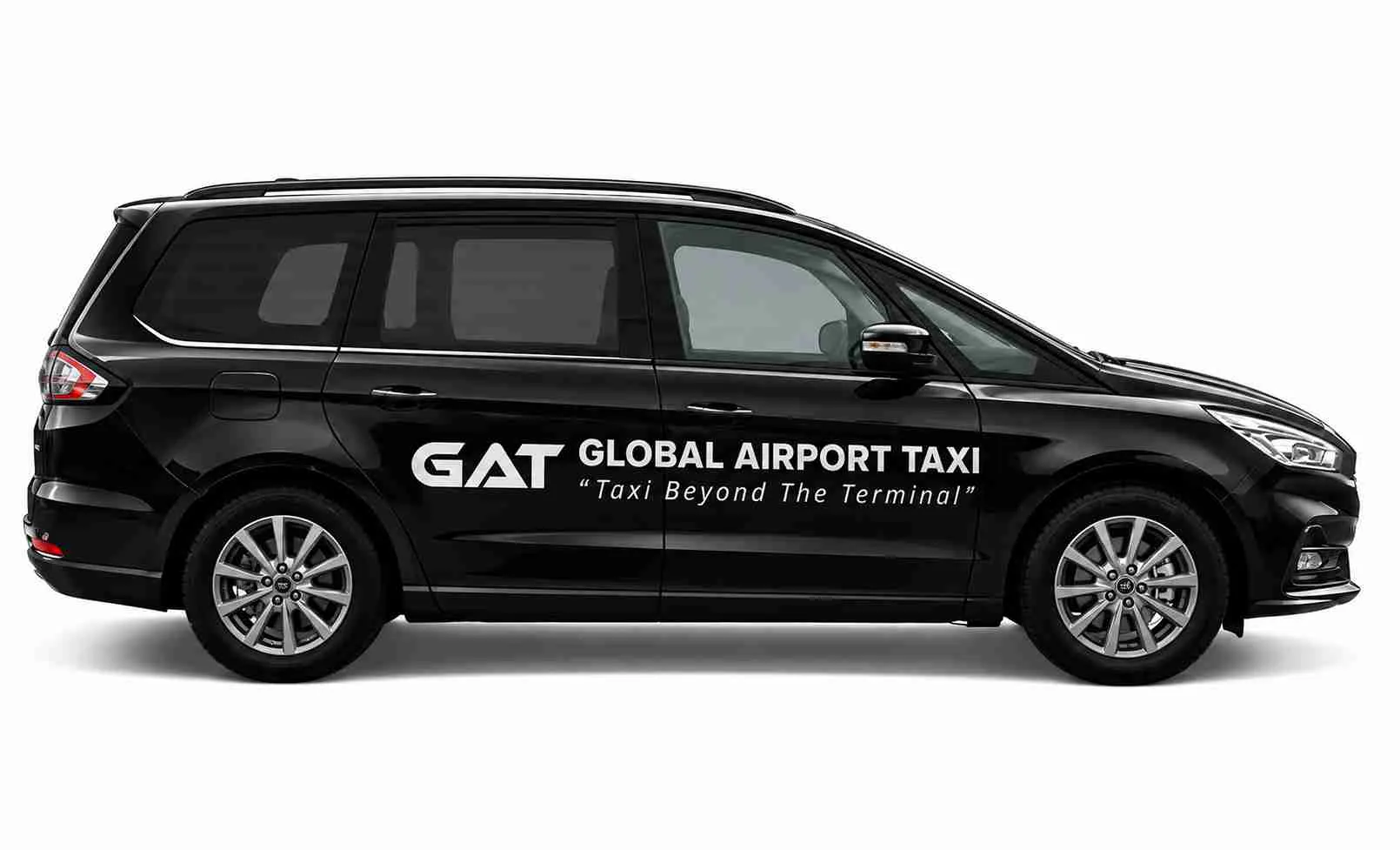
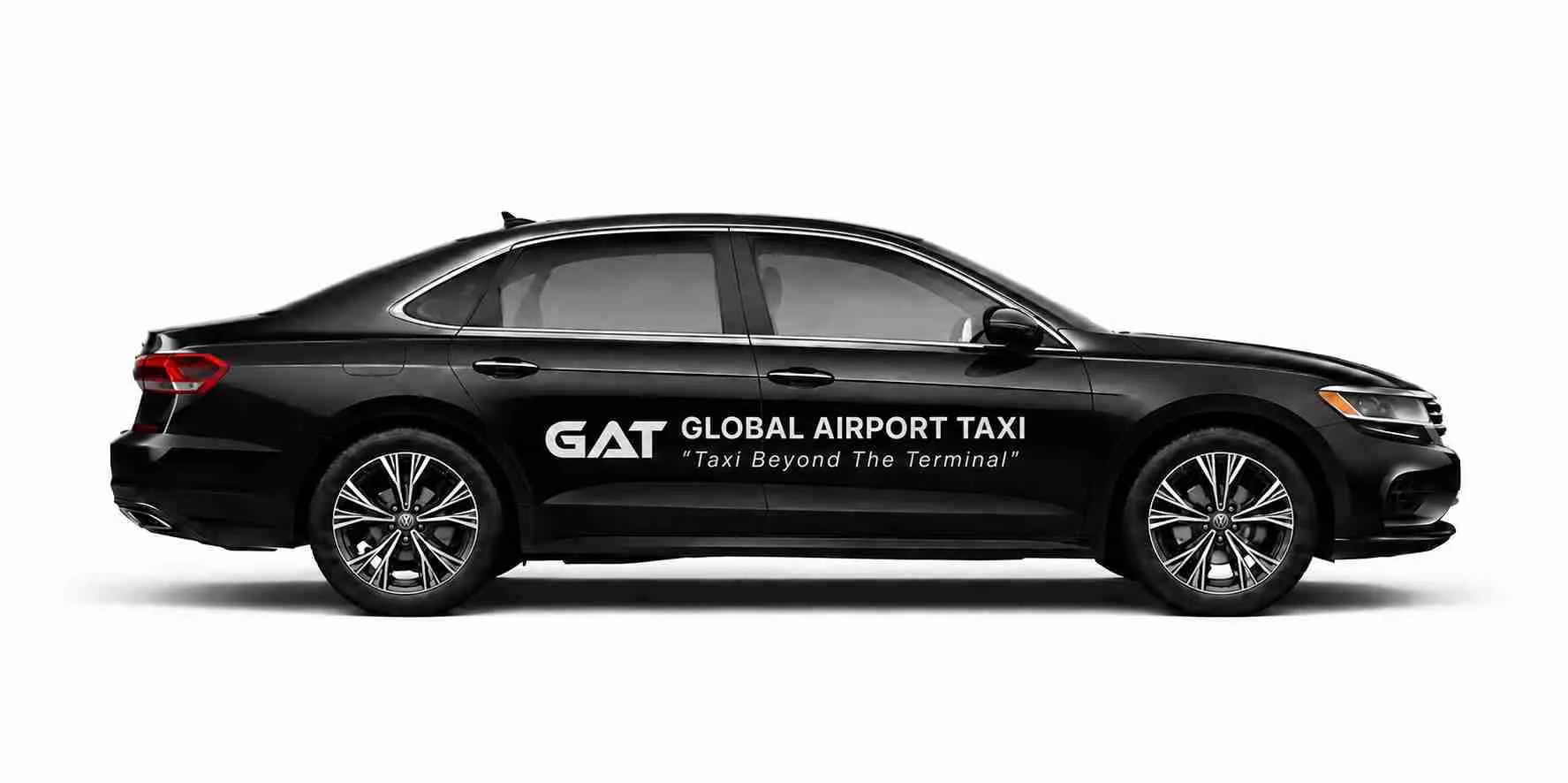
Luxury private car of the kind booked for a Heathrow Terminal 2 transfer, with the fare agreed before the journey
Nobody collects you from the kerb at Heathrow. The airport does not allow waiting on the terminal forecourt at all, so a pre-booked driver meets you inside arrivals and walks you to a car park — which is why the meeting point, rather than a car at the door, is what your confirmation names.

Vehicles

Choose Your Vehicle for Heathrow Terminal 2 Transfers

Nine classes, and the one number that actually decides which you need.

Count the hold bags before you count the passengers. On a long-haul arrival into Terminal 2 the boot runs out well before the seats do, and almost every booking that goes wrong at the kerb goes wrong on luggage rather than on people.

The classes below are the network’s, which means a saloon booked here is the same saloon booked anywhere else on it. What changes from airport to airport is which of them makes sense, and at Heathrow it is decided by the length of the road journey as much as by the party.

Vehicle classes and capacities
ClassPassengersLuggageWhat it is for
SaloonUp to 43 large (3 passengers), or 2 large and 2 hand bags (4 passengers)One or two travellers and a motorway run. The commonest booking made from this terminal, and the one that fails if a fourth case appears.
Estate carUp to 43 large and 3 hand bagsThe answer when the cases outnumber the people and nobody needs an extra row of seats.
Executive carUp to 32 large and 2 hand bagsThree seats, not four. A quieter cabin for the hour between the terminal and a meeting.
MPV, 5-seaterUp to 5Up to 4 large suitcasesFive people kept together: one vehicle, one driver and one set of instructions instead of two of each.
MPV, 6-seaterUp to 64 to 5 large suitcasesSix with a holiday’s luggage, or a family whose pushchair has to travel flat.
Executive 7-seaterUp to 7Up to 7 bagsSeven travelling together on a route where the drive is counted in hours, with nobody holding a case.
Executive MPVUp to 7Up to 7 bagsThe same seven seats in a higher-specification vehicle, usually booked for arriving guests rather than for a holiday.
Van, 8-seaterUp to 8Up to 7 bagsEight people with luggage: the last size still handled as a car class rather than as a group movement.
8-seater minibusUp to 86 to 8 large suitcasesEight where the cases outnumber the passengers, which after a long-haul arrival is most of the time.

Those figures come from the network fleet pages, which describe each class in full: the saloon, the estate, the executive car, the people carrier, the seven-seater and the eight-seat minibus. Where a number there disagrees with a number here, the fleet page is the one to believe.

Saloons, estates and people carriers

Three people with a case each are comfortable in a saloon; four people with four large cases are not. The estate fixes the luggage without adding a row of seats, and the people carrier fixes both, which is why it is the usual answer for a family going any real distance.

The class that catches people out is the executive car. It has three seats, not four — the fourth was traded for the cabin — so a party of four who choose it on the strength of the name arrive one seat short.

Saloon car of the class booked most often, carrying two or three passengers and their hold luggage
The saloon: two or three people, a case each, and the commonest booking from this terminal.
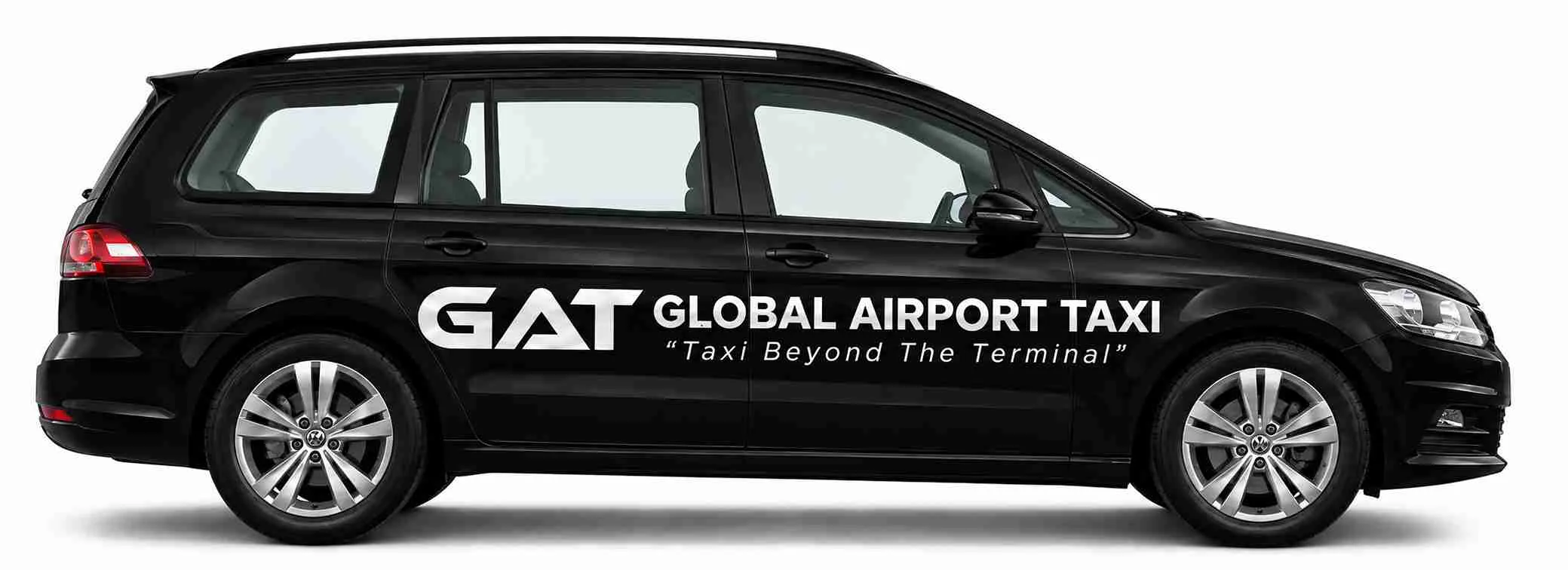
Estate car, chosen when the number of suitcases rather than the number of passengers rules out a saloon
The estate: four people whose cases, not heads, ruled out the saloon.
Executive car with the driver waiting at the passenger door, the quieter cabin booked for business journeys
The executive car: three seats and a quieter hour on the way into London.
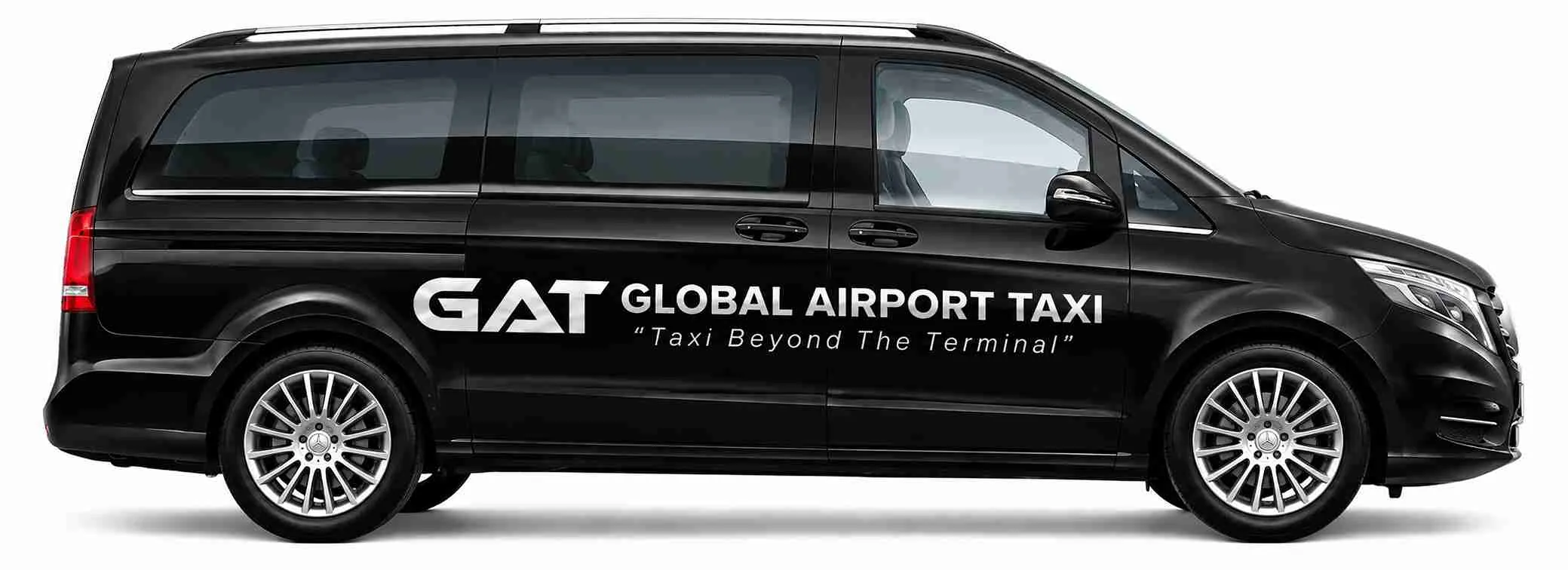
Six-seat people carrier with room for several large cases and a pushchair travelling flat
The six-seat people carrier: room for the pushchair without unpacking anything.
Seven-seat vehicle with a full rear row, for a family travelling together with their luggage on a long road journey
The executive seven-seater: the class that turns a four-hour drive into something bearable.
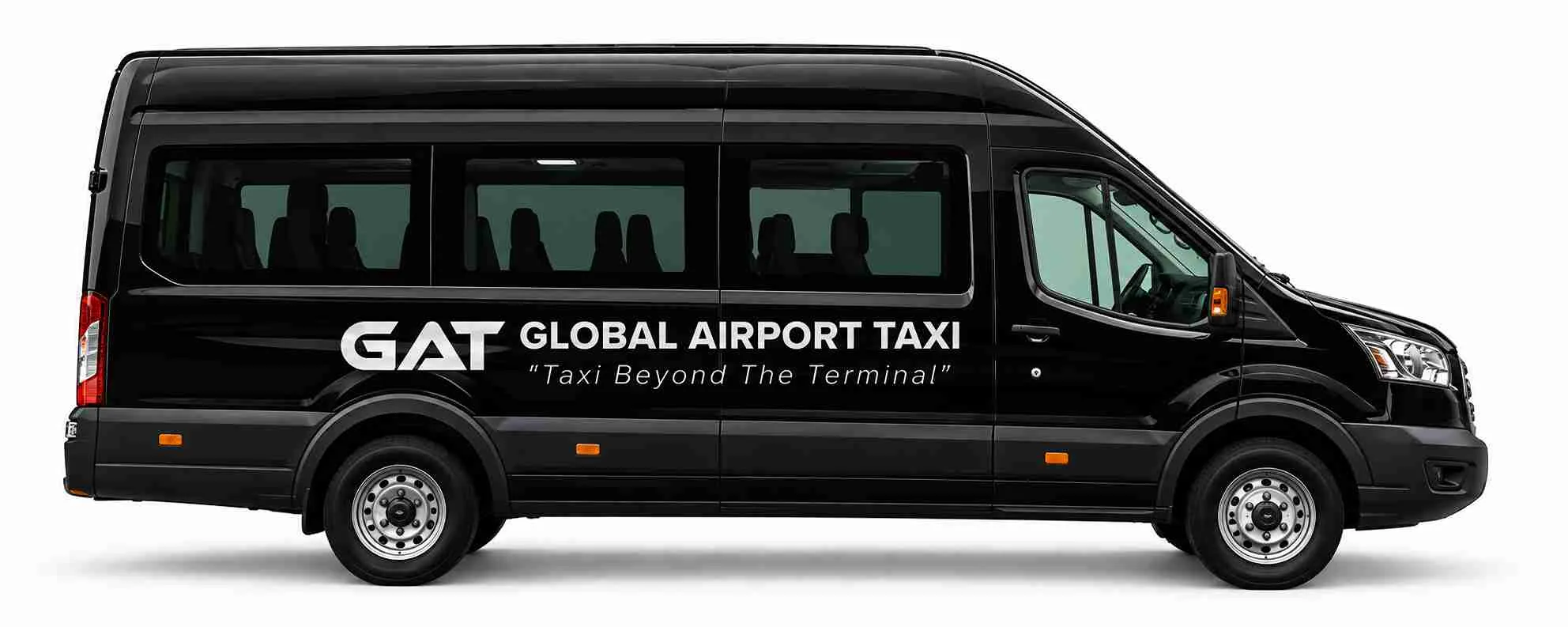
Eight-seat van, the largest vehicle still booked as a single car class
The eight-seat van: eight people, their cases, and still one vehicle.
A note on these photographs. The cars above are the network’s vehicle classes, photographed where the network photographs them, and their captions name no place because none of them was taken in one. The three wider images elsewhere are different: they were made for this terminal and their captions say so. What none of them claims is that the shutter was pressed at Heathrow, because nobody has told us that it was.

Minibuses and coaches for larger groups

Beyond eight passengers a booking stops being a car class and becomes a vehicle: the sixteen-seat minicoach, the thirty-seat coach and the fifty-seat coach are all on the network and are quoted as group airport transfers — one movement against one flight rather than six separate bookings that happen to want the same minute.

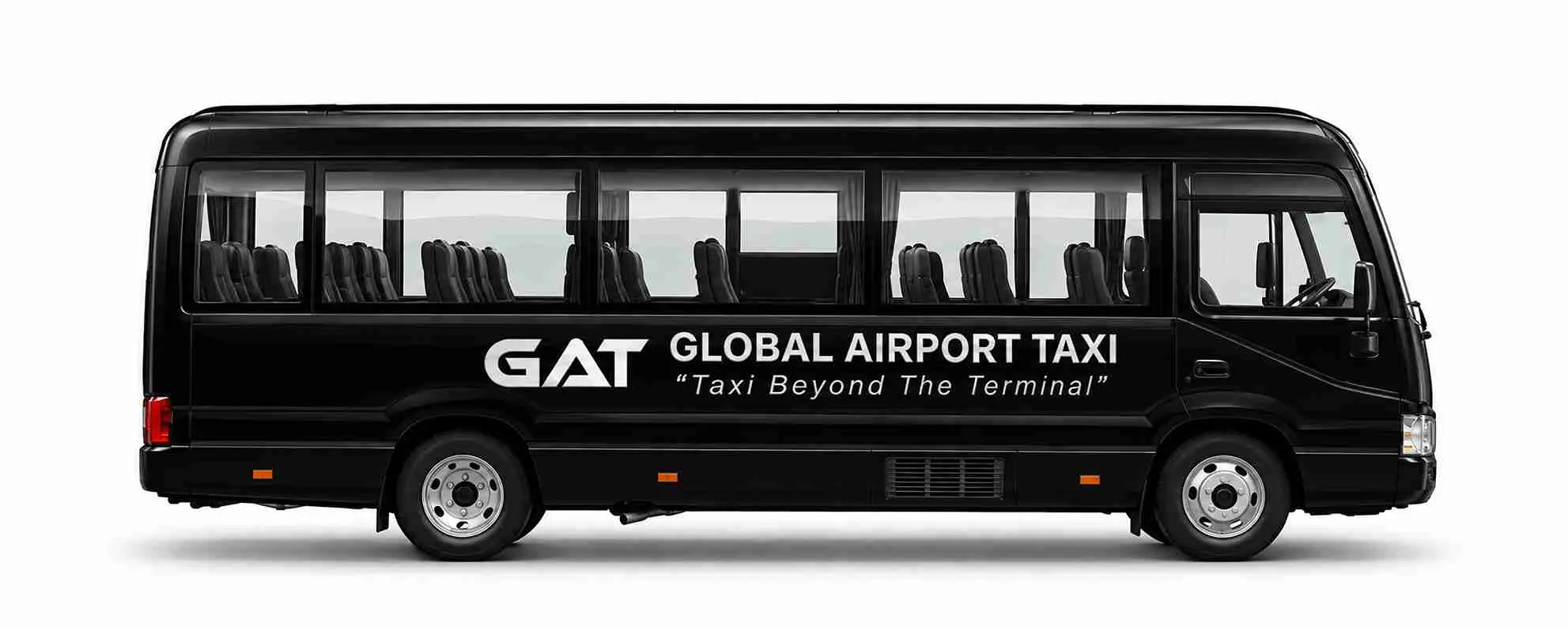
Sixteen-seat minicoach, the vehicle used when a party arrives on one flight with a case each
The sixteen-seat minicoach: a party that arrived together and would rather not be divided up.
Thirty-seat coach, booked when a group is too large to divide sensibly between cars
The thirty-seat coach: past this point, cars are the expensive way to do it.
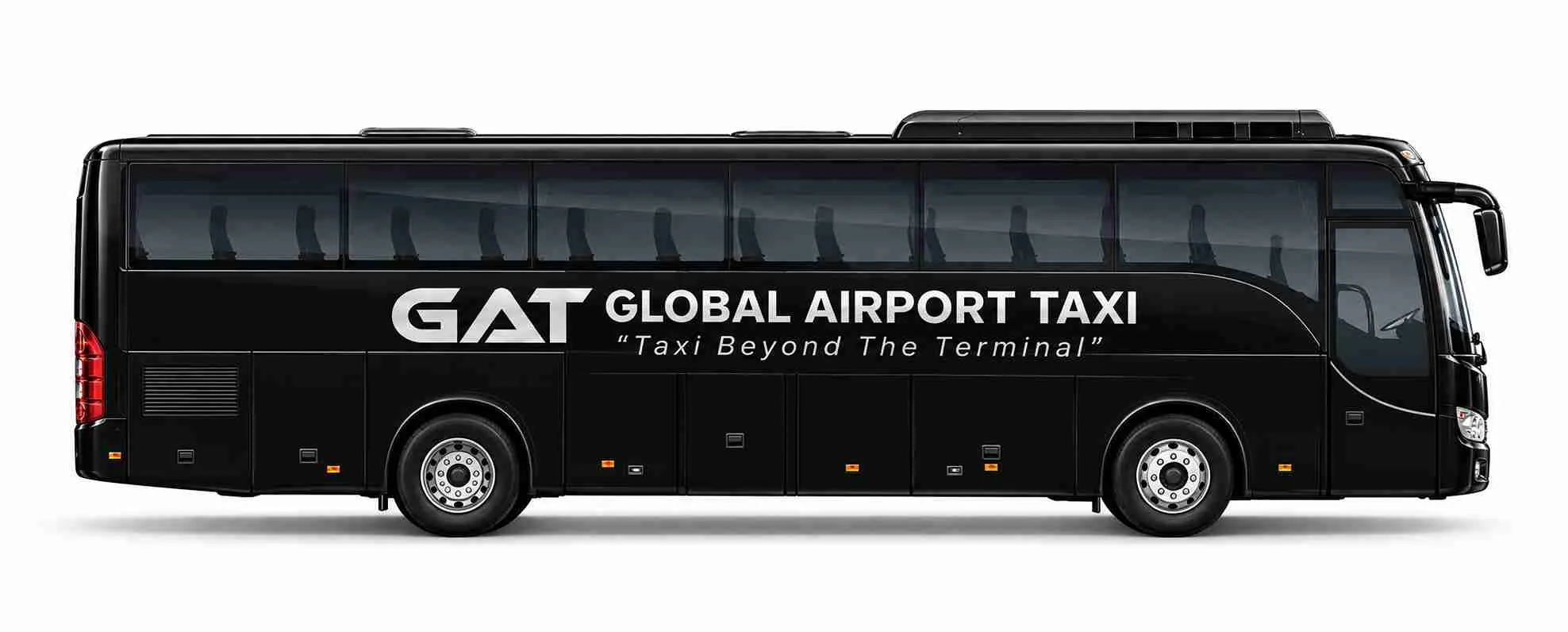
Fifty-seat coach, the largest vehicle on the network and the one used for organised group movements
The fifty-seat coach: organised group movements, booked as one arrangement.

A transfer fare is quoted against the journey you describe and holds from the moment you confirm it. It is not a published list, because the journeys are not a list.

Reviews

What Travellers Say About Their Transfers

Whatever the review service is holding, in whatever order it holds it.

The panel below is somebody else’s, and that is the point of it. It is fetched from the review service at the moment the page opens, and neither the wording nor the order of what appears in it is decided here.

Terminal 2 has no score of its own anywhere, so none is claimed. What loads is the whole network’s record, left by passengers on whichever platform they happened to use.

Where the panel comes from
A third-party review service, fetched when you open the page.
Why there is no terminal score
Rating one building of an airport would take more reviews of journeys from that building than exist. Inventing the number is the only way to have one, so there is none.
Kept on our own site as well
the customer reviews page holds the same journeys in one place.

At a glance

Heathrow Terminal 2 Taxi Service at a Glance

The terminal, the meeting point, the vehicle and the fare, before any of the detail.

Heathrow calls Terminal 2 the Queen’s Terminal, and it is one of five terminals spread across a site two and a half miles wide. Which one your flight uses decides where your driver stands, which car park the vehicle is in and how long the walk is, so it is the first thing a booking needs and the thing most often left out of one.

What follows is the whole arrangement in one table, and then the same arrangement explained properly. If you only read the table, you will still know what to expect.

Heathrow Terminal 2 private transfers at a glance
What you are arrangingHow it works
The airportLondon Heathrow Airport (LHR), Terminal 2
The terminal’s other nameThe Queen’s Terminal, which is the airport’s own name for it
Where you meet the driverIn the public arrivals hall, at the point your confirmation names, behind a board with your name on it
Where the car waitsA car park rather than the kerb. The airport does not allow waiting on the forecourt
What the dispatch followsThe flight number: land late and the collection shifts with you rather than lapsing
Included waiting after you land60 minutes, stretching to 90 where the hold baggage is the delay
Where the journey can goCentral London, and towns and cities across England, Wales and Scotland where the network operates
What the fare isOne figure for the vehicle, agreed in writing before you travel
Child seatsAvailable on request and free of charge
CancellationFree up to 24 hours before the pick-up
The journey homeArranged identically, counted back from the hour the desk closes
Who drivesWe are a booking platform. Your transfer is carried out by a licensed private hire driver

Get Instant QuoteAsk about a journey

Nothing above is a quotation. A quotation names your vehicle, your address and your flight, and it arrives in writing before anything is agreed.

Booking

Book Your Heathrow Terminal 2 Taxi Online

What the form asks for, in the order it asks, and why each line is there.

A transfer goes wrong at the booking stage far more often than it does at the kerb. Almost every failure traces back to one of eight lines: the terminal, the address, the flight, the luggage. Get those right and the rest of the arrangement looks after itself.

A pre-booked transfer is a different legal arrangement from a taxi taken off a rank. The vehicle is hired in advance through a licensed operator, the fare is agreed rather than metered, and the driver is allocated to your journey before you land rather than found when you arrive.

How to book your Heathrow Terminal 2 transfer

Nothing in the list below is there for completeness. Each line is something that, left out, produces a driver somewhere you are not.

  1. Terminal 2, named as the terminalHeathrow is five terminals on one site and they are not next door to each other. A booking that says Heathrow and means Terminal 2 is a booking somebody has to ring you about.
  2. The full address at the other endA postcode covers a street; a street covers a block. The property, the building or the hotel is what the driver is actually looking for.
  3. The flight numberOf everything on the booking this is the part that does not go stale. Schedules move, aircraft are swapped, aeroplanes are put down elsewhere; the number stays, and the car is dispatched against it.
  4. Passengers and hold bags, counted separatelyA vehicle runs out of boot long before it runs out of seats, and after a long-haul flight it is the cases that decide which one is sent. Give both numbers and the choice makes itself.
  5. Anything bulky, named rather than countedA pushchair, a wheelchair, golf clubs, a bicycle or a cello is not an extra suitcase. Say what it is and the right vehicle is sent instead of hoped for.
  6. Child seats, by ageAn age decides the restraint. Children given as a head count arrive to a seat that may suit none of them.
  7. The return leg, if there is oneAdd it while you are here. The morning of a departure is the worst time to work out how long the road to Heathrow takes.
  8. Confirm, and keep what arrivesOne email holds the vehicle, the driver, the meeting point and the figure. It is the arrangement itself rather than a receipt for one, so it is worth being able to find on the day.

Book Heathrow Terminal 2 TaxiCheck a fare first

Taxi from Heathrow Terminal 2 arrivals

Arrivals are dispatched off the flight number. What that buys is an aeroplane’s worth of uncertainty absorbed: the driver leaves when the aircraft is down, the allowance starts counting then, and the journey finishes at your address rather than at a station near it.

What you are buying on this leg is the end of the journey being settled before the start of it. After a long-haul arrival into Terminal 2 that is worth more than it sounds.

Taxi to Heathrow Terminal 2 departures

Leaving is the same road and a different calculation. The fixed point is the check-in desk closing, and the pick-up is worked back from it. The departure section sets out what that needs.

The short version is the flight, the terminal and the time you have to be there. Give those three and the pick-up time is worked out rather than guessed.

Changing or cancelling

Free cancellation up to 24 hours before the pick-up, and a change to the journey is re-quoted before you agree to it rather than settled at the far end. Both live in the booking terms and conditions, which apply to every journey on the network rather than to this one.

Distance, vehicle and the hour of the day all move a figure, which is why one comes back against a described journey rather than off a board.

Pick-up

Heathrow Terminal 2 Taxi Pickup – Where to Meet Your Driver

The meeting point, the car park, and why nobody is waiting at the kerb.

Heathrow’s own instruction to anybody collecting a passenger is that you will not be able to wait on the terminal forecourt. That single rule shapes every Heathrow collection there is. A pre-booked driver cannot sit outside arrivals waiting for you, so the arrangement is a meeting point inside the building and a short walk to a car park.

It catches people out because it is the opposite of what happens at a hotel or a station. At Terminal 2 the car is parked and paid for before you reach it, and the person you are looking for is standing in arrivals rather than sitting behind a wheel.

The Heathrow Terminal 2 arrivals meeting point

Heathrow’s published meeting point for Terminal 2 is opposite the international arrivals exit. That is the airport’s own published point and it is where people arrange to find each other generally.

Your own meeting point is the one your confirmation names, which may be that point or another agreed spot in the same hall. At airport arrivals your driver waits at the meeting point with a name board and helps with the bags. Your confirmation shows the driver and vehicle details.

Meet and greet arrival for a pre-booked Heathrow transfer, where the driver waits with a name board and walks you to the vehicle
The car is parked before you reach it. Where you meet the driver is a line in your confirmation rather than a guess at the kerb.

For a collection Heathrow directs drivers to Terminal Parking, paid before leaving, or to twenty-nine minutes of free parking in a Park & Ride car park — which is why a collection takes a few minutes longer than a drop-off and why the walk is part of the arrangement rather than a surprise.

The Authorised Vehicle Area on the Northern Perimeter Road is Heathrow’s waiting area for private hire cars and licensed taxis, open twenty-four hours a day, and open only to authorised operators and their vehicles. From there, Heathrow says, drivers pick up from Terminal Parking or Park & Ride car parks, or meet passengers at agreed terminal locations. None of that is visible from the arrivals hall, but it is the reason a driver can be minutes away rather than circling.

How to find your pre-booked taxi

  • Check the terminal on the board. Flights are occasionally moved, and Terminal 2 is a long way from Terminal 5.
  • Clear immigration and collect the hold bags. The included waiting is already running from the moment you landed, so there is no need to hurry anybody.
  • Walk out into the public arrivals hall. Everything before that point is airside and nobody can meet you in it.
  • Read the meeting point off your confirmation rather than looking for a car. The confirmation is the only document that names it.
  • Look for your own name on a board. That is what the driver is holding.
  • If you cannot see anybody, ring the number on the confirmation before leaving the hall. Walking outside is the one move that makes finding each other harder.

Heathrow Terminal 2 car park pickup

A pre-booked car does not collect from the forecourt because it is not allowed to. For a collection Heathrow directs drivers to Terminal Parking, paid before leaving, or to twenty-nine minutes of free parking in a Park & Ride car park, and the walk from the meeting point to that car park is part of every collection here.

It is worth knowing in advance for one practical reason: it adds a few minutes at the end of a journey that most people have already mentally finished, and it is the single thing travellers are most surprised by at Heathrow.

The thing to know before you land. Do not stand at the kerb expecting a car. Heathrow’s own instruction to anybody collecting a passenger is that you will not be able to wait on the terminal forecourt, so a private hire driver who tried it would be moved on. The arrangement is inside the building.

Our general guide to Heathrow airport taxi pick-ups covers the other terminals, and what meet and greet actually includes sets out the service itself rather than the phrase.

Delays

Flight Delays and Free Waiting Time

What happens when the flight is late, and how much free waiting you actually get.

Your booking is tied to a flight number, which is why a late landing costs you nothing. The allowance begins when the wheels touch the runway rather than at the hour your ticket once promised.

That is how the arrangement works rather than a feature with a name. Nobody here is going to sell you flight tracking as a product: a transfer that ignored the flight it was booked against would simply be a transfer that did not work.

Waiting after you land
60 minutes, and the clock starts at touchdown rather than at the hour printed on a ticket.
When the baggage belt is the problem
Up to 90 minutes. Nobody can make a belt move faster, and being behind one should not cost you the car.
Waiting at an address rather than a terminal
A shorter allowance, 15 minutes, which is what governs a doorstep on the outbound leg.
A long delay, a diversion or a cancellation
Tell us as soon as you know. A journey moved in advance is a journey; one moved afterwards is a conversation.
What to look for in the hall
Somebody holding your surname up, standing where the confirmation said they would be.

Heathrow is a single-runway airport operating close to its limit, which is why holding, stand delays and a slow turn onto the gate are ordinary rather than exceptional here. The allowance above exists because of that, not in spite of it.

Late arrivals and very early departures have their own problems, and the notes on late-night and early-morning airport transfers go through them.

Airlines

Which Airlines Use Heathrow Terminal 2

Thirty carriers, listed as the airport lists them, and one rule about alliances.

Terminal 2 is where most of Heathrow’s Star Alliance traffic sits, but an alliance is not a terminal and should never be used as one. The list below is taken from the airport’s own airline pages, one carrier at a time, from the line that says which terminal it operates in.

Every name is spelt the way the airport spells it, which is not always the way the airline brands itself. Heathrow’s own page for MEA records it as having moved to Terminal 2 from Terminal 3, which is the kind of move that happens quietly and is the reason this list is read rather than remembered.

Airlines operating at Heathrow Terminal 2
Where they fly fromAirlines the airport lists at Terminal 2
Europe and IrelandAegean Airlines, Aer Lingus, Austrian, Brussels Airlines, Croatia Airlines, Eurowings, Icelandair, ITA Airways, LOT Polish Airlines, Lufthansa, Lufthansa City Airlines, SAS - Scandinavian Airlines, Swiss International Airlines, TAP Portugal, Turkish Airlines
The AmericasAir Canada, Avianca, JetBlue, United Airlines
Asia and the PacificAir China, Air India, ANA, Asiana Airlines, EVA Air, Shenzhen Airlines, Singapore Airlines, Thai Airways
Africa and the Middle EastEgyptair, Ethiopian Airlines, MEA

European airlines at Terminal 2

Fifteen of the thirty fly from Europe and Ireland, which makes this the largest group in the building: Aegean Airlines, Aer Lingus, Austrian, Brussels Airlines, Croatia Airlines, Eurowings, Icelandair, ITA Airways, LOT Polish Airlines, Lufthansa, Lufthansa City Airlines, SAS - Scandinavian Airlines, Swiss International Airlines, TAP Portugal and Turkish Airlines. Between them they cover most of the short-haul network that feeds Heathrow’s long-haul departures.

North American airlines at Terminal 2

Four carriers link Terminal 2 with the Americas: Air Canada, Avianca, JetBlue and United Airlines. Arrivals from New York, Toronto, Boston, Chicago, San Francisco and Washington are handled here, although the terminal depends on the operating airline rather than on the city you left.

Asian, Middle Eastern and African airlines at Terminal 2

The long-haul east and south are served by Air China, Air India, ANA, Asiana Airlines, EVA Air, Shenzhen Airlines, Singapore Airlines and Thai Airways from Asia and the Pacific, and by Egyptair, Ethiopian Airlines and MEA from Africa and the Middle East. These are the arrivals that land with the most luggage, which is why the vehicle section is worth a look before you book one.

Checking your own flight

Terminal allocations change, and a codeshare is booked under one airline and flown by another. The terminal that matters is the one for the operating flight, which is printed on your boarding pass and published on the airport’s own page for that airline.

Two carriers are worth naming for the opposite reason. British Airways works mainly from Terminal 5, and several large groups operate from Terminals 3 and 4 — so a passenger who assumes Terminal 2 because the airline is a partner of one that uses it can end up on the wrong side of the airport with luggage.

Why this matters for a transfer. A driver is allocated to a terminal. Terminal 2 and Terminal 5 are separate buildings with separate car parks and separate arrivals halls, and the walk between them is not a walk. If your terminal changes after you book, tell us — it is a small change in advance and a large one on the day.

Fares

Heathrow Terminal 2 Taxi Prices and Fixed Fares

What a Terminal 2 transfer is priced on, and the figures nobody here will invent.

The fare is fixed, and it is fixed at the moment you book rather than printed on a list. A terminal whose journeys can end anywhere in Britain has no price list to publish; what it has is a figure quoted against the journey you describe, held in writing from the moment you confirm it, and unchanged by the traffic you then sit in.

No fare of ours is printed anywhere below, and that is deliberate rather than evasive. The company publishes fixed fares where it has a fixed list of destinations; a terminal that serves the whole country does not have one, and a number invented for the look of the thing is worse than no number at all.

What affects your Heathrow Terminal 2 taxi fare?

  • Where you are going. The single largest factor, and the reason a quotation is built from the full address rather than the town.
  • Which vehicle it needs. Decided by the luggage far more often than by the head count — see the vehicle section.
  • The size of the party. Nobody is charged a seat: the figure is for the vehicle, so the only question a head count settles is which vehicle it has to be.
  • Anything bulky. A bicycle, a wheelchair, golf clubs or a pushchair is a vehicle question settled in advance rather than a surcharge applied later.
  • Whether it is one journey or two. An extra collection, a drop on the way or a wait in the middle is agreed and priced before you book it, never afterwards.
  • When you travel. Not as a penalty, but because a cross-London run at six in the evening is a different journey from the same run at six in the morning.
  • The airport’s own charges. Heathrow charges vehicles for entering its forecourts and the city charges some of them for driving at all — both are in the charges section.

Check Heathrow Terminal 2 taxi prices online

A quotation is the only figure anybody here can stand behind. Give the terminal, the flight and the full address and it comes back against your journey rather than against an average of everybody else’s.

Get Your Fixed Heathrow Terminal 2 Taxi QuoteAsk about a fare

For the shape of airport pricing generally, the London airport transfer price guide and the guide to long-distance taxi prices set out what the numbers are made of.

Every charge in this section is the airport’s or the city’s rather than ours. They are reproduced because they change what a journey costs, and they are reproduced as their owners wrote them.

Airport charges

The Charges Heathrow and London Set Themselves

The drop-off charge, the low emission charge and the waiting area — none of them ours.

Heathrow charges £7 every time a vehicle enters a terminal drop-off area. It is the charge people are most surprised by, it applies to anybody driving you to a departure, and it belongs to the airport rather than to whoever is behind the wheel.

Everything in this section is somebody else’s money. It is here because it changes what a journey costs and because a transfer page that leaves it out is leaving out the part that turns up later.

Heathrow Terminal 2 pickup and drop-off charges

  • The amount. Seven pounds per entry, set and collected by the airport.
  • How often. The charge applies twenty-four hours a day, every day of the year, and a second entry is charged again.
  • How it is paid. It is paid online, by automated telephone line or by Autopay, by card only, and a visit paid for afterwards is due by midnight on the following day.
  • If it is not paid. Heathrow’s penalty for not paying is £80, reduced to £40 if it is paid within fourteen days.
  • Who does not pay it. Emergency, military and Heathrow operational vehicles are exempt, and buses, coaches, two-wheeled motorbikes, roadside recovery vehicles and registered Blue Badge holders are discounted in full.
  • Whether a taxi is exempt. Taxis and private hire vehicles are not on either list, so a car dropping you at a terminal pays the charge like any other.
  • The free alternative. Heathrow’s own free alternative is its Park & Ride car parks, which take a drop-off at no charge and run a free bus to the terminal.

On a departure booking, ask whether the charge sits inside the fare you were quoted or beside it. Your quotation is the document that answers it, and the guide to UK airport drop-off charges sets out how the other airports handle the same thing.

The low emission charge

Heathrow, Terminal 2 included, is inside the ultra low emission zone, where a non-compliant vehicle pays £12.50 for the day it is driven — the ULEZ, as the signs and the number plate cameras call it. Heathrow adds that the charge is due for each day a non-compliant vehicle arrives at one of its car parks.

For a passenger this is rarely a line on a bill — it is a cost of operating a vehicle here, and a licensed fleet working the airport is compliant or it is not working. It is in this section because people ask, and because a page that lists the airport’s charges and quietly omits the city’s is only half a list.

Where the cars wait

The Authorised Vehicle Area on the Northern Perimeter Road is Heathrow’s waiting area for private hire cars and licensed taxis, open twenty-four hours a day, and open only to authorised operators and their vehicles. Heathrow charges drivers £1.00 an hour for the first five hours in that area.

That area is the reason a pre-booked car can reach you quickly without circling the terminal roads, and the reason a driver is not sitting on the forecourt: there is a place for waiting and the forecourt is not it.

A metered fare is the meter’s to decide. What is explained above is how such a fare is built, not what one will come to.

Black cab

Pre-Booked Transfer or Black Cab From the Rank

Two legitimate ways to leave Terminal 2, and the difference between them.

Heathrow says London’s black taxis stop at the ranks outside each terminal, that their drivers have passed the Knowledge of London examination, and that all of them have wheelchair access. That is a real option and nothing here pretends otherwise. What it is not is the same arrangement as a pre-booked private transfer, and the differences are worth knowing before you choose.

A black cab is hailed from the taxi rank and runs on a meter under a regulated fare structure. A private hire vehicle may only carry a passenger who booked it in advance, through a licensed operator, at a fare agreed beforehand. Both are licensed; they are not interchangeable.

Fixed-price private transfer vs metered black cab

Pre-booked private transfer compared with a black cab from the rank
What you are relying onPre-booked private transferBlack cab from the rank
How you get itBooked before you fly, allocated to your flightJoined at the rank outside the terminal
What you payA figure agreed in writing before the journeyA regulated metered fare, counted as you go
Where it finds youWherever the confirmation said, with somebody holding your surname upThe signed rank, where the queue is
If the flight is lateThe car is sent against the flightYou take whatever is on the rank when you arrive
Choosing the vehicleBooked by class, against your luggageThe next vehicle in the line
A long journey out of LondonQuoted and arranged in advanceDepends on the driver and the journey
LuggageThe class is booked against the casesWhatever the vehicle on the rank will take

Heathrow publishes no fare of its own for them and points instead at Transport for London’s fare information, which is worth knowing if you are trying to compare the two in advance: one of them can be quoted before you fly and the other genuinely cannot.

The comparison across London generally is in the visitor’s guide to black cabs, minicabs and apps, and fixed-price transfers compared with ride-hailing apps takes the same question from the fare side.

Rail and coach fares belong to the operators that set them and move with their own timetables. Treat the figures as the shape of the choice rather than as today’s price.

Rail and coach

Heathrow Terminal 2 Taxi Compared With the Train

What the trains and coaches do, published by the people who run them.

Terminal 2 is one of the best-connected airport buildings in Europe, and for a single traveller with hand luggage the train is often the right answer. A transfer page that hides that is not worth reading, so here is the comparison with the operators’ own figures.

The Underground station that serves Terminal 2 is shared with Terminal 3. Heathrow’s Central Bus Station is a short walk from Terminals 2 and 3. Both are a short walk from the arrivals hall rather than a shuttle ride away, which is part of why the choice is a real one here.

Published rail and coach services from Heathrow
ServiceWhere it goesHow long and how oftenPublished fare
Heathrow ExpressLondon Paddington, non-stopFifteen minutes, a train every fifteen minutesFrom £10.00 booked ahead
Elizabeth lineCentral London and on to Reading or EssexUnder forty-five minutes, a train every thirty minutes£13.90 to zone 1
London UndergroundCentral London, stoppingUnder an hour, a train every ten minutesFrom £5.50
CoachVictoria coach station and other UK townsNo published journey timeFrom £10

Those four lines are the airport’s own published figures. What they describe is a journey to a station, which is the part people forget when they compare it with a car: the train is fast to Paddington and then you are at Paddington, with the cases, looking for the next thing.

When the train wins, and when it does not

  • Travelling light, going to a station. The train, almost every time. Fifteen minutes to Paddington is not a figure a road journey competes with.
  • A family with hold luggage and a pushchair. The arithmetic changes completely: four fares, a change, an escalator and a walk at the far end.
  • Arriving after a long-haul flight at night. A direct car to the door is worth more at midnight than it is at midday.
  • Going anywhere that is not central London. Oxford, Windsor, Southampton or Birmingham by public transport means at least one change, usually two, and often a taxi at the end anyway.
  • Three or more people going to one address. One vehicle quoted once starts to look different from three or four separate tickets.

Heathrow’s own guidance for reaching central London by car is to allow at least an hour, depending on the destination and the time of day — that is the airport’s own figure for the road, and it is an honest one. A transfer does not beat a train on time into central London. What it does is take you from the arrivals hall to the actual address without the journey breaking in the middle.

Weighing it up more broadly is the job of the London transfer guide written for international travellers, while the mistakes first-time visitors make at London airports is the short version.

The figure in your confirmation is the one that governs. Everything around it is background for a decision rather than the decision itself.

Into London

Heathrow Terminal 2 to Central London

The commonest Terminal 2 booking there is, and the part of it that goes wrong.

Heathrow’s own guidance for reaching central London by car is to allow at least an hour, depending on the destination and the time of day. That is the airport’s own guidance rather than ours, and it is the most honest sentence anybody publishes about this journey: the road into London is not a fixed quantity and nobody who tells you otherwise is measuring anything.

What is fixed is the fare, the vehicle and the fact that somebody is waiting for you. The rest is the M4, the Hammersmith flyover and whatever the afternoon is doing.

Where in London the journey actually ends

Central London is a dozen different destinations as far as a driver is concerned. Westminster, Mayfair, Kensington, Chelsea, Paddington, Victoria, Marylebone, Soho, Covent Garden, the City and Canary Wharf are all booked from this terminal every week, and they are not the same journey.

The address is what settles it. A hotel name without a street is the single commonest cause of a driver and a passenger standing four hundred metres apart, because London has three of most hotel names and two of most street names.

Six-seat people carrier with room for several large cases and a pushchair travelling flat
One vehicle to one address, which also means one arrival time and nobody waiting on a pavement for the second car.

A fare into London is quoted per vehicle rather than per passenger, so four people pay for the car and not for the seats. Where that changes the decision is on luggage: four people with four large cases are a different vehicle from four people with hand baggage.

The journey ends at the door. That is the whole difference between this and the train, and on a wet evening in February with a toddler and a pushchair it is a larger difference than it sounds in a table.

If you are weighing the options rather than booking one, the comparison of the London airports and the notes on airport-to-hotel transfers both help.

A long journey is quoted as one journey rather than as a mileage rate, and the quotation says what it includes before you agree to it.

Across the UK

Heathrow Terminal 2 Taxi Transfers Across the UK

Ten destinations people actually book from this terminal, and what each one needs.

Heathrow is the country’s long-distance airport, and Terminal 2 is where a great deal of that traffic lands. A transfer from here is as likely to end in Oxford, Southampton or Manchester as in central London, and the further it goes the more the booking depends on what you tell us.

Below is what each of those journeys actually needs. No distance column and no driving time: nobody publishes either, and a figure copied off a mapping service is that service’s estimate of a road rather than a published measurement of one.

Central LondonHeathrow Terminal 2 to Central London taxi

Hotel door to hotel door. Westminster, Mayfair, Kensington, Chelsea, Paddington, Victoria, Marylebone, Soho, Covent Garden, the City and Canary Wharf. Heathrow itself tells drivers to allow at least an hour, and the hotel entrance rather than the postcode is what decides the last ten minutes of it.

Windsor and BerkshireHeathrow Terminal 2 to Windsor and Berkshire

The short run west. Windsor, Slough, Maidenhead, Reading, Bracknell and Wokingham. The shortest of the long-distance bookings and the one most often made for somebody who has just come off an overnight flight.

OxfordHeathrow Terminal 2 to Oxford taxi

College, hotel or station. The city centre, the station, the colleges and the Oxfordshire villages around them. Give the college or the building rather than the university, which is spread across the whole city.

CambridgeHeathrow Terminal 2 to Cambridge taxi

Across the top of London. The city centre, the colleges, the business parks and the hotels. The journey crosses the north of London, so the hour of the day matters more here than the mileage does.

Birmingham and the MidlandsHeathrow Terminal 2 to Birmingham and the West Midlands

Up the M40 corridor. Birmingham, Coventry, Solihull, Warwick and Wolverhampton. A booking that is usually either a business arrival or a family one, and the two want different vehicles.

Bristol and BathHeathrow Terminal 2 to Bristol and Bath

West along the M4. Bristol, Bath and the towns between. Long enough that the luggage arithmetic decides the vehicle rather than the head count.

Southampton and the cruise terminalsHeathrow Terminal 2 to Southampton and cruise ports

A sailing time, not a drop-off time. The cruise terminals, the city and the Hampshire towns around them. Give the ship, the terminal and the time you have to be aboard, because that is the number the whole booking is built backwards from.

Brighton and the south coastHeathrow Terminal 2 to Brighton and the south coast

Round the bottom of London. Brighton, Hove, Worthing, Eastbourne and Bournemouth. The orbital motorway does most of the work and most of the delaying.

Manchester, Leeds and the northHeathrow Terminal 2 to Manchester, Liverpool and the north

Four hours or more. Manchester, Liverpool, Leeds, Sheffield, Nottingham, Leicester, York and Newcastle. At this distance the vehicle choice stops being about luggage and starts being about comfort.

Cardiff, Wales and ScotlandHeathrow Terminal 2 to Cardiff, Wales and Scotland

Planned rather than quoted. Cardiff, Newport, Swansea, Edinburgh and Glasgow. Journeys long enough that the driver’s hours and the rest stops are part of the arrangement rather than an afterthought.

What a long journey needs that a short one does not

  • A vehicle chosen for hours rather than miles. At four hours the question stops being whether the luggage fits and starts being whether the people do.
  • The address in full, including the building. A rural address, a campus or an industrial estate is where a postcode stops being enough.
  • A telephone number that will answer. On a long run it is the only thing that resolves a problem quickly.
  • Honesty about the luggage. Nine cases described as "a few bags" is a vehicle that arrives too small, four hours from anywhere.
  • Time for the breaks. A driver’s hours are regulated and rest stops are part of the plan rather than an interruption to it.

Journeys of this length are quoted as long-distance airport transfers rather than off a tariff, and a sailing is arranged as a cruise port transfer, which is planned backwards from the time you have to be aboard.

None of the ten above is a link, which is deliberate: no page exists behind any of them yet, and ten links to the same error would be worse than none. What does exist is gathered on the UK airport transfers hub.

Any charge an airport adds for entering its forecourt is that airport’s. Whether it sits inside a quoted fare or beside it is on the quotation.

Airport to airport

Heathrow Terminal 2 Transfers to Other UK Airports

Terminal 2 to another airport, and the one promise nobody should make about it.

A transfer books a car, not a connection. If your onward flight is on a separate ticket, the time you leave yourself is doing the work — and no vehicle, however early it starts, can be held responsible for the M25.

Said plainly: allow much more time than the road journey appears to need, and more again if you have to check luggage in again at the far end. With that understood, an airport-to-airport transfer is one of the things a pre-booked car does best, because the alternative is a rail connection with at least one change and all of your luggage.

GatwickTerminal 2 to Gatwick Airport

What the journey is. Both terminals, North and South. The commonest airport-to-airport booking in the country and the one where people most often leave too little time.

StanstedTerminal 2 to Stansted Airport

What the journey is. A door-to-door run that replaces a rail connection with at least one change and a walk with the cases.

LutonTerminal 2 to Luton Airport

What the journey is. North-west round the orbital, and a terminal with access charges of its own to allow for.

London CityTerminal 2 to London City Airport

What the journey is. Straight across London rather than around it, which makes the hour of the day the single biggest variable.

SouthendTerminal 2 to Southend Airport

What the journey is. The longest of them, out to the east of the city.

The Heathrow to Gatwick run is the one people ask about most, and the Heathrow to Gatwick transfer guide goes through it properly. For Gatwick and Stansted journeys in the other direction, the Gatwick transfer guide and the Stansted options cover the ground.

Before you book a connection this way. For separate flight tickets, allow a generous connection window. Two tickets are two contracts: a missed onward flight is not covered by the transfer that ran late, so the margin belongs in the plan rather than in the hope.

Luton has access charges of its own, set out in the Luton drop-off charges guide.

A class is quoted rather than listed: the figure follows the vehicle the journey actually needs, and which vehicle that is gets settled before the price does.

Families

Heathrow Terminal 2 Transfers for Families and Groups

Ages rather than numbers, boot space rather than seats, and what to say before the day.

Children are an age question rather than a head count. An age decides the restraint, and "two children" tells a fitter nothing at all — which is why the booking form asks for the ages rather than the number.

Child seats are available on request and free of charge. If your own seat is travelling with you, say so: it is welcome, and it takes boot space the booking ought to know about before the vehicle is chosen.

Family travelling together in one vehicle on a pre-booked Heathrow Terminal 2 transfer, with room for the cases and a pushchair
One vehicle for the whole party, which also means one arrival time and nobody waiting on a pavement for the second car.

After a long-haul arrival a family is carrying more than it left with: the cases, the pushchair, the duty free and a child who has not slept. The vehicle that fits all of it is chosen from what you tell us at the booking rather than from what is free on the day.

The seats are rarely the problem. A people carrier seats six and takes five large cases; the same six people with eight cases and a travel system are a different vehicle, and that is the arithmetic the booking form is really asking about.

Arriving as a family

  • Give the ages, not the count. An infant carrier, a group 1 seat and a booster are three different things.
  • Count the pushchair as luggage. A travel system takes the space of a large case and does not fold into a saloon boot alongside four of them.
  • Say if somebody cannot walk far. The walk from arrivals to the car park is part of every Heathrow collection, and it can be planned around if we know.
  • Book one vehicle rather than two cars. One arrival time, one driver, and nobody standing outside a hotel wondering where the others are.

Our guide to child seats on airport transfers sets out how the classes differ, and the notes on family airport transfers in London go through the vehicle side.

Accessible travel

Help inside the building is the airport’s and the airline’s, and is booked with them before you fly. What is ours begins at the door of the terminal: which vehicle comes, how long it holds, and where exactly it is able to stop.

Those three are decided in advance or they are decided badly, so they belong in the booking rather than in a conversation on the day.

  • A folding wheelchair goes in the boot and counts against the same space the suitcases do, so it belongs in the luggage count rather than beside it.
  • A powered chair or a scooter changes the vehicle entirely. Settle that one in writing before the booking is made.
  • An assistance dog is welcome and should be mentioned, so that both the car and the driver know in advance.
  • A passenger who cannot stand about should be named, because then the walk and the wait are planned around them instead of discovered.

The guide to wheelchair-accessible taxis in the UK covers the vehicle side in detail. Worth knowing from the airport side: heathrow says London’s black taxis stop at the ranks outside each terminal, that their drivers have passed the Knowledge of London examination, and that all of them have wheelchair access, which is a genuine advantage of the rank for a traveller who needs it and is said here even though it points away from the service being sold here.

Nothing in this section is a tariff. Family, accessible and group work is quoted against the vehicle the party needs, which is agreed first.

Business

Business and Executive Taxi Transfers at Heathrow Terminal 2

Executive vehicles, several passengers at once, and an account rather than a card.

A business arrival is a different booking from a holiday one, and the difference is rarely the car. It is that somebody other than the passenger is arranging it, often for several people on different flights into the same terminal on the same morning.

That is worth saying because it changes what the booking needs: a contact who is not the traveller, a flight per passenger, and an arrangement for what happens when one of the four flights is two hours late.

  • Executive classes. The executive car and the executive seven-seater exist for the hour between the terminal and the meeting — quieter cabins, space to work, and a driver who does not need directions.
  • Several passengers, several flights. Each traveller is booked against their own flight number rather than against one shared time.
  • A named contact. Somebody who can be reached if a flight moves, and who is not the person in the air.
  • One arrangement rather than one booking. A programme of airport work is set up once and run from there.

Regular airport work is handled through corporate airport transfers, the vehicle side is in business-class airport transfers in London, and events have arrangements of their own under event transport. Partners and agents are set up through the business pages.

Programme work is priced per movement rather than per head, and the arrangement is confirmed in writing before anybody travels.

Going back

Book Your Return Taxi to Heathrow Terminal 2

The departure leg, and why the check-in time is the only number that matters.

Arrange the outbound leg at the same time as the inbound one. There is no discount in it — the journey is identical reversed — but the day you fly home is the day you are least equipped to estimate the M4.

Three things settle it: the flight, which terminal it leaves from, and the hour you must be standing at the desk. The pick-up time is then calculated rather than estimated, with the distance and the hour of the morning both counted in.

What changes on the way back

  • The pick-up end is the unpredictable one now. An arrivals hall is a known quantity; a house at five in the morning is not, so the included waiting at a non-airport pick-up is 15 minutes rather than the hour that follows a landing.
  • The terminal has to be right. Heathrow has five of them and they are not interchangeable — see the airline list if you are not certain which one your flight uses.
  • The forecourt charge belongs to the airport. Heathrow charges £7 every time a vehicle enters a terminal drop-off area, and whether it sits inside your quoted fare or beside it is on your quotation.
  • Traffic is the variable nobody controls. Build the margin into the pick-up time rather than into the hope, particularly from the north or the west on a weekday morning.

A journey from a railway station rather than a home is arranged the same way and is covered by the station transfer pages. For a sailing, a cruise port transfer is planned backwards from boarding rather than from the quay.

Book Your Taxi to Heathrow Terminal 2Ask about a return

A return is the same journey in the other direction and is quoted the same way: against the address, the terminal and the flight you give us.

About us

Why Choose Global Airport Taxi for a Terminal 2 Transfer?

What is promised, what is not, and how to check either.

We are a booking platform. Your transfer is carried out by a licensed private hire driver That is the first thing worth knowing about us, and the thing most pages in this market leave until last if they say it at all.

What that means in practice is the list below. Every line on it can be held against the confirmation you receive, which is the only test a promise in this trade ever has to pass.

  • The fare is agreed before you travel. One figure for the vehicle, in writing, unchanged by the traffic.
  • The car answers to the aeroplane. Two hours late off the stand means a pick-up two hours later, not a booking you have lost.
  • Waiting is measured, not promised vaguely. 60 minutes from the moment you are on the ground, and 90 of them when the belt is what is holding you up.
  • No charge to cancel with more than 24 hours to go. Written into the terms, so it does not depend on who answers the telephone.
  • Child seats available on request and free of charge. Ordered by age.
  • Everything in writing. Your confirmation shows the driver and vehicle details — and where that document and anybody’s recollection differ, the document wins.

And what we are not claiming

The second list matters more than the first. Almost every unhappy transfer starts with a promise that could not have been kept by anybody, however well they drove.

  • We do not own the cars. Every class is clean, modern and driven by a professional, licensed driver.
  • We have no desk at Heathrow and no partnership with the airport. The airport has its own on-site operator and its own approved providers; we are neither, and a page implying otherwise would be claiming a position it has not got.
  • We do not publish what a black cab charges. Heathrow publishes no fare of its own for them and points instead at Transport for London’s fare information.
  • We are not promising a journey time. The airport’s own guidance is to allow at least an hour into central London, and that is as precise as anybody honest can be.
  • We are not guaranteeing a connection. A transfer books a car, as the airport-to-airport section says plainly.

There is a registered company behind the trading name and the about page says which. Everything that governs a journey once it is booked lives in the terms and conditions.

Every amount named on this site belongs to the body that set it and can be checked on that body’s own pages. Ours is the one on your booking.

Questions

Frequently Asked Questions About Heathrow Terminal 2 Taxis

Sixteen questions, answered from the airport’s own published pages wherever it has one.

The short version, if you read nothing else: nobody waits at the kerb at Heathrow, so your driver meets you inside arrivals and walks you to a car park; the terminal matters as much as the airport does; the airport charges £7 to enter a drop-off area; and the fare for your own journey is quoted against the address rather than read off a list.

How much does a taxi from Heathrow Terminal 2 cost?
There is no single answer, because a Terminal 2 transfer can end anywhere from Hammersmith to Edinburgh. The fare is quoted against the journey you describe — the full address, the vehicle the luggage needs and the time of day — and it is fixed in writing from the moment you confirm it. A black cab from the rank is the other option and runs on a regulated meter instead; Heathrow publishes no fare for those and points at Transport for London’s own fare information.
Can I pre-book a taxi from Heathrow Terminal 2?
Yes, and a pre-booked Heathrow Terminal 2 taxi is a different legal arrangement from one taken off the rank: it is hired in advance through a licensed operator at a fare agreed beforehand, and it may only carry the passenger who booked it. Give the terminal, the flight number, the full destination address, the passengers and the hold bags, and the confirmation names the vehicle, the driver and the meeting point before you fly.
Where is the taxi pickup point at Heathrow Terminal 2?
For a pre-booked transfer it is a meeting point inside the arrivals hall, named in your confirmation, where the driver waits with a name board. Heathrow’s own published Terminal 2 meeting point is opposite the international arrivals exit. The vehicle itself is in a car park rather than at the kerb, because Heathrow does not allow waiting on the terminal forecourt at all; the driver walks you to it. Black cabs are different again and queue at the signed rank outside the terminal.
Which airlines use Heathrow Terminal 2?
Heathrow lists around thirty carriers at Terminal 2, most of them Star Alliance members: Lufthansa, Swiss International Airlines, Austrian, Brussels Airlines, SAS, LOT Polish Airlines, TAP Portugal, Turkish Airlines, Aegean Airlines, Croatia Airlines, Icelandair, ITA Airways, Eurowings and Aer Lingus from Europe; Air Canada, United Airlines, Avianca and JetBlue from the Americas; Singapore Airlines, ANA, Asiana Airlines, Thai Airways, EVA Air, Air China, Shenzhen Airlines and Air India from Asia; and Egyptair, Ethiopian Airlines and MEA from Africa and the Middle East. Allocations change, so check the terminal for your own operating flight rather than relying on the alliance.
Is Terminal 2 the same as the Queen’s Terminal?
Yes. The Queen’s Terminal is Heathrow’s own name for Terminal 2, and the two names appear interchangeably on signs, tickets and booking confirmations. If your documents say one and the airport says the other, they are the same building.
How long does a taxi take from Heathrow Terminal 2 to central London?
Heathrow’s own guidance is to allow at least an hour by car, depending on the destination and the time of day, and nothing here will be more precise than the airport is. The same airport publishes fifteen minutes for Heathrow Express to Paddington and under forty-five for the Elizabeth line, which is the honest comparison: the train is quicker to a station, the car goes to the address.
What happens if my flight is delayed?
The booking is held against your flight number, so the driver is sent when the aircraft actually lands. The included waiting runs from that moment rather than from the scheduled time: 60 minutes after you land, stretching to 90 minutes where the hold baggage is what is keeping you. If you are delayed further inside the terminal, ring the number on your confirmation rather than leaving the hall.
Is there a charge for being dropped off at Terminal 2?
Yes, and it is Heathrow’s rather than the driver’s. Heathrow charges £7 every time a vehicle enters a terminal drop-off area, twenty-four hours a day and every day of the year, with a second entry charged again. Whether that sits inside a quoted departure fare or beside it is set out on your quotation, so check it there. Heathrow’s own free alternative is its Park & Ride car parks, which take a drop-off at no charge and run a free bus to the terminal.
Can I book a taxi from Heathrow Terminal 2 to Gatwick Airport?
Yes, and the same applies to Stansted, Luton, London City and Southend. Airport-to-airport transfers are one of the things a pre-booked car does best, because the alternative is a rail connection with at least one change and all of your luggage. One warning worth repeating: a transfer books a car, not a connection. If the onward flight is on a separate ticket, leave considerably more time than the road journey appears to need.
Can I book a Heathrow Terminal 2 taxi to any UK city?
You can ask for a quotation to any city the network serves, which covers London, Oxford, Cambridge, Birmingham, Bristol, Southampton, Manchester and a great deal in between: Heathrow is the country’s long-distance airport and much of Terminal 2 traffic is heading well beyond London. Journeys of that length are quoted as long-distance transfers against the full address rather than off a mileage rate, and the vehicle is chosen for the hours as much as for the luggage.
Is Meet & Greet available at Heathrow Terminal 2?
Yes, and it is what every arrival booking here is: the driver waits at the meeting point named in your confirmation with a name board and walks you to the vehicle. What it does not mean is a desk in the terminal with our name over it. The airport has its own on-site operator and its own approved providers; we are neither, and the meeting point is a spot in the public arrivals hall rather than a counter.
Is the Heathrow drop-off charge included in the fare?
Check your quotation, because that is the document that answers it. The charge is Heathrow’s rather than the driver’s — £7 every time a vehicle enters a terminal drop-off area — and taxis and private hire vehicles are not exempt from it. On a departure booking it either sits inside the figure you were quoted or beside it, and your quotation says which.
Is Heathrow Terminal 2 open for early-morning taxi transfers?
Transfers to and from Terminal 2 are booked around the clock, including the first departures of the morning and the last arrivals of the night. What is worth planning rather than assuming is the pick-up time at your end: a five o’clock collection from a house is a different arrangement from a mid-morning one, and the included waiting at a non-airport pick-up is 15 minutes.
Can I book a child seat for a Terminal 2 transfer?
Yes. Child seats are available on request and free of charge, and they are ordered by the child’s age rather than by a count of children, because an age is what decides the restraint. If you would rather bring your own, say so when you book: it travels, and it takes boot space the vehicle choice should know about.
Are larger vehicles available at Heathrow Terminal 2?
Yes. The classes run from a saloon up to an eight-seat van, and beyond that a booking becomes a minicoach or a coach rather than a car class — sixteen, thirty and fifty seats are all on the network. Tell us the hold bags as well as the passengers, because on a long-haul arrival the boot runs out before the seats do.
Can I book a return taxi to Heathrow Terminal 2?
Yes, and it is worth doing at the same time as the arrival. A return is planned backwards from your check-in: give the flight, the terminal and the hour you have to be at the desk, and the pick-up time is worked out from those rather than guessed on the morning.

Questions that apply to any airport rather than this terminal are gathered in help and answers for travellers. For a journey you are actually taking, a message beats a search: give the terminal, the flight and the address.

The airport reviews its own charges on its own schedule. What is printed here is what it published; what you pay is what it is charging on the day.

Seven-seat vehicle with a full rear row, for a family travelling together with their luggage on a long road journey

Book Your Heathrow Terminal 2 Taxi Today — send the flight and the address.

Three things decide the whole arrangement: the terminal, the flight number and the address at the other end. Send those, with your passenger count and your hold bags, and say if anything bulky is travelling — a pushchair, a wheelchair, a bicycle, golf clubs. Back comes one figure for one vehicle, settled before you agree to it, and a licensed driver waiting inside arrivals with your name on a board.