A Marseille Airport taxi settled before you fly, with a single figure agreed in writing and a driver held against your flight number at MRS. Out at the rank in front of Terminal 1 the charge is whatever the meter reads on one of its four settings, and since the airport stands at Marignane and not in the city, the setting a run into Marseille falls under is usually the more expensive of the pair. No fixed airport price is set here as one is at Nice or Toulouse, and the airport prints no fare of its own. The alternative is the pre-booked private transfer: quoted for the journey you have described and held once accepted. Both are set out below, with the runs to Aix-en-Provence, the cruise terminals, Cassis, Avignon and the Riviera.
The airport publishes no taxi fare, and France sets no fixed airport price at this one. A rank journey runs on the meter, usually on the empty-return setting; a pre-booked car is quoted for your own journey, and the confirmation names the spot where it waits.
Vehicles
Choose Your Vehicle for a Marseille Airport Transfer
Counting seats is the simple part. The boot is the part that settles it.
Four passengers with four big suitcases run out of boot long before they run out of seats. On a run that may finish at a kerb above the Vieux-Port in half an hour or at a gate in the Luberon two hours later, it is the luggage that picks the class far more often than the passengers do.
The capacities below belong to the network and hold wherever it works, because a seven-seat van is a seven-seat van in Marignane or in Manchester. What is particular to this airport is the range of work the same short list has to cover: a hotel at La Joliette and a mas outside Saint-Rémy come off the same table and are not remotely the same choice from it.
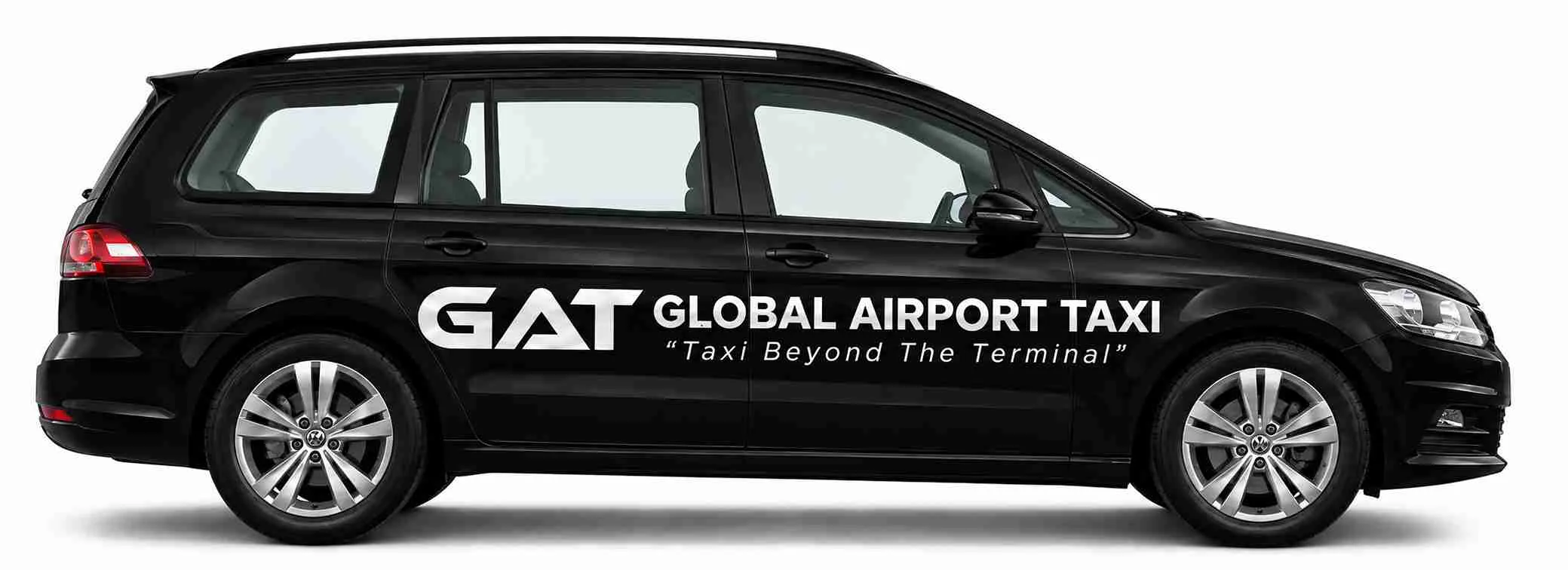
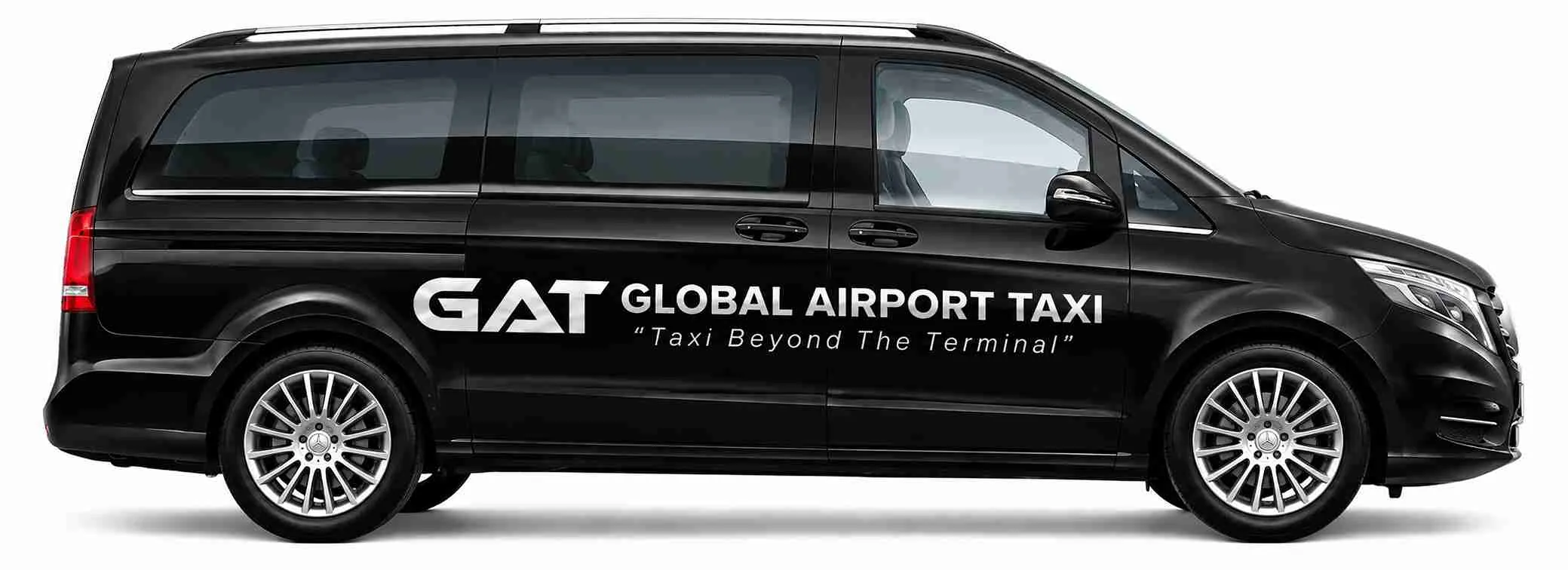
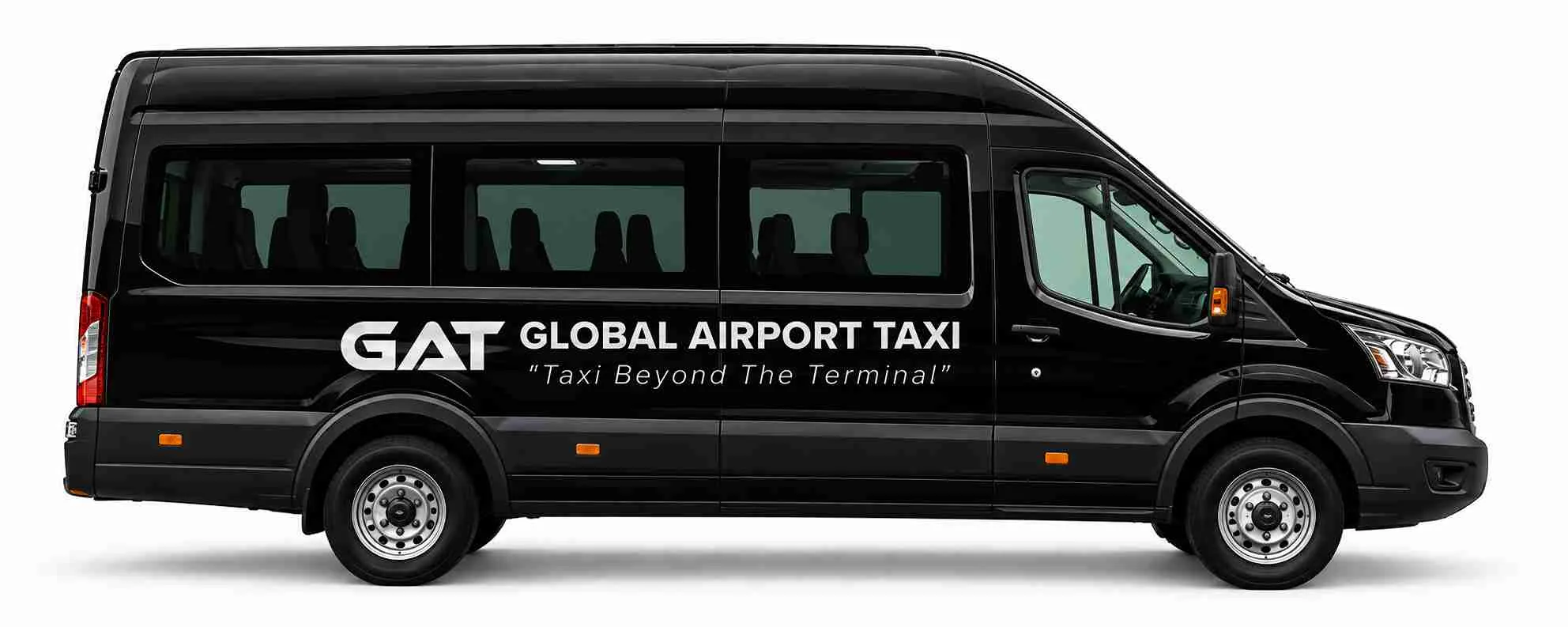
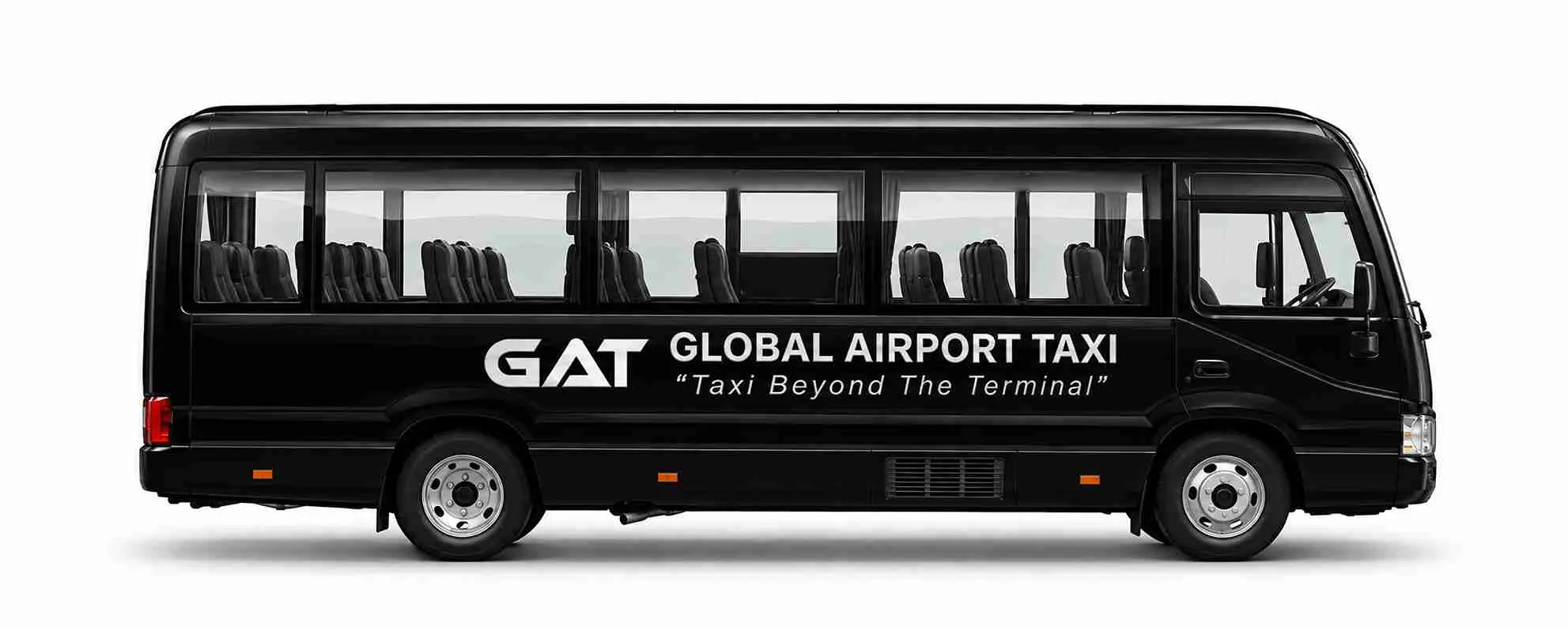
Vehicle classes, passengers and luggage
Class
Passengers
Luggage
Booked for
Saloon
Up to 4
3 large (3 passengers), or 2 large and 2 hand bags (4 passengers)
Two travellers with a case each going to a hotel above the Vieux-Port. The commonest booking off an early arrival, and the one that comes apart the moment a third suitcase appears at the doors.
Estate car
Up to 4
3 large and 3 hand bags
The same four seats over a longer load space, which is what a week in a village in the Luberon turns out to want once the cases and the market basket coming home are both counted.
Executive car
Up to 3
2 large and 2 hand bags
Three seats and a quiet forty minutes for an arrival going straight into a meeting at Euroméditerranée, a campus at Aix or an office park at Les Milles.
MPV, 5-seater
Up to 5
Up to 4 large suitcases
Five people kept in one vehicle rather than divided between two cars, which on the road round the Étang de Berre means two routes, two drivers and two arrival times.
MPV, 6-seater
Up to 6
4 to 5 large suitcases
Six places above a boot with real depth: a fortnight at Cassis or La Ciotat, buggy laid flat below and the beach bags above it.
Executive 7-seater
Up to 7
Up to 7 bags
A seventh seat and a boot deep enough for the drives measured in hours: Saint-Tropez, Nice, Montpellier. Nothing travels on anybody’s lap.
Executive MPV
Up to 7
Up to 7 bags
Seven places again, in a car an office is happy to send for a client. This is what gets booked when the arrival is being received rather than simply picked up.
Van, 8-seater
Up to 8
Up to 7 bags
Eight seats, and the furthest a single car booking goes. A ninth traveller turns it into a group movement.
16-seat minicoach
Up to 16
Luggage confirmed with the booking
A ship’s party or a conference landing on the same aeroplane: a single vehicle, a single meeting point, the cases loaded once.
Saloons, estates and executive cars
A saloon with three people aboard will take three large cases; seat a fourth passenger and the allowance drops to two large and two hand bags. An estate keeps all four seats and stretches the space behind them, which is what a week in Provence asks for once the cases flying out and whatever is flying home have both been counted. A Marseille Airport executive taxi gives up the fourth seat for a quieter cabin, and it tends to be ordered by an office rather than by the person who will sit in it, which is why the business section asks for two telephone numbers.
Two passengers, one case apiece, nothing left to work out.The same four seats, behind a load space the week in Provence turns out to need.One fewer place, bought back as quiet enough to work in.Six places over a deep boot: the fortnight at Cassis, in one vehicle.
Family MPVs, seven and eight seats
An MPV is where most families here end up: five or six travellers and everything that flew with them, the buggy included, which never packs down to the size it managed in the shop. Above it sit the two trims of the Marseille Airport 7-seater taxi, standard and executive, and then the Marseille Airport 8-seater transfer, which is the largest thing the network books as a single car.
Minicoaches, cruise parties and group movements
With nine people aboard you are no longer booking a car at all. What you are booking is a group movement, run as one vehicle rather than a convoy losing sight of itself on the A7. Quoting a Marseille Airport minibus transfer takes the details a saloon takes — where to, what time, and a bag count that somebody has actually carried out — plus one that only matters on a sailing day: whether everybody and everything has to stand on the quay by a stated minute.
A third row that grown-ups will tolerate for two hours on a motorway.Where a car booking ends and a group movement begins.Sixteen seats instead of four cars travelling in loose convoy and arriving separately.The coach, for a group that cannot be split and still reach one place at one time.
About these vehicle photographs. They show the classes as the network photographs them, and not one caption under them names a city, an airport or a kerb. The four wider pictures further down were made for Marseille and say so; these cars were not, and captioning one as though it stood in front of Terminal 1 would be the first untrue line here.
No class on the list below carries a price of its own. Which class you need is one ingredient in what one journey costs, and whether it exists on your date is a question only the booking system answers.
Reviews
What Travellers Say About Their Transfers
Passengers’ own words, on the platforms that gathered them.
Everything in the panel underneath comes straight from the review platforms, written by the traveller who took the journey being described. Nobody here composed it, selected it or put it in order.
There is no rating shown for Marseille on its own, and nobody has manufactured one to fill the gap. The panel reflects the network as a whole, written by whoever felt moved to write, leaving from wherever they happened to be.
Marseille Provence Airport Taxi Service at a Glance
The whole of it, compressed into one table.
You are buying a whole vehicle for your own party at a sum you have seen in advance. The queue in front of Terminal 1 is something else: a public service running on a meter, with national ceilings over it and a prefectural order working inside them.
Each line comes back in full further down with the body that published it attached. The airport gets credit for what it prints, the transport authority for the services it runs, the tariff order for the limits it sets — and whatever belongs to us is marked as ours and claimed no further.
The short answers about a Marseille Airport transfer
The question
The answer
Airport
Marseille Airport (MRS), Aéroport Marseille Provence in French
Also written
Marseille Provence, and Marignane by a good many people who live near it
Where it is
In the commune of Marignane, Bouches-du-Rhône, Provence-Alpes-Côte d’Azur, France
How far from the city
reported figures put it about twenty-seven kilometres north-west of Marseille; the airport publishes no distance of its own, so that one is given as reported
Passenger buildings
Terminal 1, divided into halls, and Terminal 2, which the airport writes as MP2
Official taxi rank
In front of Terminal 1, and nowhere else
When taxis are there
The airport says the station runs twenty-four hours a day, seven days a week
Fixed airport fare
There is none. Six places in France have one and this is not among them
What the airport publishes instead
No fare at all on its taxi page, only a schedule charged by the kilometre
What a rank taxi charges
a journey on the meter, taken from the rank outside Terminal 1, with the setting chosen by the time of day and by whether the driver returns loaded or empty
What may never be added
any flat fare, because none is set for this airport, and any charge for the pick-up being at an airport, which the rules do not permit
Our fares
Worked out from your journey, and unchanged once the booking exists
Flight watching
Standard on every inbound booking, run from the number you typed
Free waiting after landing
60 minutes from touchdown, and as much as 90 where it is the carousel holding you up
Public transport
The A1 and A2 coaches, a long list of regional routes, and a shuttle to the regional railway station
Where the journeys go
Marseille, the cruise quays, Aix, Cassis, the Var coast, Arles, Avignon, the Luberon and the Riviera
Booking
Online at any hour, subject to availability
It is the Aéroport Marseille Provence, MRS to an airline and LFML to a pilot, and it stands in the commune of Marignane on the far side of the Étang de Berre rather than in Marseille itself. It is reported to be the fifth-busiest airport in France by passengers, which is worth knowing because the arrivals hall at eight in the morning does not feel like a regional airport. In French the same service is searched for as a taxi aéroport Marseille, as a transfert aéroport Marseille, as a navette aéroport Marseille by anybody expecting a shuttle, or as a chauffeur privé Marseille by anybody who wants a car and a driver rather than a queue. A Marseille Provence Airport taxi, an MRS airport taxi and a Marseille Airport transfer are all the same arrangement under different search habits, and a private Marseille Airport transfer is the English way of asking for a car rather than a queue.
Nothing anybody wrote about a journey they took says what yours will cost. That number comes from the form, on your date, for your own route.
Terminals
Terminal 1 and MP2: Which One Is Yours
Two buildings, one rank, and a stop that belongs to neither.
Does Marseille Airport have two terminals? Yes — Terminal 1 and Terminal 2, which the airport calls MP2. There are two passenger buildings: Terminal 1, which is divided into halls, and Terminal 2, which the airport writes as MP2 and which was built for low-cost traffic, and the difference matters to a transfer for one reason above all others: the rank is at one of them.
Terminal 1
Divided into halls, and the building the taxi rank stands in front of
Terminal 2, or MP2
Built for low-cost traffic, and without a rank of its own
The coach stop
Between the two buildings rather than outside either of them
The shuttle to the train
From the airport bus station, at dock 5
A Marseille Airport Terminal 1 taxi
Terminal 1 is where the rank is, so a Marseille Airport Terminal 1 taxi is the taxi everybody else is queueing for as well: out of arrivals, through the doors, and into the line. It is also where the greater part of the airport’s airlines, shops and services sit.
A Marseille Airport MP2 taxi
MP2 was built to a plainer specification for low-cost traffic, and the thing to know about it is simply that it is a separate building. A Marseille Airport Terminal 2 taxi taken from the rank means walking across to Terminal 1 first. A pre-booked car does not, which is precisely why the terminal belongs in the booking rather than being worked out on the day.
Do not assume your driver is waiting at the rank. The rank is a public queue at one building. A car booked in advance meets you where the confirmation says, which may be neither that queue nor that building. Reading the confirmation before you walk is thirty seconds that saves a crossing of the airport.
Working out which building is yours
Which airline sold the ticket, and which carrier is actually flying it, since those are often two different companies.
The flight number itself, because that is what every screen and every booking is indexed by.
Whatever the airport publishes for arrivals and departures on the day in question.
A boarding pass, which names the terminal on the way out.
And the displays in the building, which beat every one of the above when they disagree.
One airline can use both buildings at this airport depending on the route, so a rule of thumb learned on a previous trip is not worth relying on. Terminal assignments move, which is the reason a booking is keyed to a flight number and the reason the terminal is asked for separately.
Three kinds of money run through everything below and none is mixed with another: what the tariff order lets a meter charge, what the transport operators charge for a seat, and what a private journey is quoted at.
Booking
Book Your Marseille Airport Taxi Online
Eight answers, and what each of them changes.
Can you pre-book a Marseille Airport taxi? Yes, and it is the one route to landing with the figure already fixed. To pre-book Marseille Airport taxi journeys is to come off the aeroplane with a Marseille Airport taxi booking already holding your name, your flight, your terminal and the address you are going to. Eight questions are asked on the form, and six of the answers between them settle which vehicle goes out.
One set of eight questions covers both directions and the answers carry different weight each way. Inbound, an aeroplane governs the day, and a car will happily wait on one. Outbound, a counter governs it, and counters close on time.
Choose MRS, and then say which terminalThe code picks the airport and the terminal picks the walk. Terminal 1 and MP2 are separate buildings, and the rank serves only one of them.
Write the far end out in fullStreet and number, or the mas, the hamlet and the commune. A village name alone reaches a village in the Luberon and stops there, and on the Corniche it can be the wrong end of a hill.
Set the day and the hourLanding? Use the scheduled arrival time, not your own forecast of the baggage hall. Leaving? Work back from the closing minute at check-in and then allow for the road on top.
Add the flight number for an arrivalDeparture boards get rewritten and aircraft get substituted; the number survives both of those, so it is what the pick-up is pinned to.
Count heads, and then count casesThe second of those two figures is usually the one that picks the vehicle. A party of four with four big suitcases has outgrown a saloon while still having a seat to spare.
Say what is coming that is not a suitcaseChild seats, a buggy, a wheelchair, clubs, diving kit for the Calanques boats, a case of wine on the way home: no two of them stow alike, and any pair together lifts the booking a class.
Pick a class, or let the luggage pick itThe capacities are tabulated above. Where a party sits between two classes, moving up is the cheaper of the two mistakes.
Read the figure, then decideThe amount shown is for the entire journey from door to door. Accept it and a confirmation comes back carrying the vehicle, the driver and the meeting arrangement.
A private taxi from Marseille Airport arrivals
A Marseille Airport arrivals taxi booked in advance needs five things: the flight number, the date, the terminal, the destination written out and a real count of the bags. The aircraft is then watched and the meeting arrangement goes into the confirmation instead of being improvised at the terminal doors. At airport arrivals your driver waits at the agreed meeting point with a name board and helps with the bags.
The purchase is the vehicle itself rather than a place in it. Nobody is picked up along the way, no second address joins the route, and nobody is sitting in it already waiting on somebody else’s aircraft. When the day may finish beyond the Alpilles, that distinction is worth most of an afternoon.
A taxi to Marseille Airport for a departure
Going the other way, the car comes to a hotel, an apartment with a keypad, a mas on a lane with no name or a cruise quay, and puts you down at the building your flight leaves from. To réserver taxi aéroport Marseille for an early flight, do it the day you buy the ticket: the first coach of the morning does not reach the terminal in time for every departure.
How a Marseille Airport private transfer price is produced
The figure follows the journey itself: the class, the road, the hour, and anything added on top — a second address, a child seat, a set of clubs. Each of those was something you entered yourself, which is why half an address ends up being quoted twice over. The fares section goes through the inputs one at a time, and explains why no rank at this airport can answer the same question with one number.
The terminal you land at sets the walk and the meeting point and nothing beyond them. A quotation is built from the two addresses on the booking, never from the door you happened to come out of.
Pick-up
Where to Meet Your Driver at MRS
The rank, the stops, and the two things "meet and greet" can mean.
Where is the taxi rank at Marseille Airport? The taxi rank is in front of Terminal 1, and the airport marks it on its own plan. That is the Marseille Airport taxi rank in one line, and it is the only one at the airport.
The airport says the station has eighty-six cars available twenty-four hours a day, seven days a week, so are Marseille Airport taxis available at night is a question with a published answer: yes. It also says the drivers speak English, Italian and Spanish, that invoices are issued, and that both cash and card are accepted. That rank, the coach stands and the shuttle stop are the only vehicle points the airport publishes: there is no designated bay anywhere in its pages for a pre-booked private driver.
Meeting a pre-booked private driver
First light at the airport, which is when a good many departures leave and when nothing scheduled is running yet.
Only one Marseille Airport taxi pickup point counts: the one printed on your confirmation. No bay for a pre-booked driver appears anywhere in the airport’s own pages, so an official private-hire point offered as though the airport had set one aside is a thing that has never been published.
It also means the meeting arrangement has to be read rather than guessed, and that it may differ between Terminal 1 and MP2. Thirty seconds with the confirmation before you walk saves a crossing of the airport with the luggage.
"Meet and greet" means two different things at this airport. The airport also sells a reception service of its own through its business centre, with a porter, help with formalities, lounge access, a private security lane and a car, and it publishes a starting figure for it. That product is a VIP welcome inside the building and is not the same thing as a driver meeting you with a board, which is part of a transfer and carries no separate charge. So a Marseille Airport Meet and Greet booked through us is a driver, a board and help with the cases; the VIP product is bought from the airport, costs from €190, and is a different thing entirely. What meet and greet covers on a transfer sets out ours.
The difference between the rank and a booked car is what you bought, not where you stand. The queue at Terminal 1 is open to anyone and settles at whatever the meter says on arrival. A car arranged beforehand has your name against it, a figure already agreed, and Marseille Airport flight tracking behind it — so a late aeroplane produces a later pick-up instead of a missed one.
Take nothing from anybody who approaches you inside the building. Licensed drivers do not tout in an arrivals hall. A driver you booked knows your name before you say it and can show you the booking; anybody who cannot is not your transfer, whatever they are holding and whatever they say the queue outside is like.
Step by step, from the aircraft to the car
Land, and take note of the buildingTerminal 1 or MP2. That decides the walk and the meeting point, and decides nothing else at all.
Clear the border, where the flight requires itAnything arriving from beyond the Schengen area meets passport control first, and that queue is invisible from the kerb. It is the reason our free allowance starts at touchdown rather than at the doors.
Collect the luggage, and count itAnything missing is worth reporting there and then, not after walking the hall. An hour spent at the baggage desk is an hour a driver would much rather be told about while it is still the first one.
Open the confirmation before you set off anywhereIt names the driver, the vehicle and where to meet. Thirty seconds spent on it saves the lap of the terminal most arrivals end up doing.
Head for whichever of the two is yoursPre-booked: the spot your confirmation names. Taking whatever is on the rank: out through arrivals, then follow the signs to the queue in front of Terminal 1.
If you landed at MP2, allow for the walkThe rank is at the other building, and so is most of the airport. Give it more minutes than the plan on the wall suggests.
Check the board, then check the plateIn that order, each against the confirmation, and both of them before a case leaves your hand.
Taking the rank? Ask for the noteAbove a published amount the driver must give you one, and below it you may request one. Every later question about what you paid depends on having it.
On the roof a sign carries the word taxi together with the commune that issued the licence, showing green while the car is free and red once it is hired, while a separate plate gives the licence number and the department. Between them those two markings settle, from the pavement, whether a car is a licensed taxi and whether it is for hire. Anybody landing in France for the first time will get more out of the guide written for arriving somewhere unfamiliar than by eight steps alone, and if you are expecting an app to behave the way it does at home, read how ride-hailing works at European airports first.
Enquiring is free and binds nobody. Enter the destination, the class and the flight and the figure comes back, well before there is any booking to speak of.
Fares
What a Taxi Costs at MRS, and Who Sets the Figure
Four meter settings, one of which is the one you will be on.
How much is a taxi from Marseille Airport to the city centre? There is no published answer, and the airport is not hiding one — it prints no taxi fare at all. Its taxi page prints no fare at all — no flat price, no example journey, no figure for the city centre — only a link to a schedule charged by the kilometre. So a Marseille Airport taxi price, a Marseille Airport taxi cost, a Marseille Airport taxi fare and a Marseille Airport to city centre taxi fare are four ways of asking one question, and in French it is the prix taxi aéroport Marseille. The honest answer begins with how the meter works.
Where the figures circulating for this journey came from. Two numbers appear all over the internet for the run into Marseille, usually attributed to the airport. The airport’s own taxi page was read for this build and it carries neither of them, nor any other price. They are therefore somebody else’s estimate, and they are not reproduced here.
Why no fixed price exists here
France does set fixed airport taxi prices by order, binding in both directions, but only at Paris, Nice, Cannes, Antibes, Toulouse and in Guadeloupe. Marseille is not among them, so no flat rank fare exists here. Our own Nice Airport page and Toulouse Airport page describe airports where the fixed prices do apply, and the contrast is the clearest way to see what is missing here.
What the meter actually does
Four settings exist on a French meter rather than one: A where a daytime run ends with a loaded return to the rank, B where that same run falls at night, on a Sunday or on a public holiday, C where the daytime return has to be made with nobody aboard, and D where that empty return falls at night or on a Sunday. Which of the four runs is decided by the clock, the calendar and the geography of the journey, and it is the last of those that catches people out here.
Tariff A
Daytime, when there is a paying return to the station
Tariff B
The same journey at night, on a Sunday or on a public holiday
Tariff C
Daytime, when the driver comes back with an empty car
Tariff D
That empty return at night, on a Sunday or on a public holiday
The setting almost every airport journey here falls under. The rule that matters at an airport outside the city it serves is the empty return, which may add up to another hundred per cent to the kilometre: a car taking you from Marignane into Marseille has no rank of its own to pick up from at the far end. That is not a surcharge and it is not sharp practice: it is the rate the tariff sets for a journey out of the licensed area, and it is why a run of this length costs more from an airport than the same distance across town.
A night journey may add up to half again, snow or ice with winter equipment may add up to half again, and the night and snow increases may not be applied together. A toll is not a supplement. Where you have agreed to a motorway, it is passed on at what it cost and nothing is added to it.
The ceilings, and who sets what
Those ceilings are set nationally and revised once a year, coming into force on the first of February, after which a driver has two months to get the meter reset. Once a meter has been adjusted a coloured letter is stamped on its dial, which is how an inspector, and a passenger, can see that the vehicle is on the current scale. Inside those ceilings the préfet of the department sets the figures by order; the ones that apply to your journey are displayed inside the vehicle. What follows is therefore the national ceiling rather than the figure set for this department, and the notice inside the vehicle is the thing that governs your journey.
The national ceilings a French meter works inside
Item
Maximum
Minimum fare for any journey
€8.00
Hire charge at the start
€4.48
Per kilometre
€1.30
Per hour, waiting or crawling
€42.15
Each passenger from the fifth
€4.00
Each bulky item of luggage
€2.00
The surcharge that may not lawfully be added. No majoration and no supplement may be applied for a pick-up at a station, a port or an airport, and none may be applied for a wheelchair. So an airport surcharge on a Marseille fare is not merely absent from the tariff: it is a charge the rules forbid. The supplements that do exist are the fifth passenger and the bulky item, and the second also covers suitcases beyond three per traveller.
What you are entitled to see, and to keep
A notice in the cabin must give the rate by the hour and by the kilometre, what the hire itself costs, every supplement together with when it applies, whatever fixed prices are in force, the figure above which a receipt is compulsory, confirmation that a card may be used, and somewhere to send a complaint. Above a published figure the driver must hand over a receipt, and below it one may be requested; whichever way, it carries the date, the times the journey began and ended, who operates the vehicle, its registration, where to complain, the fare before anything was added, each addition, and the sum of them. None of that is offered as a courtesy; all of it is a published obligation, which leaves the rank rather more predictable than its reputation would suggest.
And what a pre-booked transfer is instead
There is one sense in which a Marseille Airport fixed price taxi is fixed: the sum is worked out for the journey as you described it — the address at the far end, the class, the hour and whatever was added — and shown to you before a booking exists. Once accepted it stays where it is, whatever the A55 happens to be doing.
How the four arrangements differ
Arrangement
What sets the figure
What you get
Pre-booked private transfer
Worked out from the journey as you have described it, and read before anything is confirmed
A whole car for your own party, collected and set down where you said
Official taxi from the rank
Whatever the meter reads on its applicable setting, beneath the limits the department sets
Door to door, after a queue in front of Terminal 1
The A1 or A2 coach
A seat price the transport authority publishes
A drop at Saint-Charles or in Aix, with the final stretch left to you
The shuttle and a train
A shuttle ticket plus a separate rail fare
Wherever the regional network goes, with two changes of vehicle
None of the amounts printed above is ours. Four of them are national ceilings out of the tariff order; the others belong to transport operators or to the airport itself. Each can be changed by its owner without telling anybody, and the card inside the vehicle is what governs the journey you take.
Every airport in the world costs a driver time at the kerb. Here that time was priced into the figure you accepted, which is why it never turns up later as an extra line.
Delays
Flight Delays and Waiting Arrangements
A delayed aeroplane changes when. It changes nothing else.
With the flight number on the booking, the vehicle follows the aeroplane rather than the hour. So what happens if my flight is delayed answers itself: your collection slides with the aircraft, and the free allowance opens at touchdown instead of at the time printed on the ticket.
Free waiting after you land
60 minutes measured from touchdown, whatever the timetable had said
When the carousel is the hold-up
As far as 90 minutes, since a baggage hall detains people longer than any border desk
Waiting at any address but this one
15 minutes at any other address, where the car has come to take you to a departure
Cancelling without charge
Free of charge for as long as more than 24 hours remain
What the booking needs from you
The number the airline issued, on its own: no route, no aircraft type, nothing else.
Which terminal, since a car sent to the other one is a delay nobody needed.
A telephone somebody will pick up on landing, with roaming switched on or a French number in the party.
A message as soon as anything moves, sent from the seat rather than from the belt.
Two flight numbers for a party split across two aircraft, and two terminals if they are landing in different buildings.
Moved onto a different flight? Send the new number across and the arrangement moves with it; nothing is cancelled and nothing is rebooked from scratch. A diversion is harder, since the journey now begins at a different airport — Nice, Nîmes and Lyon take most of the diversions in this corner of France. Tell us from your seat rather than from the arrivals hall.
How the service works as a whole is described on the airport taxi page. Where exactly free waiting ends is a term of the contract rather than something to advertise, so it lives in the terms and conditions, to which every confirmation links.
Every amount in this section was set by the national tariff order or published by a transport operator, and each is credited to its owner. No transfer price of ours appears, because one form books a hotel above the Vieux-Port and a house outside Gordes.
Coach and train
The A1 and A2 Coaches, the Train, and a Private Car
Where the coaches and the train are the right answer, and where they stop being it.
Is there a bus from Marseille Airport to Saint-Charles? Yes — the A1, and the transport authority publishes it in detail. Between the A1, the A2 to Aix and a shuttle to the regional railway station, public transport is the honest answer for a good many arrivals and the wrong one for a good many others.
The A1 coach to Marseille Saint-Charles
The A1 coach runs between the airport and Gare Saint-Charles in Marseille, and the transport authority puts the run at between twenty-five and fifty minutes depending on the traffic. It goes every ten minutes through the middle of the day and every twenty at either end of it, with the first departure from the airport before half past four in the morning and the last after one at night. Its stop at the airport is between the two terminals rather than outside either of them, which is worth knowing if you have landed at MP2 and are looking for it outside Terminal 1.
The A2 coach to Aix-en-Provence
The A2 coach runs to Aix-en-Provence, calling at the Aix TGV station on the way and finishing at the bus station in the centre, with departures from the airport every half hour. A park-and-ride at Plan d’Aillane is included on the return leg, and a coach ticket carries a week of free parking there. For anybody whose destination is the Aix TGV station rather than the city, that first stop is the useful one and it comes a good deal sooner.
The train, and the shuttle that reaches it
There is no railway platform in the terminal. The station is Vitrolles Aéroport Marseille Provence, on the regional network, and the airport runs a shuttle to it. That shuttle is the L13+, from dock 5 at the airport bus station, every day of the year including public holidays, and the airport puts the run at about five minutes. A single on that shuttle is €1.20 and a book of ten is €9, both as the airport prints them. The airport reports that the station is served by as many as seventy-three trains, between about half past six in the morning and just after ten at night.
The rest of the network
Beyond those two the airport lists coach routes to Martigues, to Salon-de-Provence, to Toulon, along the coast through Fréjus, Cannes, Antibes and Nice, west through Nîmes, Montpellier, Béziers, Narbonne, Toulouse and Bordeaux, north to Manosque, Forcalquier, Digne, Sisteron and Gap, and seasonal shuttles to the ski stations of the southern Alps. It prints no times, no frequencies and no fares for any of them on that list, and sends readers to each route for the rest, so no times or fares for them appear here either. A route that runs six times a day in August may run twice in February, and a page is the wrong place to learn that.
Marseille Airport taxi vs shuttle, honestly
What each one is actually good at
The question
Coach, shuttle or train
A pre-booked transfer
Where it ends
A station, a bus stop or a coach stand, with the last leg still to arrange
The address you typed, including a cruise quay or a village lane
What it costs
A published ticket or seat price, per person
Quoted per vehicle, before you book
Luggage
Whatever you can get up the steps and into a rack unaided
A vehicle picked for the cases, with the driver doing the lifting
A delayed flight
The timetable has not heard about it
The booking moves with the aircraft
Very early or very late
The A1 runs long hours; most of the rest does not
Arranged for whatever hour the flight lands
Where each one wins
One or two of you, light bags, and a destination the line already serves
Children, heavy luggage, a group, a sailing time, or an address nothing scheduled goes near
None of which makes the coach a bad choice. One traveller with a cabin bag bound for Saint-Charles should plainly take it, and a Marseille Airport shuttle vs taxi argument is beside the point where the shuttle already stops at the door you want. What is easy to spot is the moment it stops being the right choice: a second suitcase, a child, a ship to catch, or a village in the Alpilles three-quarters of an hour off the route.
Past the free allowance the applicable rate lives in the terms, on purpose. A charge printed in a page that is trying to sell you something binds nobody and dates within a year.
Into Marseille
Marseille: the Vieux-Port, Le Panier and the Corniche
A city built on hills, with a harbour in the middle of it.
A Marseille Airport to Marseille city centre taxi is not one journey but a dozen, and the address does all the work. The old quarters climb steeply, several of their streets are closed to traffic, a tram occupies part of the Canebière and the Corniche narrows as it goes south.
A quotation is unmoved by any of it, being built from the two addresses. Where a car may legally stop is moved by all of it, and that is why the line worth filling in properly is the name of the building rather than the square you half-remember from a photograph.
Vieux-PortMarseille Airport to Vieux-Port taxi
The front door of the city. The old harbour with the quays on three sides, the Canebière running inland from the head of it and most of the central hotels within a few minutes’ walk. The quays themselves are busy and partly restricted, so the useful instruction is the hotel’s name rather than the harbour.
Le PanierMarseille Airport to Le Panier taxi
Uphill, and the narrowest streets in Marseille. The oldest quarter, climbing north from the port in a grid of stepped lanes. A good deal of it a car simply cannot enter, so a property here is reached from an agreed corner, and the property will know which one.
La Joliette and EuroméditerranéeMarseille Airport to La Joliette taxi
Offices, hotels and the cruise quays behind. The business district north of the port, with the Docks, the Terrasses du Port and a row of hotels built for it. Wide streets, proper kerbs, and the easiest drop-off in the central city.
La Canebière and NoaillesMarseille Airport to La Canebière taxi
The spine, and the market behind it. The avenue running inland from the port, with Noailles and its market immediately south. A tram line occupies part of the street, which is what decides where a car can stop rather than the address itself.
Castellane, Prado and Cinq-AvenuesMarseille Airport to Prado taxi
The residential middle of the city. The axis running south from Castellane down the Prado to the sea, with Cinq-Avenues to the north-east. Apartment blocks with door codes, so the building number earns its place in the booking.
Endoume, La Corniche and Roucas-BlancMarseille Airport to La Corniche taxi
The coast road, and the hill above it. The seafront drive south of the port with the steep lanes of Roucas-Blanc behind. Villas and small hotels on roads that narrow sharply, which is a reason to send the full address rather than the district.
Pointe Rouge, Bonneveine and Les GoudesMarseille Airport to Les Goudes taxi
The far south, where the city runs out. The beaches and the marina at Pointe Rouge, Bonneveine behind them, and the road out to Les Goudes at the edge of the Calanques. The last few kilometres are slow and the road is single file in places.
Hotels in the old quarters
Anywhere inside Le Panier, or in the lanes directly behind the quays, name the hotel. Its own staff know the corner a vehicle is allowed to wait on, and that corner is precisely the instruction a driver wants. The hotel transfers page covers apartments with keypads and everything else without a reception desk.
The arrondissements, and why they are not enough
Marseille is divided into sixteen arrondissements and they are numbered in a spiral rather than in any order a visitor can guess. A postcode narrows the city down; a street and a number finish the job, and a door code finishes it properly.
Seat and ticket prices belong to the operators who set them and can be changed without notice to anybody who has copied them down. The ones printed here are the ones the airport itself prints.
Saint-Charles
Transfers to and from Marseille Saint-Charles
The run to the station, where the margin counts for more than the road.
A Marseille Airport to Saint-Charles taxi is booked around the train rather than around the station. There is nothing unusual about the drive. What is unusual is that whatever waits at the end of it departs whether you are aboard or not.
The city’s principal railway station, Saint-Charles sits above the centre at the top of its celebrated staircase, and it is where the A1 coach terminates. Anybody holding a reserved seat on a high-speed service is not really asking which option is quickest on a good day, but which of them still gets them there on a bad one.
The A1 coach
Between twenty-five and fifty minutes as the transport authority publishes it, every ten minutes through the day
A rank taxi
On the meter, at whichever of the four settings applies, and no fixed price to be had
A pre-booked car
From the terminal to the station entrance you name, for a sum settled weeks earlier
The steps
Worth avoiding with luggage, which is the practical argument for naming an entrance
Connecting onto a train
Put the train time on the booking as well as the collection time. It leaves the figure untouched and changes entirely the hour the car is sent for, and it puts the margin in the hands of somebody who drives the route week in, week out. Our station transfers page covers the reverse journey and the connections either side of it.
Coming the other way
From Saint-Charles out to the airport the same arithmetic runs backwards, with one addition: the station sits above the city on a hill, and the approach by road is not the flight of steps everybody photographs. Name the entrance and the collection happens where you are standing.
There is no published figure for any of these journeys, and the two that circulate on the internet for the city centre were not published by the airport. What you get instead is a quotation for the address you give.
Cruise and ferry
The Cruise Terminals and the Ferry Berths
A ship sails at a stated minute, and the port is several kilometres long.
Can you book a taxi to Marseille Cruise Terminal? Yes, and the booking needs the ship rather than the word terminal. The port is one of the largest in the Mediterranean and spreads for several kilometres along the coast, with controlled access and separate terminals for cruise ships and for the ferries.
A cruise transfer as it is sold: the ship, the sailing and the berth settled before anybody set off.
A Marseille Airport to cruise terminal taxi is priced and timed on four things: the operator, the ship, the sailing date and the boarding time. With those the driver can be sent to the right gate; without them the booking reaches a barrier with a security desk behind it.
The same applies in reverse on disembarkation morning, when several thousand people leave one quay inside two hours. A car with a name on it and an agreed spot is worth considerably more that morning than it is on any other.
Ferries are not cruises
The ferry berths are a separate part of the port from the cruise quays, and the crossings to Corsica, Sardinia, Algeria and Tunisia all have their own check-in arrangements and their own closing times. A road transfer ends at the permitted drop-off point: it does not include a ticket, a boarding card or anything that happens after the doors. Our cruise port transfers page covers what a port transfer is and is not.
What to send with a port booking
The operator and the ship’s name, which between them identify the berth.
The sailing date and the time boarding closes, not the time you hope to arrive.
How many passengers and how many cases, because cruise luggage is heavier than holiday luggage and there is more of it.
Whether you are joining the ship or leaving it, since the two use different parts of the terminal and different hours.
Having a train to catch alters no part of the sum and every part of the cushion you should leave. The cushion is free right up to the one morning it is not.
Aix and the west
Aix-en-Provence, Aix TGV and the Communes West of the Runway
Two stations called Aix, and a lagoon to drive round.
Aix-en-Provence has two railway stations and they are nowhere near each other. Aix TGV is not in Aix-en-Provence. It stands out at Cabriès-Calas between the city and the airport, which makes it a much shorter run from the terminal than the centre of Aix is, which is why a Marseille Airport to Aix TGV taxi and a Marseille Airport to Aix-en-Provence taxi are different bookings with a real difference in the journey.
Aix-en-Provence city centreMarseille Airport to Aix-en-Provence taxi
The second city of this airport’s traffic. The Cours Mirabeau, the old town north of it and the hotels in and around both. Much of the centre is pedestrian or one-way, so a hotel name beats a square every time.
Aix-en-Provence TGV stationMarseille Airport to Aix TGV taxi
Not in Aix, and much nearer the airport. The high-speed station sits out in open country between the airport and the city, not in Aix at all. It is a markedly shorter run than the centre, and booking one when you meant the other is the commonest error on this route.
Les Milles, La Duranne and the business parksMarseille Airport to Les Milles taxi
Where Aix goes to work. The technology and office parks south-west of the city, along with the university sites around them. Several have gated visitor entrances, so name the building rather than the park.
Vitrolles and MarignaneMarseille Airport to Vitrolles taxi
The two communes nearest the runway. Marignane is the town the airport is in; Vitrolles sits above it, with the regional station and a long row of business parks. Both are short runs, and both are full of addresses a satnav needs in full.
Salon-de-Provence and aroundMarseille Airport to Salon-de-Provence taxi
North-west, towards the Alpilles. The town itself with Lançon-Provence, Rognac and La Fare-les-Oliviers on the roads between it and the airport. Business and family traffic rather than holiday traffic, and a straightforward run.
Martigues and the Côte BleueMarseille Airport to Martigues taxi
Round the lagoon, to the other coast. Martigues on its canals, with Carry-le-Rouet, Sausset-les-Pins, Ensuès-la-Redonne, Le Rove, Châteauneuf-les-Martigues and Gignac-la-Nerthe along the shore. Village addresses, often steep and narrow at the end.
Searched in French this is the taxi aéroport Marseille Aix-en-Provence question, and the two stations matter in either language.
Aix, and the business parks around it
Aix is the second city of this airport’s traffic and much of it is work rather than holiday: the university, the research sites, and the technology parks at Les Milles, La Duranne and Plan d’Aillane. A Marseille Airport to Les Milles taxi usually ends at a gated visitor entrance, so the building is the address and the park is only the district.
Marignane, Vitrolles and the road round the Étang de Berre
Marignane is the commune the airport stands in and Vitrolles is immediately above it, which makes both among the shortest runs on the page. Everything beyond them — a Marseille Airport to Martigues taxi, the Côte Bleue villages, a Marseille Airport to Salon-de-Provence taxi — involves going round the lagoon rather than across it, which is the single fact that makes the map misleading here.
A ship sails whether or not you are on it, which is why a cruise transfer is priced on the ship and the sailing rather than on the word port.
The coast
Cassis, La Ciotat, Bandol and the Var Shore
East along the water, and over the departmental line.
Can you book a taxi from Marseille Airport to Cassis? Yes, and the journey crosses the whole city to get there. Everything in this section lies east or south-east of Marseille, which means the airport traffic has to pass the city before it starts.
CassisMarseille Airport to Cassis taxi
The harbour under the cliffs. A fishing port turned resort between Marseille and La Ciotat, with the Calanques to the west and Cap Canaille above it. The streets round the port are restricted in season, so a hotel name and an agreed corner do the work.
La CiotatMarseille Airport to La Ciotat taxi
Shipyards, beaches and an old port. A working town with a long beach, the old harbour at one end and the shipyard cranes at the other. Holiday apartments are spread along the front, so the building name matters more than the town.
Bandol and Sanary-sur-MerMarseille Airport to Bandol taxi
Over the departmental line, into the Var. Two seaside towns with their own vineyards behind them. In July and August the coast road between them is slow, which is an argument for having the car booked rather than found.
Saint-Cyr-sur-Mer and Les LecquesMarseille Airport to Saint-Cyr-sur-Mer taxi
The bay between Bandol and La Ciotat. Les Lecques is the beach half of the commune and Saint-Cyr the town behind it. Two addresses, one name, and a short drive between them that nobody wants to make with luggage.
ToulonMarseille Airport to Toulon taxi
The naval city, and a second ferry port. The harbour, the old town, the railway station and the naval installations, with ferry berths for Corsica and Sardinia. Say which of those you mean, because the port area is extensive and controlled.
Hyères and the islandsMarseille Airport to Hyères taxi
The last of the Var coast before the Maures. The old town inland, the beaches at Almanarre and the Giens peninsula below, and the harbours the boats to Porquerolles and Port-Cros leave from. A road transfer ends at the quay; the crossing is yours to book.
In French it is asked as a taxi aéroport Marseille Cassis, and the answer is the same in both: give the property rather than the resort.
Cassis, the Calanques and what a transfer is not
Cassis sits under the cliffs at the eastern end of the Calanques, and it is the commonest coastal booking from this airport. The Calanques between Marseille and Cassis are a national park with seasonal access rules of its own, and a road transfer neither includes nor arranges entry to any of it. A car takes you to your accommodation; the boat trips, the walking permits and the seasonal closures are arranged separately and by you.
The Var coast
Past La Ciotat the coast enters the Var, and a Marseille Airport to Bandol taxi, a Marseille Airport to Toulon taxi and a Marseille Airport to Hyères taxi are each a longer run than the last. Toulon in particular is two destinations in one: a city with a station, and a port with ferry berths for Corsica and Sardinia that have their own closing times.
Two stations in Aix, two towns beside the runway and one lagoon to drive round. Each of these is quoted on its own address, and the right address can halve the journey.
Provence
Arles, Avignon, the Alpilles and the Luberon
North and west, into the countryside the flights are full of.
Can you book a transfer to Avignon? Yes — and the first question is which of its two stations you mean. Avignon Centre sits on the edge of the walled city and Avignon TGV some way south of it, and the two are not interchangeable on a booking.
ArlesMarseille Airport to Arles taxi
Roman stone, and the gate to the Camargue. The amphitheatre, the theatre and the old streets around them, with the Camargue beginning immediately south. The historic centre restricts vehicles, so an accessible drop-off is worth agreeing before you travel.
AvignonMarseille Airport to Avignon taxi
Inside the walls, or out at the TGV. The Palais des Papes and the hotels inside the ramparts, with Avignon Centre station on the edge of them. Avignon TGV is a separate station some way south, and choosing the wrong one of the two is a mistake measured in a quarter of an hour and a taxi fare.
Saint-Rémy-de-Provence and Les BauxMarseille Airport to Saint-Rémy-de-Provence taxi
The Alpilles, and the hotels in the olive groves. Saint-Rémy below the hills with Les Baux on the rock above it. Many of the mas and boutique hotels sit outside the towns on unnamed lanes, so the property name and the full address travel together.
Gordes, Roussillon and the LuberonMarseille Airport to Gordes taxi
The hilltop villages, and the roads up to them. Gordes, Roussillon, Bonnieux, Ménerbes, Lourmarin and Apt, with L’Isle-sur-la-Sorgue and Cavaillon on the plain below. Village streets are narrow and frequently closed to traffic, so the nearest accessible point is agreed rather than assumed.
Nîmes and the GardMarseille Airport to Nîmes taxi
West, across the Rhône. The arena, the Maison Carrée and the city around them, with the Pont du Gard north of it. A straightforward motorway run for most of the way, and a long one.
MontpellierMarseille Airport to Montpellier taxi
Further west again. The Écusson, the newer quarters around it and the university sites. A genuine long-distance transfer, and one that wants the exact address rather than the city.
Arles, the Alpilles and the Luberon
A Marseille Airport to Arles taxi runs west towards the Camargue; a Marseille Airport to Saint-Rémy-de-Provence taxi stops short of it under the Alpilles; a Marseille Airport to Gordes taxi climbs into the Luberon on roads that narrow with every village. What these have in common is that a great many of the properties are outside the towns altogether, on lanes with a name and no numbers. The property name and the full address travel together.
West across the Rhône
A Marseille Airport to Nîmes taxi and a Marseille Airport to Montpellier taxi leave Provence for the Gard and the Hérault. Both are motorway runs for most of the distance and both are genuinely long, which puts them under long-distance airport transfers rather than under anything described as a city run.
What a coastal run costs follows the property, not the resort. In August it also follows the hour, which is the one input nobody controls.
The Riviera
Saint-Tropez, Cannes, Nice and the Long Runs East
The runs counted in hours, and what August does to them.
Can you book a Marseille Airport to Nice taxi? Yes, and it is a genuine long-distance transfer rather than a transfer with a long drive in it. Everything in this section is confirmed before it is quoted, and none of it is a run anybody wants to negotiate at a rank at midnight.
Saint-Tropez and the gulfMarseille Airport to Saint-Tropez taxi
The long way round the Maures. The village itself with Ramatuelle, Gassin and the beaches of Pampelonne behind it. In August the last few kilometres can take as long as the rest of the journey, which is worth knowing before you plan a flight around it.
Fréjus and Saint-RaphaëlMarseille Airport to Saint-Raphaël taxi
Where the Var coast turns into the Riviera. Two adjoining towns with the Roman remains at Fréjus and the harbour at Saint-Raphaël. The motorway reaches both, which makes them among the more predictable of the long runs.
CannesMarseille Airport to Cannes taxi
The Croisette, and the festival weeks. The seafront hotels, the Palais des Festivals and the old town above. During the congress season the city fills, the roads close in places and a pre-booked car stops being a convenience.
Antibes and Juan-les-PinsMarseille Airport to Antibes taxi
The old town, the port and the cape. Antibes with its ramparts and the yacht harbour, Juan-les-Pins on the other side of the isthmus, and the villas of Cap d’Antibes between them. Three distinct destinations under two names.
Nice and the Côte d’Azur airportMarseille Airport to Nice taxi
City to city, or airport to airport. The Promenade des Anglais, the old town and the business district, with Nice Côte d’Azur on the western edge. A road transfer between the two airports is a real booking and a long one, and no airline is underwriting the connection.
MonacoMarseille Airport to Monaco taxi
The far end, and a border on the way. The Principality beyond Nice, reached on motorway for most of the distance. Access and parking in Monaco are tightly controlled, so the drop-off is agreed rather than improvised.
Saint-Tropez, and why August is different
A Marseille Airport to Saint-Tropez taxi is motorway for most of the way and then a single road round the gulf. In high summer that last stretch can take as long as everything before it, which is worth knowing when you are choosing a flight rather than when you are sitting in it.
Cannes, Antibes and Nice
A Marseille Airport to Cannes taxi and a Marseille Airport to Antibes taxi are straightforward motorway runs outside the congress season and considerably less so inside it. A Marseille Airport to Monaco taxi carries on past Nice, where access and parking are tightly controlled and the drop-off is agreed in advance. Where a journey finishes at the other airport, our Nice Airport taxi page covers that end of it — and no airline is underwriting a connection made by road between two separate tickets.
Village roads here are narrow, often one-way and frequently closed to traffic. The figure is built from the address you give, so the nearest point a car may legally stop at is part of the booking.
Business
Business and Executive Transfers from MRS
The arrivals that open a working week, not a holiday.
A Marseille Airport chauffeur service booking wants two mobile numbers on it: the traveller’s and the arranger’s. Leave the traveller’s off and every message about the car goes to a desk in another country, while the person it concerns stands in arrivals with no idea where to look.
An executive run, arranged by an office for a passenger who is being received rather than simply picked up.
This city earns a living as well as receiving visitors. The offices are at Euroméditerranée and La Joliette, the research and university campuses at Aix and Luminy, the technology parks at Les Milles and La Duranne, and the port itself runs on meetings that never appear in a brochure.
Plenty of those destinations are a barrier with a security lodge and a visitor book rather than a hotel door. Name the authorised entrance in the booking notes; a satnav asked to find an industrial perimeter will pick one at random.
The vehicle
Executive when the occasion wants one; otherwise whatever the cases demand
The flight
Watched against the number on the booking, free time beginning at touchdown
The figure
Settled beforehand, and unmoved by whatever the A7 is doing
The paperwork
One confirmation, carrying driver, vehicle and meeting place
Regular movements, billing to an account and conference arrivals are handled through corporate transfers. Where a journey is built around an immovable date, there is a separate note on event transport. None of this implies a partnership with the airport, with a venue or with any company, and nothing above should be read as claiming one.
Hours rather than minutes, and each one set up as a single journey. What the figure does and does not take in is spelled out before anybody agrees to it.
Families
Family and Group Transfers
Cases, a buggy, and two children who slept until the wheels came down.
What decides a family booking is boot space; the seat count almost never does. Several classes above will take six passengers. Markedly fewer will take six passengers plus six large cases plus a pushchair that refuses to collapse.
A Marseille Airport taxi with child seat
Child seats are requested at the booking stage and carried without a charge of any kind. Give the number of children and an age against each of them: a baby, a two-year-old and a six-year-old want three different pieces of equipment, and whichever yours wants leaves on the car instead of being hunted down at the terminal. Which suits which is set out in our guide to child seats on airport transfers, and before a first journey involving a buggy and a connection it is worth ten minutes with what we have written about travelling with children.
What else to declare
Buggies, and whether yours collapses. A travel system that does not is a suitcase in its own right.
Cots, any car seat you are carrying yourself, and whatever else is big enough to need space of its own.
Diving kit for the Calanques, clubs, bicycles, boards: none of them stows the way a case does.
Whether the party is on one aeroplane or two, and which terminal each lands at.
Groups arriving together
The value of a group booking shows itself in the ten minutes beyond the customs doors, because that is where parties disintegrate. One vehicle gives you a single spot to gather at, a single round of loading and a single arrival time. Weddings in the Luberon and cruise parties joining the same ship habitually arrive on one flight and then discover they are seventeen people with twenty-two bags; the rest is on the group transfers page.
How a company is invoiced, on what terms and against which account is settled between that company and us. A page written for everybody cannot commit anybody to it.
Accessibility
Accessible Transfers and Wheelchair Vehicles
Confirm the vehicle first; book it second.
Arrange a Marseille Airport wheelchair accessible transfer beforehand; there is no arranging one on the morning. What is needed depends entirely on the passenger, and a vehicle that is exactly right for one is of no use to the next, so suitability is confirmed before a booking is taken at all.
The chair: manual or powered, how wide it is, and whether it folds at all.
Whether a move across to a seat is on, or the drive is made from the chair start to finish.
Anything accompanying it — frame, crutches, scooter — and whether it comes apart.
The full party, because a companion takes a seat exactly as a case takes boot space.
One rule worth knowing before you choose
A wheelchair may not lawfully attract a supplement in a French taxi — a rule that sits next to the one forbidding an airport charge. Both bind the rank in front of Terminal 1 as firmly as they bind a rank anywhere else in France.
Answering those four needs an exchange of messages, and that makes this the one arrangement described anywhere here that cannot be put together at an hour’s notice. What is settled in advance is described in our guide to accessible vehicles.
Not a single figure appears in this section, deliberately. A family is charged for a vehicle; the vehicle is chosen by the bags; and so the bags are the only thing here worth counting carefully.
Going back
Book Your Return Taxi to Marseille Airport
The journey home: least planned, most in need of planning.
Getting away needs more thought than getting here did. An arrival has slack built into it: the aeroplane lands when it lands and the day rearranges itself afterwards. A departure has none, since check-in shuts at a published minute whatever the road has just put you through.
The return leg: same people, same luggage, and a closing desk where the incoming aircraft used to be.
Where it can be done, book both legs at once. That way the way home is arranged while you are still at your own front door — which matters most when the flight leaves before anything scheduled runs and the house is forty minutes from a main road.
Give us the departure flight number and the terminal as well as the collection time. If the aeroplane is already late while you are still locking up, the car moves with it rather than sitting at a barrier.
Village lanes, cruise quays and rural addresses
The return from Provence is the one that needs a line of notes. A lane with no number, a gate that is open at ten in the morning and shut at five, a village square closed to traffic on market day: none of that is unusual here, and all of it is easier arranged in writing than discovered on the morning. From a cruise quay the problem is the opposite — thousands of people leaving one place inside two hours — and the answer is the same.
How much time to leave
Begin with whatever check-in time the airline asks for, add the road as it will be at that hour, and then add the margin you would want if the road let you down. It is that third number people quietly remove. Leaving the hill villages or the Var coast in August, be generous with it: very often there is no alternative road at all.
Nobody prices an accessible vehicle before confirming that a suitable one exists for your date and your equipment. The suitability question is answered first; the money question second.
About us
Why Book Your Marseille Airport Transfer With Us?
Our part of it, and everybody else’s.
There is one thing on sale here: a named vehicle for your own party at a figure you have read before you agree to it. Any other amount printed above was set by the national tariff order, by a transport operator or by the airport, and every one of them is credited to whoever set it.
Everything here rests on that distinction. National ceilings come from the order; the figures beneath them from the préfet; the coach and shuttle fares from whoever runs those services; the VIP reception from the airport that sells it. The queue in front of Terminal 1 belongs to no one. We set one number here and it is the one on your confirmation.
The vehicle is yours alone, with no one else collected along the way.
A sum read beforehand, which stays put once it has been agreed.
Arrivals followed on whatever flight number the booking carries.
A confirmation in writing that names driver, vehicle and meeting place.
We are a booking platform. Your transfer is carried out by a licensed private hire driver.
Every class is clean, modern and driven by a professional, licensed driver.
What we have not claimed
No endorsement by the airport is claimed anywhere above, because the airport endorses no private-hire operator in anything it publishes. No other transfer company’s example fares are reproduced, because they belong to those companies. And the pair of numbers everybody quotes for the run into the city is absent, because the body they are credited to never printed them.
Going out is costed from the collection address, the flight it has to catch and the hour it must leave by. A hill village at five in the morning is part of that arithmetic rather than an afterthought.
Questions
Frequently Asked Questions About Marseille Airport Taxis
Twenty-four questions, each answered in its first sentence.
The answer comes first in every one of them. The reasoning follows, and any figure belonging to the airport, to the tariff order or to an operator is named as theirs where it appears.
How much is a taxi from Marseille Airport to the city centre?
There is no published figure, and the airport is not withholding one: its taxi page carries no fare at all, only a schedule charged by the kilometre. France sets fixed airport taxi prices at six places and Marseille is not among them, so a rank journey runs on the meter. A pre-booked private transfer is quoted separately for your own journey.
Where is the taxi rank at Marseille Airport?
In front of Terminal 1, and nowhere else. The airport says the station has eighty-six cars working around the clock, seven days a week. A pre-booked transfer uses the meeting arrangement in your confirmation instead, which may be at the other building.
Does Marseille Airport have two terminals?
Yes. Terminal 1 is divided into halls and holds the taxi rank; Terminal 2, which the airport writes as MP2, was built for low-cost traffic. They are separate buildings, so the terminal belongs on the booking.
Which terminal does Ryanair use at Marseille Airport?
Low-cost carriers are the traffic MP2 was built for, and that is where to expect them. Check your own flight rather than a rule of thumb: assignments move, and at this airport one airline can use both buildings depending on the route.
Which terminal does Air France use?
Terminal 1 is the main building and the one with the rank in front of it. As with every other airline here, confirm your individual flight on the airport’s own information rather than on anything a page tells you in advance.
Does easyJet use Terminal 1 or Terminal 2?
Either, depending on the flight. That is exactly why the booking form asks for the terminal separately from the airport, and why a driver is sent against a flight number rather than against an airline.
Can I pre-book a Marseille Airport taxi?
Yes, and nothing else gets you on the ground with the figure already settled. Put in MRS and the terminal, spell the other address out in full, add the date, the time and the flight number, count heads and then cases, and read the quotation back before you confirm it.
How do I meet my private driver at Marseille Airport?
By following the meeting arrangement in your confirmation, which is the only thing that answers it. The airport publishes a taxi rank, the coach stands and the shuttle stop, and no bay at all for a pre-booked private driver, so no page can tell you where one stands.
Is Meet and Greet the same thing as a driver with a board?
Not at this airport. Marseille Provence sells a VIP reception product of its own through its business centre — porter, lounge access, a private security lane, a car — starting at a published figure. A driver holding your name at an agreed point is part of a transfer and carries no separate charge. The words are the same; the products are not.
Is there an airport surcharge on a Marseille taxi?
There is not, and there lawfully cannot be. The French rules bar any supplement or increase for collecting a passenger at a station, a port or an airport, and bar one for a wheelchair just as firmly. What the rules do allow is a charge for each passenger beyond the fourth and one for each oversized item of luggage.
Why does the fare seem higher than a town journey of the same length?
Because of the empty return. A French meter has four settings, and the two that apply when the driver has no realistic fare back may be charged at up to double the loaded rate. The airport is at Marignane, outside the city it serves, so a run into Marseille is the case those settings exist for.
Can I book a taxi from Marseille Airport to Aix TGV Station?
Yes, and it is a much shorter run than the centre of Aix. The high-speed station is not in Aix at all; it stands out in open country between the city and the airport. Choosing the wrong one of the two is the commonest error on this route.
Can I book a taxi to Marseille Cruise Terminal?
Yes. Give the operator, the ship, the sailing date and the time boarding closes. The port runs for several kilometres with controlled access and separate areas for cruise ships and ferries, so the ship is what identifies the berth.
Are Marseille Airport taxis available at night?
Yes. The airport says the taxi station operates twenty-four hours a day, seven days a week. Private transfer availability at an unusual hour is confirmed when you book rather than assumed.
Can I book a taxi from Marseille Airport to Cassis?
Yes. Cassis sits east of Marseille under the cliffs, so the journey crosses the city before it begins. Give the property name: the streets around the harbour are restricted in season and the drop-off is agreed rather than assumed.
Can I book a transfer to Avignon?
Yes, and say which station or which part of the city you mean. Avignon Centre is on the edge of the walled town and Avignon TGV is some way south of it, and they are not interchangeable.
Can I book a Marseille Airport to Nice taxi?
Yes. It is a genuine long-distance transfer, confirmed before it is quoted, and it is priced from the two addresses and the hour like any other journey. Leave a real margin if a flight waits at the far end: nobody underwrites a connection made by road between two separate tickets.
Are child seats available?
Yes, and nothing is added to the fare for them. Ask at the booking stage and give each child’s age, since an infant carrier, a toddler seat and a booster are three different things and the right one has to leave on the car rather than be located at the terminal.
What happens if my flight is delayed?
Nothing, as far as the booking is concerned. The flight number on it means the car follows the aeroplane and the collection time moves with the aircraft. Free waiting starts at touchdown rather than at the scheduled hour, and lasts sixty minutes, or ninety where the delay is at the baggage belt.
Can I book an 8-seater or minibus?
Yes. One car stops at eight seats; the ninth passenger makes it a group movement in a minicoach. Count the luggage with the same care as the passengers, because the cases are usually what settle which class goes out.
Is there a bus from Marseille Airport to Saint-Charles?
Yes, the A1. The transport authority puts the run at between twenty-five and fifty minutes depending on traffic, every ten minutes through the middle of the day and every twenty at either end of it. Its stop at the airport is between the two terminals.
Is there a train at Marseille Airport?
Not in the terminal. The station is Vitrolles Aéroport Marseille Provence, on the regional network, and the airport runs the L13+ shuttle to it from dock 5 at the bus station — about five minutes, every day of the year, at a published ticket price.
Can I book a return taxi to Marseille Airport?
Yes, and doing both legs on one booking before you fly out is two minutes well spent. The outbound half has no slack in it, and an unlit lane or a crowded cruise quay at six in the morning is a much smaller problem when it was agreed in writing weeks earlier.
Do you carry wheelchairs and mobility equipment?
Yes, given notice. An accessible vehicle is arranged ahead of time and never found on the day, because the requirement is specific to the passenger. Tell us whether the chair folds, whether a transfer into a seat is possible and what else is travelling; the vehicle is confirmed before the booking is.
Nothing printed above is a figure of ours. The ceilings come from the national order; what a seat or a ticket costs is set by whoever runs the service. The one number we set appears on your confirmation.
Where to go next: the rest of France, the services behind this transfer, the vehicles that carry it and the guides worth reading before you book
Book Your Marseille Airport Taxi Today — five answers and the car is arranged.
Five answers are all it takes: the flight, the terminal, the far address written out in full, how many are travelling, and how many cases are really coming off the belt. Back comes a single vehicle at one agreed figure, the aeroplane followed on the number you gave, and a meeting point set down in the confirmation — instead of a queue in front of Terminal 1, a coach timetable and a village lane you have never seen.