Beauvais6.5 km
The city the airport is named after, and the only destination it is genuinely close to.
Cheap airport transfers
Private door-to-door transfers from Paris Beauvais Airport, booked in advance with a licensed driver and quoted for the whole vehicle before you confirm. Into central Paris, out to Disneyland Paris, across to Charles de Gaulle or Orly, into Beauvais itself, or onward across the Oise and Normandy. Your driver meets you at arrivals with a name board, tracks the flight rather than the clock, and takes you to the address rather than to a terminus. Tell us where you are going and the figure comes back before anything is agreed.

Vehicles
Published capacities, class by class. Count the bags before you count the people.
Nine vehicle classes, with the passenger and luggage capacity of each written down rather than described. This matters more on a Beauvais run than on a short hop: the flights here are overwhelmingly low-cost, which in practice means a hold case each plus cabin bags, and an eighty-kilometre drive is a long way to go with a boot that will not close. Every class is clean, modern and driven by a professional, licensed driver.



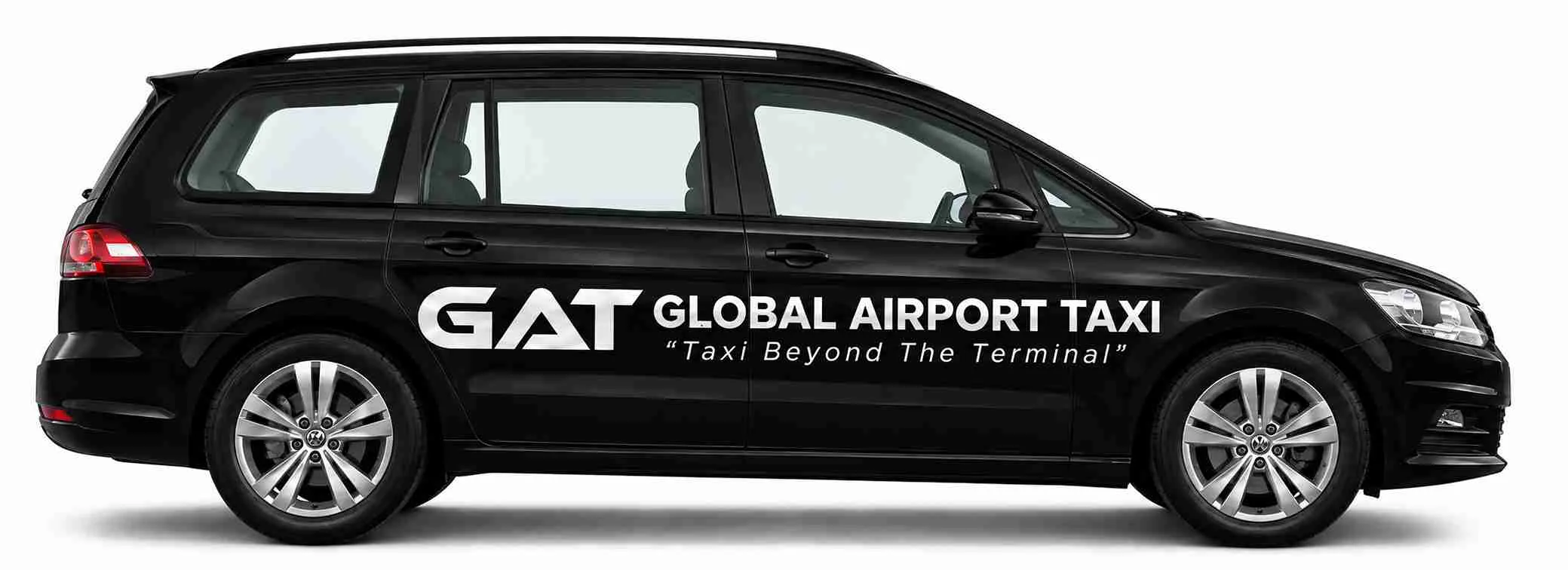
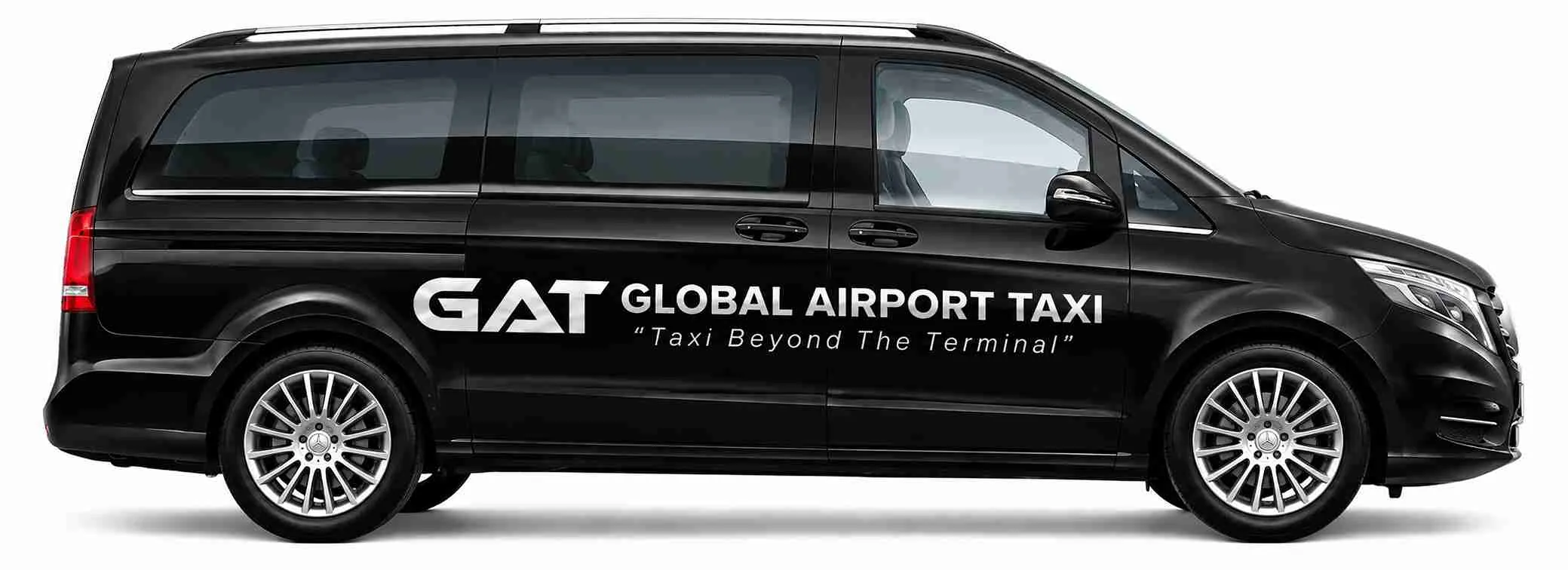

| Class | Passengers | Luggage | What it is for on this journey |
|---|---|---|---|
| Saloon | Up to 4 | 3 large (3 passengers), or 2 large and 2 hand bags (4 passengers) | Two or three people with cabin bags and a case each — the usual answer for a low-cost flight with hold luggage. |
| Executive car | Up to 3 | 2 large and 2 hand bags | A better car with one seat fewer. Worth knowing before you book it for four. |
| Estate car | Up to 4 | 3 large and 3 hand bags | Four people whose cases, not heads, decide the vehicle. |
| MPV, 5-seater | Up to 5 | Up to 4 large suitcases | Five kept together in one vehicle rather than split across two. |
| MPV, 6-seater | Up to 6 | 4 to 5 large suitcases | Six with a week’s luggage, or a family with a pushchair. |
| Executive 7-seater | Up to 7 | Up to 7 bags | Seven seats with room to work on a long run into Paris. |
| Executive MPV | Up to 7 | Up to 7 bags | The same seven seats in a higher-specification vehicle. |
| Van, 8-seater | Up to 8 | Up to 7 bags | Eight with luggage — the largest single car-class booking. |
| 8-seater minibus | Up to 8 | 6 to 8 large suitcases | Eight where the cases outnumber the people. |
A saloon is the default and the right answer most of the time: two or three people with a case each, door to door. The thing to notice in the table above is that a saloon seating four carries three large cases comfortably rather than four — the fourth passenger costs you a suitcase. An estate solves exactly that problem for the same four people.
An executive car is the opposite trade: a better vehicle with one seat fewer, three rather than four. It is worth booking deliberately rather than by assumption, because a party of four who book one on the strength of the word “executive” will be a seat short at the kerb. Full specifications for executive cars and saloon cars are published per class.
A five or six-seat MPV is where most families with luggage end up, and the six-seater’s four to five large suitcases is usually the deciding number. A seven-seat vehicle takes up to seven bags and gives a full rear row rather than a folded bench, which matters on a journey of this length. See six-seat people carriers and seven-seat vehicles for the detail, or estate cars if the bags rather than the seats are the problem.
An eight-seat van or minibus is the largest single car-class booking, and it is also where a legal line falls. Both a taxi and a private hire car are limited to nine people including the driver, which is why a party of more than eight travels in something larger rather than in one car. Above that, a party travels in a minibus or coach — a different kind of vehicle under a different licence, not simply a bigger car. Eight-seat minibuses and group airport transfers cover how a larger party is handled, and our full vehicle fleet lists every class.
Capacities are the ones published by us for each class. The vehicle sent is the one available in that class on the day, which is why no manufacturer or model is named anywhere above: naming one we cannot guarantee would be a promise we could not keep.
Reviews
Network-wide feedback rather than feedback about one airport, served live from the platforms it was written on.
These are the network’s reviews, not this airport’s. We have not filtered them to Beauvais, and we are not going to: a selection chosen to flatter one destination page is not evidence, and a score minted for a single airport out of network-wide data would be a number we had invented. What loads below comes straight from the review platforms, in the words the passengers wrote.
Scores and reviews are served by Trustindex from the platforms they were written on, and cover journeys across the whole network rather than this airport alone. None of them was written by us, and we publish no rating markup from any of it, because a score we do not control is not ours to mint into structured data.
Booking
A pre-booked car, a named driver at arrivals, and a price agreed before you leave home.
Book a Paris Beauvais Airport taxi online and the price is fixed before you travel. Give us the flight number and the full destination address, choose the vehicle class that fits the bags as well as the people, and the quote comes back for the whole car. Your driver meets you at arrivals with a name board and takes you to the door — not to a coach terminus on the edge of Paris, and not to a station with a connection still to come.
A private transfer is one vehicle, booked for you, going where you are going. Nobody else is picked up on the way, there is no circuit of hotels before yours, and the vehicle does not leave until you are in it. That matters more at this airport than at most, because the alternatives here all end somewhere that is not your destination: the coach ends at its terminus, the train ends at a station in the town of Beauvais, and both leave you with the last leg still to arrange.
Drop-offs work the same way in reverse. We collect from the address you give — a flat, a hotel, an office, a park hotel at Disneyland Paris — and the collection time is worked back from your check-in deadline rather than from your departure time. The airport asks passengers to arrive two hours before departure, which is the figure the arithmetic starts from.
Six things, and then you are done. The order below is the order the booking form asks for them in, and every one of them exists because leaving it out causes a specific problem on the day.
French law sets no minimum notice period for booking a private hire car. A rule imposing one was struck down by the Conseil d’État, and its most recent opinion on the question holds that the government has no power to impose one without new primary legislation. In practice the earlier the better for anything larger than a saloon, and on a journey this long the vehicle class is worth getting right the first time.
The airport
The name is the most misleading thing about it. Everything else follows from that.
Paris Beauvais Airport is not in Paris. It sits in the commune of Tillé, just north of the city of Beauvais — not in Beauvais itself, and not in the Paris region, in the Oise département, in Hauts-de-France — a different region from Paris. On top of that, the airport is outside the Paris transport area, so a Navigo pass, a zone ticket and the Métro are all irrelevant to reaching it. If you take one thing away, let it be the distance: the journey into the capital is a long road run, not an airport shuttle hop.
It is the ninth busiest airport in metropolitan France, handling well over six million passengers a year through terminals built for a fraction of that. The airport is open about that gap — its own figures put the terminals’ design capacity at a fraction of the traffic they now take — and it is the reason arrivals can feel tight when two aircraft empty into the same hall. It is also served almost entirely by low-cost airlines, with one carrier accounting for the large majority of its destinations, which matters to a transfer for a practical reason rather than a snobbish one: low-cost passengers travel with hold luggage they have paid for, and that luggage decides the vehicle class.

Several of the awkward facts about this airport are awkward for the same reason: it was built to serve a city in Picardy and now serves a capital eighty-odd kilometres away. The terminals carry several times the traffic they were designed for. The transport network that reaches it is the regional one, not the Paris one. The licensing authority for its taxis is a departmental prefect rather than a Paris one. None of that is a complaint — the airport is honest about all of it — but almost every traveller who is caught out here was caught out by assuming otherwise.
The practical consequence is that the transfer is not an afterthought to be sorted on arrival. It is a piece of the journey roughly as long as a flight from Paris to London, and it is the piece most often left unplanned.
The airport has two passenger terminals, and the airport tells them apart by colour: Terminal 1 is the blue building and Terminal 2 the grey one. Both terminals handle arrivals, and each has its own baggage reclaim, and which terminal a flight lands at is published per flight on the airport’s live board, and cannot be worked out from the airline or the route. For a pre-booked car this is a non-event, because the flight number tells the driver which building to be outside. For anyone planning to meet a friend at the door, it is worth checking the board before setting off.
Arrivals, and its own baggage reclaim. As for getting between the two: the two terminals sit either side of the bus station and are joined by a walkway; the airport publishes no walking time between them. Allow for a walk if you land at one and need the other.
Arrivals and its own baggage reclaim, and the building where the airline desks and the information points for several services sit. Both terminals are served by the same taxi rank and the same access road.
This is the single most useful operational fact about Beauvais and the one least often published: no aircraft may land or take off between midnight and five in the morning. The restriction is set by order for this airport, and the number of exceptions permitted each year is capped.
There is no railway station at the airport. The Paris region’s own transport authority counts only Charles de Gaulle and Orly as its airports. Beauvais appears on its pages as an exception, served by an independent coach that its travel passes do not cover. A Navigo pass, a zone ticket and the Métro map are all irrelevant to getting here, which catches out a surprising number of people who have used Charles de Gaulle or Orly before and assume the same system reaches this far north.
For travellers without a car or a transfer, the airport publishes two routes of its own. The airport runs its own coach to a terminus on the edge of central Paris, and publishes a journey time from about an hour and a quarter. And there is a route by regional train to Beauvais town station followed by a local bus or taxi for the last stretch. Both are covered properly in other ways into Paris, including the cases where one of them is the better choice than we are.
Distances, terminal arrangements and the order setting the night restriction are the three facts most worth re-checking at maintenance, because all three are published by bodies that revise them on their own schedule rather than ours.
Prices
The honest version: no fixed fare exists here, so a quote in advance is the only fixed number available.
There is no flat-rate airport fare at Beauvais. The national tariff order that creates flat airport fares lists the airports they apply at — the two Paris airports, Nice, Toulouse and one in the French West Indies — and Beauvais is not among them. That one sentence explains most of the confusion on this subject, because travellers who have used Charles de Gaulle or Orly arrive expecting the same arrangement and there is nothing like it here.
Taken at a rank, it costs whatever the meter shows at the end of a journey of roughly eighty to ninety kilometres, with the rate raised at night and on Sundays, and raised further where the driver has no fare for the return leg. That last point is the one people underestimate: on a run of this length, the empty drive back is most of the driver’s afternoon.
The airport does publish its own estimates for a dozen destinations. They are worth reading, and worth reading sceptically. The airport labels them indicative itself, and the fare terms printed beside them sit below the maximum levels currently permitted nationally — which tells you the table was set some years ago and has not been brought forward. We have not reproduced those figures here, because reprinting a stale estimate under an official-looking citation is worse than printing none at all. Several pages you will find on this subject quote numbers a third below even that table.
Nothing printed on an airport page is a quote. The quote is produced against your addresses, your date and your party, and that is the only figure that binds either of us.
Taxi fares at Beauvais are set for the Oise département by the préfet, not by Paris. The national order fixes ceilings; the department fixes the figures underneath them and the date they take effect. So a Beauvais taxi is an Oise taxi, charging Oise rates, not Paris ones — a distinction with real consequences on a journey that ends in Paris.
A French taxi fare is built from a pick-up charge, a rate per kilometre, an hourly rate for time spent stationary or crawling, and a minimum fare below which the journey cannot be charged. All four are revised annually and come into force on a date fixed department by department, and the meter carries a mark showing it has been reprogrammed. Rates can be raised for a night journey and for Sundays and public holidays, and raised further where the taxi has no return fare and must drive back empty — which is the part that bites on a long run out of the airport.
Two protections are worth knowing because they are often assumed away. No supplement may be charged simply because a taxi picked you up at an airport, and none may be charged because a passenger uses a wheelchair. And above a nationally set threshold a taxi must give you a receipt before you pay, and below it you can ask for one. We have deliberately not printed any of the underlying amounts: every one of them is revised annually, which makes a published figure a liability rather than a service.
A pre-booked transfer is priced differently, because it is not a metered journey. Private hire prices are not regulated the way taxi fares are. What the law requires is disclosure: the price before the contract is made, without the customer having to ask, including any extra that can be known in advance — and where a price genuinely cannot be computed in advance, the method of calculating it. In distance selling, an extra you were never told about is not payable. What we do is quote in advance, for the whole vehicle, and hold it. These are the things that move the figure:
Road transport prices move with demand, and a page cannot see the day you are travelling. Read anything here as the shape of the answer rather than the answer itself.
The quote takes the destination address, the date and time, the passenger count and the luggage, and returns a figure for the whole vehicle before anything is confirmed. It is the only number on this subject that anybody can stand behind, which is why the page keeps sending you to it rather than printing a table that would be wrong by the time you read it.
Check your priceHow our pricing works
Figures set by a public body change on their own timetable, not ours. Where one is described here, what is described is how it is built rather than what it currently is.
Pick-up
Where the driver waits, how you find each other, and what the law says about how long he can stay.
Your driver meets you inside arrivals with a name board, once you are through baggage reclaim. The flight number is what makes that work: the booking follows the aircraft rather than the clock, so a late landing moves the pick-up rather than losing it. There is also a legal limit on waiting at a French airport, and it is the reason a flight number matters more than a time.
T1 is the blue building. Arrivals and baggage reclaim are inside it, and the taxi rank and the access road serve both terminals rather than one each. For a pre-booked car, the meeting point is confirmed with your booking: we will not print a hall name here, because the airport does not publish a named pick-up zone for pre-booked vehicles and inventing one would send you to a door that does not exist.
T2 is the grey building, and the one where several of the airport’s information and airline desks sit. The same arrangement applies: your driver works from the flight number and waits in arrivals. If your flight is reallocated between terminals — which the airport publishes per flight rather than per airline — the driver follows the flight, not the original building.

The practical shape of an arrival here is short. You land at one of the two terminals, you collect your bags from that terminal’s own reclaim, and your driver is in arrivals with a name board. Nothing has to be arranged on the day, and nothing depends on you finding a particular door, because the booking carries the flight number and the flight number carries the terminal.
What the page will not do is invent the rest. The airport publishes no named pick-up zone for pre-booked cars and no map of one, so the meeting point is confirmed with your booking rather than printed here as though it were signposted.
At airport arrivals your driver waits at the meeting point with a name board and helps with the bags. Your confirmation shows the driver and vehicle details. Keep that confirmation on your phone: it is the document that identifies the car, settles the price, and — as it happens — is the thing the driver may be asked to produce by an inspector. The driver also has to be able to produce proof of your booking to an inspector on demand, on paper or on a screen.
If you want to check the car is what it says it is, there is a published test rather than a reassuring sentence: a professional card in the windscreen and two numbered stickers on the glass. That section sets out exactly what to look for.
Here is the part that no commercial page on this airport explains. A pre-booked car may wait at the airport for up to one hour before the pick-up time its passenger asked for — and that hour runs from the time you gave, not from the time your aircraft actually lands. Where the flight is late, that hour is read against the delay rather than against the clock — which is exactly why a booking should carry a flight number instead of a guessed time.
The other half of the same rule applies at the end of the journey. Once a pre-booked journey is finished the driver has to return to base, or to a place off the carriageway where parking is allowed, unless another booking is already in hand. In practice that means a driver cannot simply wait at the kerb for a return you have not booked, and it is the reason a return is booked as its own journey.
Routes
The airport publishes its own indicative distances. They are the only official ones there are, and they disagree with each other in one place.
The distances below are the airport’s own, from its taxi page. We have reproduced the distance column and not the fare column, for the reason given under taxi prices at this airport. One figure is worth flagging: the airport gives Paris as 89 km here and as 77 km on its road-distance page, where the measure is taken to the porte de la Chapelle, on the northern edge of Paris instead. That single discrepancy is why published distances for this journey range from about seventy to about ninety kilometres all over the web, usually with no indication of which is meant.
The city the airport is named after, and the only destination it is genuinely close to.
The airport’s taxi page. Its road-distance page says 77 km to a point on the northern edge of the city instead — the same journey, two different measures.
Closer than Paris itself, because the route does not enter the city.
The far side of Paris, and the longest of the three airport runs.
East of Paris in Seine-et-Marne, and the longest journey on the airport’s own list.
Nearer than Paris, on the other side of the A1 corridor.
Transcribed from the airport’s own published table. The airport gives these as indicative figures and says plainly that they vary with traffic. No journey time is published for most of these, and where a time is given below it is attributed.
The long one, and the reason most people are reading this at all. The airport’s road-distance page gives about an hour and a quarter by car, measured to the porte de la Chapelle, on the northern edge of Paris — so a Marais address or a Left Bank hotel is that plus whatever Paris is doing when you arrive. The airport’s own directions out of Paris run north on the A1, across to the N1, and on to the A16 to the Beauvais-Nord exit, then by local road into Tillé. Going in by private transfer, the journey is one vehicle from the terminal door to the building door; going in by coach, it is a terminus on the edge of the city and then your own arrangements.
The longest journey on the airport’s own list, and further than Paris itself. Disneyland Paris lies east of Paris in Seine-et-Marne, on the far side of the city from the airport, so the route has to get round or through the capital to reach it. For Charles de Gaulle, Orly and Disneyland the airport publishes no route at all — only a distance, so treat any confident travel time you read elsewhere as somebody’s estimate rather than a published figure. Booked as a transfer it is a single run to the park hotel entrance. For the same destination from the other side of Paris, Orly to Disneyland Paris transfers covers a much shorter version of the same trip.
Nearer than central Paris on the airport’s own figures, because the route does not have to enter the city. For a connection, the thing to budget is not the distance but the city in between and the check-in deadline at the far end. Tell us both flight numbers and the collection is worked back from the second one. Our hub page for the far end is Paris Charles de Gaulle airport taxis.
The far side of Paris, and the longest of the three airport runs on the airport’s list. Worth planning generously: this one crosses the conurbation rather than skirting it. Paris Orly airport taxis covers transfers at that end, and Orly to Charles de Gaulle transfers the hop between the two Paris airports themselves.
The short one, and the only destination the airport is genuinely close to — its own figure is 6.5 km, and it describes the drive as about ten minutes. If Beauvais is your destination rather than a waypoint, this is a very different proposition from every other journey listed here: a ten-minute run rather than an eighty-kilometre one. The cathedral city is also where the regional train from Paris actually terminates, which is the source of a good deal of confusion about trains to this airport.
North and west of the airport the distances fall away quickly, and several destinations are nearer than Paris. The airport’s own list includes Amiens, Rouen, Compiègne, Chantilly, Cergy-Pontoise, Villepinte and Parc Astérix. For anything beyond that, long-distance airport transfers covers runs where the destination is a region rather than a city, and every French airport we cover lists the rest.
The shortest of the Oise and Val-d’Oise runs.
East across the Oise département.
The first large town on the way in to the Paris conurbation.
North on the A16, in the opposite direction from Paris.
West into Normandy, roughly the same distance as Paris.
The exhibition ground north-east of Paris.
If your plans involve more than one French airport, these are the hub pages for the rest of them: Paris Charles de Gaulle, Paris Orly, Lyon, Nice, Marseille, Toulouse, Bordeaux, Nantes and Basel Mulhouse.
Pre-booking
At an airport eighty kilometres from the city it is billed as serving, this is less a convenience than a plan.
Pre-booking fixes the three things that are genuinely uncertain at Beauvais: the price, the vehicle, and whether there is a car at all. There is no flat fare to fall back on, the flights arrive in waves rather than steadily, and the alternatives all end somewhere other than your destination. A quote agreed in advance replaces all three unknowns with one number.
A metered journey of eighty-odd kilometres has a range rather than a price, and the range widens at night, on Sundays, and where the driver faces an empty drive home. A pre-booked transfer is quoted for the whole vehicle before you confirm and does not move afterwards. On a journey this long that is not a small difference.
What a journey costs is settled at the moment it is booked, and the confirmation overrides anything written here if the two ever disagree.
At a rank you take the car at the front. Pre-booked, you choose the class against the published capacities, which is the only way to be confident that four people and four large cases are going to fit. The bags are the usual culprit, and a low-cost flight is the usual reason.
The airport has traffic that peaks in summer and clusters into a morning and an evening wave. That is a structural feature of a low-cost base rather than a seasonal quirk, and it means the queue at the rank is not evenly spread across the day: several aircraft can empty into the same hall within a short window. A booking is a car that is already yours.
A pre-booked transfer is made against a flight number, so a delay moves it. The waiting rule set out under pick-up and meet and greet is the reason that matters legally as well as practically. A rank taxi, by contrast, has no idea you are coming.
This is the one that decides it for most people. The coach ends at its terminus; the train ends in the town of Beauvais; a transfer ends at the door of the building you are going to, with the bags carried to it. On an arrival after a long day, with children or with luggage, that last two hundred metres is worth more than it looks on a map. Airport to hotel transfers covers that journey in full.
Families
Capacity, child seats as a legal requirement rather than an extra, and the hotel door.
For a family or a group the two things to get right are the luggage count and the child seats, and both are settled at booking rather than at the kerb. Give the number of passengers, the number of large cases separately, and the ages of any children. On an eighty-kilometre drive these are not details.

The arithmetic that catches families out is simple enough to do in advance and awkward to discover at the airport. Four people in a saloon have room for three large cases, not four. Six in an MPV have four to five. Eight in a van have seven bags between them. Those are the published figures, and they assume large suitcases rather than hand luggage — which, on a low-cost flight with hold bags, is what you will have.
Pushchairs are the other common miscount. A folded pushchair takes the space of a large case, so a family of four with a pushchair is usually an MPV rather than a saloon. Say so at booking and the right vehicle is sent; leave it out and the right vehicle is somewhere else.
In France a child seat for a young child is a legal requirement rather than an optional comfort, and the type depends on the child’s age and size. Give us the ages at booking and we confirm what can be supplied with the booking — which is a different thing from promising it on a page, and deliberately so. Our guide to child car seats on airport transfers sets out how the requirement works and what to ask for.
Above the nine-person limit that applies to a taxi or a private hire car, a party travels either in several vehicles or in a minibus or coach. Several vehicles is usually right when people are arriving on different flights; one larger vehicle is usually right when everybody lands together. Group airport transfers covers both, and corporate airport transfers covers the case where the booking is on an account rather than a card.
A transfer ends at the hotel entrance. That sounds obvious and is the single biggest practical difference from the coach, which ends at a terminus from which a family with four cases and a pushchair has to make its own way. Give the hotel’s address rather than its name where you can: large hotels and the Disneyland Paris resort hotels have several approaches and only one of them will be yours.
For families flying into London rather than Paris, our guide to family airport transfers in London covers the same ground at the other end of the network.
Accessibility
What the airport publishes, what European law requires, and the one gap nobody fills.
Assistance inside the airport is arranged through your airline, not through the airport, and it needs notice. Assistance inside the airport is arranged through the airline rather than the airport, in three levels: to the foot of the aircraft steps, to the top of them, or to the seat itself. The airport asks for at least forty-eight hours’ notice, which is the same period European law uses for carrying mobility equipment. Assistance within the airport is free of charge under European law, and the airport has to publish designated points where it starts.
Forty-eight hours is the figure to remember, and it appears twice: once as the airport’s own request, and once in European law as the notice needed for carrying mobility equipment free of charge. Miss that notice period and the obligation does not disappear: the airport still has to make every reasonable effort to help. That is a genuine protection rather than a courtesy, and worth knowing if a trip is arranged at short notice.
Neither the airport nor the prefecture publishes how to obtain a wheelchair-accessible taxi at Beauvais, or what notice it needs. We would rather say that than fill the gap with a confident sentence. What we can do is take the requirement at booking and tell you what is available for your date before you commit to anything — and if an adapted vehicle cannot be arranged for a particular journey, say so while there is still time to make other plans.
Two rules do work in a passenger’s favour and are easy to miss. No supplement may be charged simply because a taxi picked you up at an airport, and none may be charged because a passenger uses a wheelchair. French law also exempts vehicles specially adapted for passengers of reduced mobility from some of the ordinary technical requirements placed on private hire cars, which is why an adapted vehicle can be a converted van rather than a saloon.
The rules
Two different regimes operate at the same kerb. Knowing which is which is how you avoid the only real scam risk here.
A taxi and a pre-booked private hire car are different things in French law, and the difference is not cosmetic. Only a taxi may be flagged down or joined at a rank; a private hire car may only carry a passenger who booked it beforehand, and may not tout for business at the kerb. Everything else in this section follows from that split.
The airport’s rank is marked spaces on the service road alongside the terminals, and only taxis holding a parking permit issued by the Oise prefecture for the airport may wait there for fares; any other taxi may set passengers down but not pick them up. The authority issuing those permits is the prefecture of the Oise, which is also the body that sets the fares — a different authority from the one that governs Paris taxis, and part of why the two airports behave differently. The fare on a rank taxi is whatever the meter shows.
Most pages on this subject offer reassurance. There is an actual published test, and it takes about four seconds at the kerb:
For a dispute with a rank taxi, the airport publishes the route: note the registration, the date and the time, keep the receipt, and the airport directs complaints to the department’s consumer protection office. For a pre-booked journey with us, the complaint comes to us first: contact us is the route, and our terms and conditions sets out what you are entitled to. How we handle your details is in our privacy and security policy.
Two rules together explain a thing that often looks like unhelpfulness and is actually law. The first is the waiting limit: A pre-booked car may wait at the airport for up to one hour before the pick-up time its passenger asked for — and that hour runs from the time you gave, not from the time your aircraft actually lands. The second is what happens afterwards: Once a pre-booked journey is finished the driver has to return to base, or to a place off the carriageway where parking is allowed, unless another booking is already in hand. Between them they are the reason a booking carries a flight number and a return leg is booked rather than assumed.
Other options
Including the cases where you should not book us. A page that pretends there are none is not worth trusting on anything else.
There are four ways out of this airport, and a private transfer is the right answer for perhaps two of them. The airport runs its own coach to the edge of Paris, there is a train-plus-bus route via Beauvais town, and there is driving. Each is better than us in particular circumstances, and those circumstances are set out below rather than left out.
The airport runs its own coach to a terminus on the edge of central Paris, and publishes a journey time from about an hour and a quarter. It is the cheapest way into the city by a wide margin and it is the right choice if you are travelling light, alone or in a pair, on a flexible schedule, and heading somewhere the Paris network reaches easily from the terminus.
We have not named the terminus or printed a fare, and the reason is not coyness: the terminus has moved within recent memory, a second route announced for another part of the city has since disappeared from the airport’s own listing, and the fare is the kind of figure that changes without notice. Check it on the airport’s own site rather than on any page — including this one — that claims to know.
The number you are shown before you confirm is the number. Nothing on a destination page outranks it.
Plainly: one or two people with cabin bags, no children, no mobility constraint, no tight connection, and a destination near the terminus or well served from it. In that situation a transfer is a comfort rather than a solution, and we would rather say so than sell you one. The calculation flips when any of those change — a third person, a hold case each, a child, a late arrival, a hotel on the wrong side of the city, or a connection to catch.
The route the airport itself publishes for rail travellers is a regional train to Beauvais town station and then a local bus or a taxi for the last stretch. The airport tells passengers to allow for that connection and does not publish how long it takes — which is a fair warning in itself. This is a reasonable option in one direction more than the other: leaving the airport you have just landed and the connection is an unknown, while going to the airport you can see the timetable in advance. Train station transfers covers the case where the station rather than the airport is the fixed point.
If you are driving to the airport, a drop-off area serves both terminals with a short free period, after which it charges by time — and it charges from the first minute for vehicles that use it repeatedly. The repeat-use surcharge is the part worth knowing about: it is designed to discourage circling, and it applies from the first minute once you have used the area several times. We have not printed the free period or the charges, because both are the airport’s to change. The A16 runs past the airport, and the airport’s own directions from Paris use the A1 and the N1 before joining it.
This is an explanation of how a price is arrived at, not an offer of one.
| Option | Ends where | Best for | Worst for |
|---|---|---|---|
| Private transfer | Your actual address | Families, luggage, groups, connections, late arrivals, mobility needs | A solo traveller with a cabin bag and no schedule |
| The airport coach | A terminus on the edge of Paris | One or two people travelling light on a flexible schedule | Anybody with cases, children, a wheelchair or a connection |
| Train plus local bus | Beauvais town, then Paris | Rail travellers heading to the airport with time in hand | Arrivals, where the connection is an unknown |
| Driving | Wherever you parked | Residents and anyone with a car at the far end | Anyone paying for several days of parking to save one transfer |
Return
Booked at the same time as the outward leg, worked back from check-in rather than departure.
A return to Paris Beauvais Airport is its own journey with its own collection time and address, not an extension of the first. There is a legal reason as well as a practical one: a pre-booked journey is finished the driver has to return to base, or to a place off the carriageway where parking is allowed, unless another booking is already in hand. So a return that was never booked is a return that does not exist, however helpful the driver would like to be.
Start from the check-in deadline rather than the departure time. The airport asks passengers to arrive two hours before departure; add the journey, and then add for the city you are leaving. A Friday evening out of central Paris is not the same journey as a Sunday morning, and the margin belongs at this end rather than at the airport end, where there is nothing to do with it.
Collections work from any address we can reach: a Paris flat or hotel, a Disneyland Paris resort hotel, a town in the Oise, a Normandy address on the way to Rouen. The further out the collection, the more the timing matters, because the margin has to cover a longer drive. Give the address rather than the district, and the flight number as well — it is how we know which terminal to set you down at.
Booking the return at the same time as the arrival costs nothing extra in effort and removes the one job nobody wants on the last evening of a trip. It also means the vehicle class is already right for the bags you are going home with, which are rarely the bags you came with.
As always, the figure that counts is the one on your booking confirmation.
Why us
Only what can be evidenced. The things we are not claiming are listed too.
We are a booking platform. Your transfer is carried out by a licensed private hire driver. That is the first thing worth saying, because it is the thing a page like this is most tempted to dress up. What we do is take the booking, quote the whole vehicle in advance, send a licensed driver against your flight number, and put the driver and vehicle details on your confirmation.
No page on this site will tell you we are the cheapest, that waiting is free, that a fare is fixed by law at this airport, or that we are an official partner of it. The first is unverifiable, the second depends on the booking, the third is false at Beauvais specifically, and the fourth would be an outright invention. About Global Airport Taxi sets out who we are, and our customer reviews carry what passengers have actually said rather than a selection of adjectives.
Operated by QMH Technologies Ltd, company number 13506378. To ask about a booking, contact us. WhatsApp is on the booking button at the top and the bottom of the page.
Questions
Thirteen questions, including the four that the research says people ask most and commercial pages answer least.
The short version, if you read nothing else: the airport is not in Paris, there is no train to it, nothing flies between midnight and five in the morning, and there is no fixed taxi fare into the city. Every one of those is counter-intuitive, and every one of them changes how you plan the journey.
More general questions are answered in our help and FAQ section. Anything specific to a booking is best asked directly: contact us, or use the WhatsApp button at the foot of the page.
Eighty-odd kilometres is a long way to improvise. Give us the flight number, the destination address, how many of you there are and how many large bags, and the quote comes back for the whole vehicle before anything is confirmed — with a licensed driver waiting at arrivals with a name board at the other end of it.